
Why Are Costa Rica Expat Properties in the Central Valley Surpassing Coastal Regions?
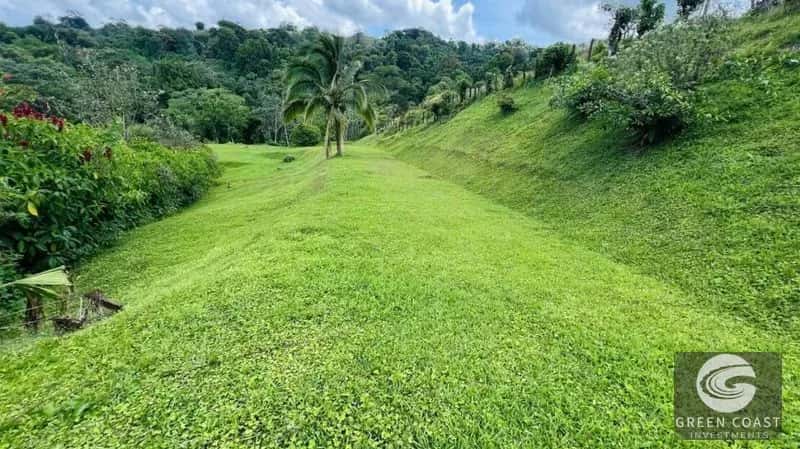
For buyers comparing active inventory, see 3.4-Acre Lake Arenal View Lot: Flat, Buildable Hilltop Sanctuary in La Unión.
In our years on this coast, we have watched a distinct shift take place. North American buyers are increasingly moving their focus from the humid, tourist-heavy coastal zones of Guanacaste and Jacó to the temperate highlands of the Central Valley. The draw is simple: a superior balance of modern infrastructure, lower living costs, and an ideal year-round climate. While the beaches will always attract transient vacationers, long-term investors and retirees are prioritizing the Central Valley for its stable volcanic soils, proximity to premier healthcare, and highly comfortable lifestyle.
Currently, the market reflects this growing demand. There are 84 active listings in this specific highland corridor, with prices ranging from USD 40,000 for smaller entry-level parcels to USD 3,800,000 for expansive luxury estates, commanding an average price of USD 566,900.
The Microclimate Advantage: Natural Climate Control
The primary catalyst for this demographic shift is the dramatic difference in daily comfort. Coastal regions require continuous air conditioning to combat oppressive humidity and temperatures that regularly exceed 90°F. In contrast, the Central Valley highlands sit at elevations that produce a perpetual spring-like climate, with daytime temperatures averaging 70°F to 80°F.
This elevation allows architects to design luxury homes that rely entirely on natural cross-ventilation. By positioning structures to capture the consistent mountain breezes, owners eliminate the need for 24/7 air conditioning. This architectural integration reduces monthly utility bills by up to 70% compared to identical coastal builds, while protecting building materials from the corrosive salt air and rapid mold growth common along the Pacific and Caribbean slopes.
The Shift Toward Long-Term Expat Infrastructure
Beyond the climate, the region has evolved into the premier hub for high-net-worth individuals seeking costa rica expat properties designed for permanent residency and remote work. Unlike seasonal beach towns that experience dramatic economic swings between the wet and dry seasons, the Central Valley maintains a stable, year-round economy.
Expats in this region benefit from direct access to the country’s top-tier private hospitals (such as CIMA and Clínica Bíblica), international schools, and high-speed fiber-optic internet corridors. This infrastructure makes the valley highly attractive to remote executives, entrepreneurs, and retirees who want a tranquil mountain sanctuary without sacrificing the conveniences of a metropolitan hub.
What Does the Central Valley Real Estate Market Look Like Today?

The Central Valley real estate market currently presents a highly bifurcated landscape, where a limited inventory of premium land parcels competes with a steady demand for finished, turnkey homes. For buyers targeting Costa Rica expat properties, the region offers a distinct entry point compared to saturated coastal markets. According to recent MLS and regional brokerage data, there are currently 84 active listings in the Central Valley, spanning a wide price range of USD 40,000 to USD 3,800,000, with an average listing price of USD 566,900. This inventory profile allows buyers to choose between entry-level acreage and ultra-luxury estates, though raw land with infrastructure remains the most strategic play for equity growth.
Inventory Dynamics: Land versus Finished Homes
Expats searching for properties in the Central Valley face a clear choice: pay a premium for existing construction or purchase raw land to build custom estates. The inventory of finished homes is heavily weighted toward older, traditional Costa Rican designs or high-density condominium developments. Consequently, modern, western-style luxury homes are scarce and command a significant premium.
This scarcity has shifted expat attention toward undeveloped land. While finished homes often require extensive remodeling to meet modern energy-efficiency and architectural standards, raw acreage allows buyers to control the build quality from the ground up. However, ready-to-build lots with secured water letters and electricity are rare among the 84 active listings, making fully permitted parcels highly competitive.
Market Segmentation and Equity Upside
Analyzing the market segments reveals where the true value lies for incoming investors:
Entry-Level Lots (USD 40,000 – USD 150,000):* Typically smaller parcels under an acre, often lacking paved road access, panoramic views, or municipal water connections.
Mid-Tier Properties (USD 150,000 – USD 500,000):* This segment includes premium acreage, such as the 3.4-acre Lake Arenal view lot in La Unión. Priced at USD 206,000, this property sits well below the regional average listing price of USD 566,900.
Ultra-Luxury Estates (USD 1,000,000 – USD 3,800,000):* Fully constructed, multi-acre estates located in exclusive enclaves, often featuring expansive views and high-end security.
Acquiring a premium, buildable lot for USD 206,000 provides an exceptional equity upside. By purchasing the land at a fraction of the regional average and constructing a custom home, investors can establish a high-value asset for a total capital outlay that remains significantly below the cost of purchasing a pre-existing luxury estate in the same market.
Property Spotlight: The 3.4-Acre Lake Arenal View Lot in La Unión

The 3.4-acre Lake Arenal view lot in La Unión is a flat, buildable hilltop sanctuary priced at USD 206,000, offering a rare combination of ready-to-build topography and panoramic water vistas. This premium lot represents a highly competitive entry point into the market for Costa Rica expat properties, where there are currently 84 active listings ranging in price from USD 40,000 to USD 3,800,000, with an average market price of USD 566,900. Positioned along a scenic ridge-line, this property provides the infrastructure advantages of the nearby Central Valley alongside the cooler, high-altitude climate of the Arenal highlands.
Strategic Geographic Positioning and Infrastructure Access
This property sits at a geographical crossroads that appeals directly to international buyers. While coastal regions like Jacó offer beach access, La Unión provides a temperate mountain climate free from extreme coastal humidity. The lot is positioned to capture unobstructed views of Lake Arenal and the surrounding mountain ranges, yet it remains connected to the reliable road networks and utility infrastructure of the Central Valley. This proximity ensures that high-speed internet, reliable electrical grids, and modern medical facilities are accessible within a reasonable drive, resolving the isolation issues common with remote jungle parcels.
The Value of Flat, Ridge-Line Topography
In the mountainous terrain surrounding Lake Arenal, finding a parcel with a natural, flat building pad is exceptionally rare. Most ridge-line properties require extensive, costly earthmoving, retaining wall construction, and complex engineering to create a stable foundation.
This 3.4-acre lot features a naturally level topography on its highest point, which offers several distinct advantages for developers:
Reduced Site Preparation Costs:* The flat terrain minimizes the need for heavy excavation, cutting down on initial site preparation expenses.
Architectural Flexibility:* A level building envelope allows for expansive single-story layouts or multi-structure estates without the structural constraints of steep slopes.
Soil Stability:* Natural flat zones are less prone to the erosion and landslide risks associated with steeply graded mountain cuts.
By securing a lot that is already flat and buildable, buyers can allocate more of their construction budget toward high-end architectural finishes and sustainable design elements rather than underground structural reinforcement.
How Do I Verify Water Rights and ASADA Connectivity Before Purchasing a Central Valley Lot?
To secure a building permit for any raw land parcel in Costa Rica, you must obtain an official carta de agua (water availability letter) from the local water authority. For properties in the Lake Arenal and La Unión sectors, this authority is typically the local ASADA (Asociación Administradora de los Sistemas de Acueductos y Alcantarillados Comunales), a community-run water board, or the national AyA (Instituto Costarricense de Acueductos y Alcantarillados). Without this legally binding document confirming an active, capacity-approved hookup, municipal authorities will deny your construction permits, rendering even the most scenic ridge-line lot unbuildable.
The Step-by-Step Water Verification Process
Securing a water letter is the primary hurdle for buyers evaluating Costa Rica expat properties. Across the current market of 84 active listings in the region—ranging in price from $40,000 to $3,800,000, with an average price of $566,900—unapproved water access remains the most common reason transactions collapse during due diligence.
To verify water rights safely, follow this protocol:
1. Request the Current Carta de Agua: Ask the seller for a water availability letter issued within the last six months. Ensure the document explicitly states that the ASADA has the capacity to serve a new residential connection on the specific finca number of the property.
2. Cross-Reference the Property Plan (Catastro): Take the registered survey map (plano catastrado) to the local ASADA office. Confirm that the physical water main runs directly in front of the property boundary.
3. Verify Concession Status for Private Wells: If the property relies on a water well rather than an ASADA, verify that the well has a registered, active concession from the Ministry of Environment and Energy (MINAE). Merely having a physical hole in the ground does not grant legal extraction rights.
4. Retain an Independent Escrow Attorney: Have your legal representative contact the ASADA directly to confirm there are no local moratoria on new connections due to seasonal capacity limits.
Infrastructure Checklist for Remote Executives
For buyers planning to run international businesses or work remotely from a hilltop sanctuary, water is only the first phase of utility verification. Use this checklist to confirm power and telecommunications before waiving your due diligence contingencies:
ICE Power Grid Proximity: Verify that ICE (Instituto Costarricense de Electricidad*) power lines run along the public road fronting the property. If the nearest transformer is more than 150 meters away, you will face significant out-of-pocket costs to install private utility poles.
Fiber-Optic Availability:* Confirm the presence of fiber-optic lines from providers such as ICE/Kölbi, Claro, or Liberty. Request a screenshot of a speed test from the nearest connected neighbor to verify upload and download speeds.
Redundant Satellite Coverage:* Ensure the property has an unobstructed southern sky view to accommodate Starlink satellite hardware as a secondary, redundant internet source.
What Are the Specific Zoning Regulations and SETENA Permits Required for Ridge-Line Properties?
Securing a ridge-line property like the 3.4-acre Lake Arenal lot requires navigating specific municipal zoning plans (Plan Regulador) and national environmental mandates to ensure your build is fully compliant. In Costa Rica's current market of 84 active listings for similar land parcels—ranging in price from $40,000 to $3,800,000 with an average price of $566,900—understanding these legal frameworks is the difference between a successful build and costly construction delays. To legally build on a hilltop sanctuary, buyers must secure a viabilidad ambiental (environmental license) from SETENA, adhere to local cobertura (building footprint) limits, and complete rigorous soil mechanics testing.
Deciphering Cobertura and the Plan Regulador
The Plan Regulador is the local municipal zoning document that dictates how land can be developed. For hilltop and ridge-line properties in areas like La Unión, this plan defines the cobertura máxima (maximum building footprint).
Footprint Restrictions: On agricultural or low-density residential lots, the cobertura* often restricts the physical footprint of the home to 10% to 25% of the total land area. On a 3.4-acre lot (approximately 13,750 square meters), a 10% allowance still yields a massive 1,375 square meters (nearly 14,800 square feet) of buildable footprint, easily accommodating a luxury estate.
Setback Requirements (Retiros):* Ridge-line properties face strict setback rules. You must set construction back from public roads (usually 2 to 5 meters) and property boundaries (typically 3 meters), as well as any natural water springs or creeks.
Navigating the SETENA Environmental Permitting Process
Every new construction project in Costa Rica must obtain environmental clearance from the Secretaría Técnica Nacional Ambiental (SETENA). For a single-family home on a ridge-line lot, this process is generally straightforward but highly structured.
D1 vs. D2 Forms:* Most custom residential builds qualify for a Formulario D2, which is a simplified environmental evaluation for low-impact projects. If the slope exceeds a certain percentage or falls within a protected forest reserve buffer, a more detailed Formulario D1 may be required.
The Process: Your licensed architect or a specialized environmental engineer will submit the site plans, earth-movement projections, and waste-management strategies to SETENA. Construction cannot legally begin, and municipal building permits will not be issued, until SETENA grants its official viabilidad ambiental*.
The Critical Role of Soil Testing (Estudio de Suelos)
Building on a sloped, hilltop acreage demands a professional estudio de suelos (soil mechanics test) conducted by a registered civil engineer. This is a legal requirement under the Costa Rican Seismic Code to secure structural approval from the CFIA (College of Engineers and Architects).
Landslide Mitigation:* The test involves drilling deep core samples on the specific ridge where the home will sit to analyze shear strength, load-bearing capacity, and moisture sensitivity.
Foundation Engineering:* The results dictate whether your villa can utilize standard spread footings or if it requires deep-pile foundations or retaining walls to anchor the structure securely into the bedrock, mitigating any risk of slope failure or soil slippage during the green season.
What Are the Hidden Costs of Building a Custom Luxury Home on a Hilltop in Costa Rica?
Building a custom luxury home on a hilltop in Costa Rica involves several overlooked expenses that can add 20% to 35% to your baseline construction budget. While the current market for Costa Rica expat properties shows 84 active listings ranging from $40,000 to $3,800,000 (with an average price of $566,900), buyers looking to purchase raw land and build must account for specialized site preparation, complex logistics, and premium material delivery fees that do not apply to flat valley lots.
Central Valley vs. Coastal Construction Costs
Constructing a luxury home in the Central Valley is generally more cost-effective than building in remote coastal zones like Nosara or Jacó. In the Central Valley, high-end luxury construction typically ranges from $120 to $200+ USD per square foot. In contrast, coastal projects often start at $250 to $350+ USD per square foot due to extreme heat, remote labor pools, and aggressive marine environments that require specialized anti-corrosive materials. However, a hilltop location in the Central Valley will still command premium rates due to the engineering required for sloped terrains.
Hilltop Site Preparation and Civil Engineering
Before pouring a foundation on a ridge-line property, significant capital must be allocated to earthworks and structural stabilization.
Retaining Walls and Soil Mechanics:* Hilltop lots require rigorous soil mechanics testing (estudio de suelos) to design reinforced concrete retaining walls (muros de contención). These walls prevent erosion and landslide risks during the green season and can easily add $15,000 to $50,000 USD to your initial budget.
Complex Drainage Systems:* Managing tropical rainfall requires engineered runoff systems. You must install deep-channel concrete gutters, French drains, and retention ponds to divert water away from your foundation without damaging neighboring downslope properties.
Private Access Roads:* If your building pad sits high above the public road, you must budget for a paved or concreted internal driveway. Heavy construction vehicles cannot traverse steep, muddy dirt tracks, meaning the access road must often be paved before actual home construction begins.
Logistics of Importing and Transporting Luxury Finishes
Importing custom double-paned glass, smart home automation systems, and high-end fixtures to a hilltop sanctuary introduces steep logistical costs. Costa Rica imposes high import duties on luxury goods, often ranging from 29% to 49% of the item's CIF (Cost, Insurance, and Freight) value. Furthermore, transporting oversized items—such as floor-to-ceiling glass panels designed to capture mountain views—up steep, winding gravel roads requires specialized transport vehicles, crane rentals, and manual rigging crews, significantly inflating your final labor and transportation invoices.
How Does the Central Valley Microclimate Affect Architectural Design and Building Materials?
The Central Valley microclimate dictates that architectural design must prioritize natural ventilation and moisture-resistant materials over the heavy air conditioning and anti-corrosion systems used on the coast. With elevations ranging from 2,000 to 5,000 feet, this region experiences warm days, cool nights, and high-altitude humidity during the green season. Designing for this specific climate reduces long-term maintenance costs and eliminates the need for active cooling, making it a primary focus for buyers browsing the 84 active listings in the area—which range from USD 40,000 to USD 3,800,000, with an average price of USD 566,900.
Designing for Natural Ventilation and Mountain Breezes
Building on a hilltop in La Unión or the wider Central Valley requires an architectural layout that harnesses passive cooling. Instead of sealing a home to trap air conditioning, structures should feature open-concept floor plans with high, vaulted ceilings that allow warm air to rise and escape through clerestory windows.
Strategic orientation is critical. Aligning the home’s longest axis perpendicular to the prevailing mountain breezes creates a natural cross-ventilation system. Deep roof overhangs (eaves of at least four to five feet) protect the interior from intense afternoon sun and heavy seasonal downpours while allowing windows to remain open for continuous airflow even during rainstorms.
Selecting Materials for Altitude, Moisture, and Seismic Activity
High-altitude moisture and seismic activity require a specific material palette. Unlike coastal builds, the primary threats here are mold, dampness, and earth movement rather than salt corrosion.
Structure:* Reinforced concrete combined with structural steel frames provides the necessary flexibility and strength to meet the rigorous Costa Rican Seismic Code.
Walls:* Light-gauge steel framing (drywall/fibercement systems) or moisture-resistant concrete blocks prevent dampness from seeping into the living spaces.
Finishes:* Breathable, anti-fungal acrylic paints and natural stone help prevent mold growth during the humid months. For ceilings and accents, local hardwoods like teak or cedar are preferred, provided they are kiln-dried and treated for humidity.
Central Valley vs. Coastal Building Requirements
The architectural demands of the Central Valley contrast sharply with those of coastal regions like Jacó or Manuel Antonio.
| Design Factor | Central Valley (e.g., La Unión) | Coastal Regions (e.g., Jacó) |
| :--- | :--- | :--- |
| Primary Challenge | High-altitude moisture, mold, cool nights | Extreme heat, intense UV rays, salt-air corrosion |
| Cooling Strategy | Passive solar, cross-ventilation, high ceilings | Heavy HVAC systems, sealed insulation |
| Material Priority | Seismic flexibility, mold-resistant finishes | Rust-proof hardware, salt-resistant concrete |
| Outdoor Living | Fire pits, wind-sheltered terraces | Deep shade, ceiling fans, pool integration |
By designing for the mountain microclimate, investors in Costa Rica expat properties can build sustainable, low-maintenance luxury homes that harmonize with the natural environment.
What Are the Tax Implications of Owning and Developing Land in Costa Rica as a Non-Resident?
Non-residents purchasing and developing land in Costa Rica face a highly favorable tax environment, characterized by low annual property taxes and flexible corporate ownership structures. The baseline property tax (impuesto territorial) is a flat 0.25% of the property’s registered value at the local municipality. For foreign buyers evaluating the market, there are currently 84 active listings in the region with prices ranging from USD 40,000 to USD 3,800,000, and an average price of USD 566,900. This means an average-priced land parcel of USD 566,900 incurs a modest annual property tax of approximately USD 1,417.25, making holding costs for Costa Rica expat properties exceptionally low compared to North American standards.
Understanding the Luxury Home Tax (Impuesto Solidario)
When transitioning from raw land to a custom-built estate, developers must account for the luxury home tax (impuesto solidario). This progressive tax applies only to residential properties where the construction value exceeds an annually adjusted threshold, which typically hovers around USD 250,000.
Construction Assessment: The tax is calculated solely on the valuation of the physical structure itself using specialized manual guidelines from the tax authority (Ministerio de Hacienda*).
Land Value Integration:* If the construction value exceeds the threshold, the value of the underlying land is then added to the calculation, resulting in a tax rate ranging from 0.25% to 0.55% of the combined value.
Exemptions:* Raw land, agricultural parcels, and homes valued below the threshold are entirely exempt from this tax.
Corporate Structures for Asset Protection: S.A. vs. Limitada
US and Canadian expats rarely purchase Costa Rican real estate in their personal names. Instead, they utilize corporate holding structures to secure liability protection, simplify estate planning, and streamline future transfer processes.
Sociedad Anónima (S.A.)
The Sociedad Anónima is the most traditional corporate structure, functioning similarly to a US corporation. It requires a board of directors with at least three members (President, Secretary, and Treasurer) plus a resident agent. This structure is ideal for complex ownership groups or projects involving multiple investment partners.
Sociedad de Responsabilidad Limitada (S.R.L. or Limitada)
The Limitada operates much like a US Limited Liability Company (LLC). It requires only one manager, offers pass-through tax characteristics, and has simpler administrative requirements than an S.A. Expats favor the Limitada for holding single residential lots or personal estates due to its ease of maintenance and robust asset protection. Both corporate types are subject to an annual corporate tax (approximately USD 100 to USD 300) and must file an annual declaration of ultimate beneficial owners (Registro de Transparencia y Beneficiarios Finales).