
Why Are Costa Rica Expat Properties in Atenas Highly Coveted?
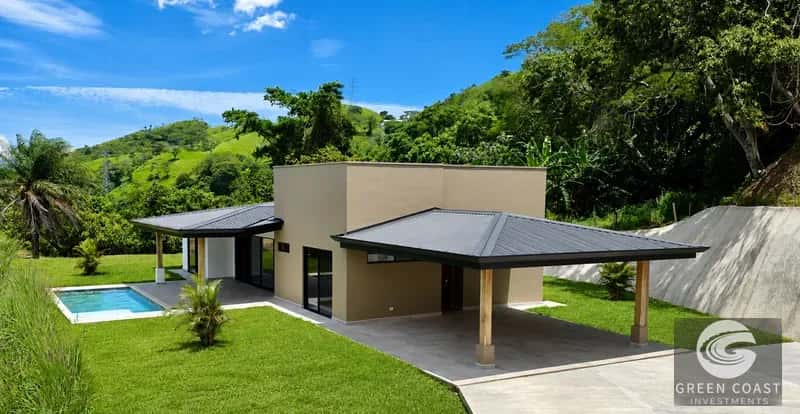
For buyers comparing active inventory, see Atenas Estate Lot with Guest Casita, Pool & Panoramic Central Valley Views.
Costa Rica expat properties in Atenas are highly sought after because they offer a rare combination of an ideal year-round climate, established North American infrastructure, and sweeping mountain topography. In our years on this coast and in the Central Valley, we have watched Atenas transform from a quiet coffee town into a premier destination. It provides panoramic views without sacrificing accessibility to the capital city of San José. For buyers seeking a secure, long-term investment, premium land in this specific corridor represents a hedge against inflation and a gateway to a lifestyle that balances rural tranquility with modern conveniences.
Market Dynamics: Central Valley Inventory and Valuation
The Central Valley real estate market currently reflects a diverse and highly active landscape, catering to both entry-level land buyers and ultra-high-net-worth investors. Across the region, there are 110 active listings, showing a broad price range from USD 40,000 to USD 68,000,000. This wide spectrum is driven by the contrast between raw, unserviced agricultural parcels and massive, master-planned luxury estates.
The average Central Valley property price currently stands at USD 1,210,311. This average underscores the premium placed on ready-to-build land that features existing infrastructure, legal water connections, and paved road access—amenities that can otherwise take years to secure independently in Costa Rica.
| Market Metric | Value (USD) |
| :--- | :--- |
| Active Listings | 110 |
| Minimum Price | $40,000 |
| Maximum Price | $68,000,000 |
| Average Price | $1,210,311 |
The Featured Atenas Estate: High-Value Entry Point
Within this competitive market, the featured Atenas estate lot presents a strategic acquisition at USD 499,000. Well below the regional average of USD 1,210,311, this property bypasses the typical logistical hurdles of raw land ownership by offering immediate usability.
A fully completed, modern secondary guest casita allows owners to reside on-site immediately or generate rental income while planning a primary residence. The private pool is already installed and integrated into the landscape, eliminating the high costs and permitting delays associated with new pool construction in the hillsides. Additionally, the lot features unobstructed vistas of the Central Valley floor and surrounding mountain ridges, a feature that consistently drives long-term property appreciation.
By securing a property that already contains these high-cost infrastructure elements, buyers mitigate the inflation risks associated with importing building materials and navigating local municipal permits from scratch.
---
Why is Atenas Considered the Premier Microclimate for North American Expats in the Central Valley?
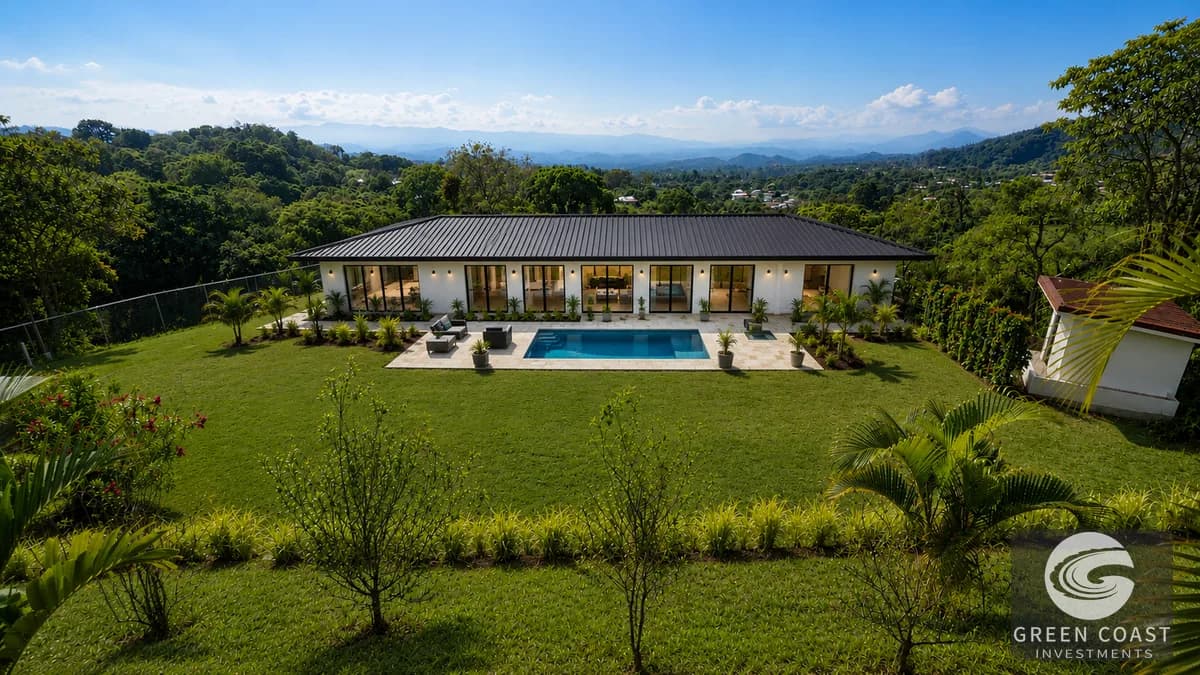
Atenas is considered the premier microclimate for North American expats because of its unique geographical positioning. It delivers consistent temperatures between 65°F and 85°F year-round, exceptionally low humidity for the tropics, and constant mountain breezes that eliminate the need for expensive air conditioning. This weather profile directly drives the local real estate market, where buyers searching for premium costa rica expat properties can currently choose from 110 active listings ranging from $40,000 to $68,000,000, with an average market price of $1,210,311.
Deconstructing the "Best Climate in the World"
The long-standing claim that Atenas possesses the "best climate in the world" originates from its specific elevation range of 700 to 1,000 meters (2,300 to 3,280 feet) above sea level. At this altitude, the atmospheric pressure and air density create a highly stable environment.
Unlike lower-altitude regions, Atenas avoids the oppressive, heavy humidity of the coasts. The scientific reality behind this comfort is the diurnal temperature variation; the daytime warmth is consistently moderated by cool evening air flowing down from the surrounding mountain ranges, allowing the body to cool down naturally without mechanical assistance.
Central Valley and Coastal Climate Comparison
To understand why expats target Atenas over other regions, consider how its daily temperature and humidity profiles compare to neighboring hubs:
Atenas (Elevation: 700m - 1,000m):* Temperatures average 65°F (night) to 85°F (mid-afternoon). Relative humidity remains comfortable, rarely reaching the saturating levels found at sea level.
San José & Escazú (Elevation: 1,100m - 1,200m):* Located higher up the valley, these areas are noticeably cooler and experience significantly more rainfall, cloud cover, and fog during the green season. Daytime highs rarely push past 78°F, which some expats find too chilly.
Jacó & Coastal Zones (Elevation: Sea Level):* Coastal towns like Jacó experience average daily highs above 90°F, paired with relative humidity levels that frequently exceed 85%, creating a heavy heat index.
The Financial Advantage of Mountain Breezes
For expats, the microclimate of Atenas is not just a lifestyle preference; it is a major factor in reducing long-term holding costs. In coastal areas like Jacó, running high-capacity air conditioning units 24/7 is a necessity to prevent mold and maintain comfort, resulting in monthly electricity bills that can easily exceed $300 to $500.
In Atenas, the natural topography creates continuous wind currents through the mountain passes. By designing homes with high ceilings, cross-ventilation, and wide overhangs, residents can rely entirely on these natural breezes. This passive cooling strategy reduces electricity consumption to a fraction of coastal averages, saving homeowners thousands of dollars annually in utility bills.
---
Can I Live in the Guest Casita While Building My Main Luxury Villa on This Estate Lot?
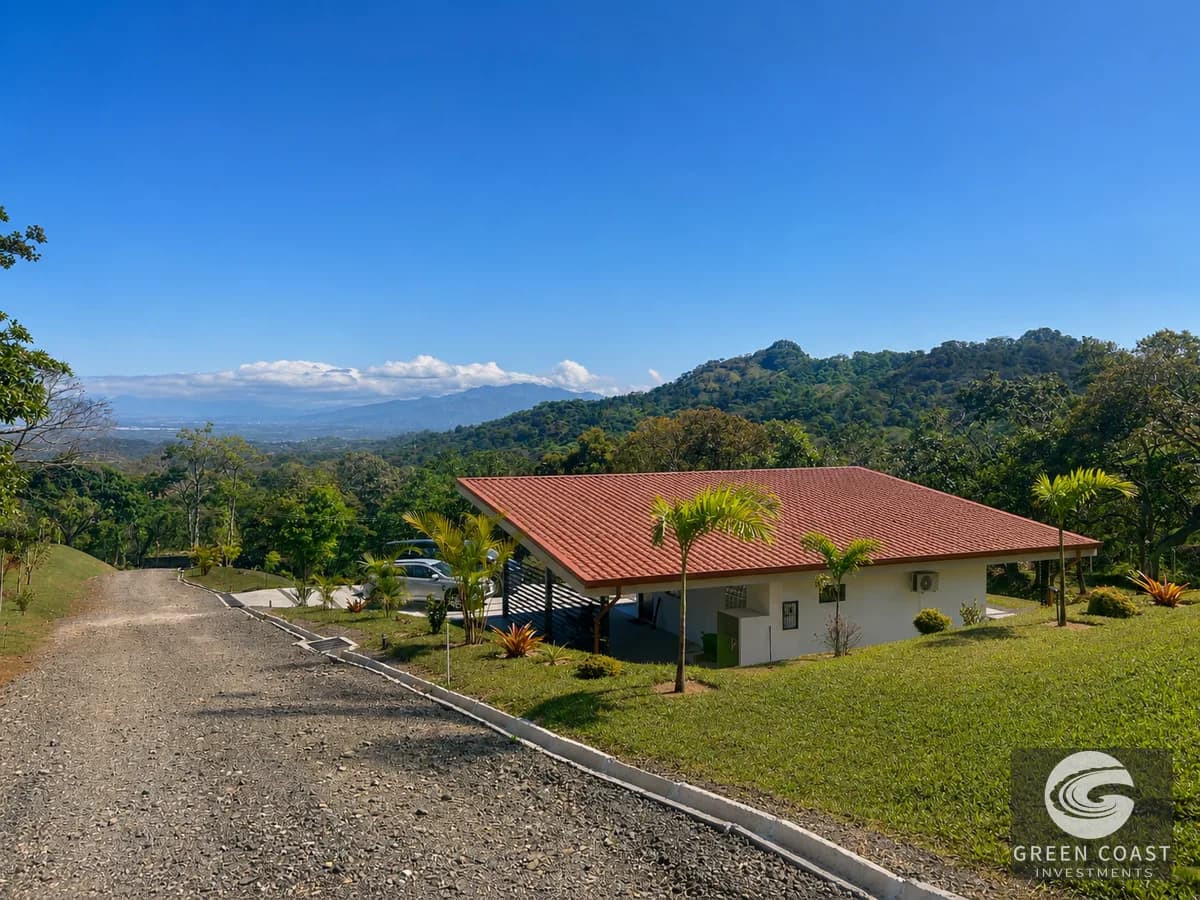
Yes, you can live in the completed guest casita while constructing your primary luxury villa on this estate lot. This strategy is favored among buyers targeting premium costa rica expat properties, as it eliminates the logistical headache of coordinating a remote build. By residing on-site, you maintain direct, daily oversight of your construction project, secure your building materials from theft, and eliminate the need for a secondary rental lease.
Financial and Logistical Advantages of an On-Site Casita
Purchasing an estate lot that already features a functional guest house and pool provides immediate utility and substantial financial relief. Renting a comparable luxury home in Atenas during a typical 12-to-18-month build cycle costs between $2,500 and $4,500 per month. By living in your own casita, you realize an estimated cost savings of $30,000 to $81,000 in rental fees alone, not including the moving expenses and utility deposits associated with a temporary residence. Furthermore, having the pool and landscaping already established means you have an immediate retreat from the daily activity of the construction zone.
Timeline for Securing Building Permits in Alajuela Province
Navigating the municipal approvals in the canton of Atenas, which falls under the Alajuela province jurisdiction, requires a structured approach. Expect the following timeline when preparing to build your main villa:
```
[Months 1-2: Design & CFIA] ---> [Month 3: ASADA & SETENA] ---> [Months 4-5: Municipal Submission] ---> [Month 6: Permit Issued]
```
Months 1–2 (Design and Engineering):* Your architect drafts the blueprints and submits the plans to the Colegio Federado de Ingenieros y de Arquitectos (CFIA) for digital approval and fee calculation.
Month 3 (Environmental and Water Approvals):* Secure your water availability letter from the local ASADA and obtain environmental clearance from SETENA, if applicable.
Months 4–5 (Municipal Submission):* Submit the CFIA-approved plans, land registry plot map (plano catastrado), and tax clearance certificates to the Municipality of Atenas.
Month 6 (Permit Issuance):* Pay the municipal construction tax (typically 1% of the estimated project value) to receive your active building permit and begin excavation.
Contractor Oversight and Managing On-Site Construction
Living steps away from your active job site allows you to implement rigorous contractor oversight. You can conduct daily walkthroughs with your master builder (maestro de obra) to verify that structural reinforcements and finishes match your architectural specifications. This proximity also solves the common challenge of material security; expensive fixtures, copper wiring, and imported tiles can be safely stored in your locked garage or casita utility room rather than an exposed temporary shed.
To manage the inevitable dust and noise, establish clear boundaries with your contractor. Define working hours—typically Monday through Friday from 7:00 AM to 5:00 PM, and Saturdays until noon—and require the installation of temporary dust screens between the casita and the main building pad.
With current market data for Alajuela province showing 110 active listings ranging from USD 40,000 to USD 68,000,000, with an average price of USD 1,210,311, securing a lot that already features completed infrastructure is an efficient way to control costs and protect your investment.
---
What Are the Legal Requirements for Water Concessions and ASADA Hookups in Atenas?
Securing a legally binding water connection is the single most critical step in purchasing Costa Rica expat properties, as Costa Rican law strictly prohibits municipalities from issuing building permits without certified proof of water availability. In Atenas, this proof must come in the form of an official water letter (carta de agua) issued by either the national water utility (AyA), a local community water board (ASADA), or through a registered concession from the Ministry of Environment and Energy (MINAE) for a private well. Without this verified documentation, an estate lot is legally unbuildable.
Understanding ASADAs vs. MINAE Concessions
When evaluating the 110 active listings in the region—which span a price range of USD 40,000 to USD 68,000,000 with an average price of USD 1,210,311—buyers must identify how the property accesses water.
ASADA Connections: Most expat properties in Atenas rely on ASADAs. These local boards manage water distribution for specific neighborhoods. If the lot is serviced by an ASADA, you must secure a carta de agua* confirming they have the capacity to connect your future main villa and guest casita to the grid.
MINAE Concessions:* If the estate relies on a private well or natural spring, you must obtain a formal water concession from MINAE. Unlike a simple utility hookup, a MINAE concession is a bureaucratic legal process.
The Critical Timeline and Validity of the 'Carta de Agua'
A common pitfall for North American buyers is relying on outdated seller representations. A carta de agua is typically valid for only 6 to 12 months from the date of issuance. If you are purchasing an estate lot with the intention of building, your real estate attorney must verify that the letter is current and explicitly states that water capacity is allocated for your specific lot number.
If the property relies on a pending MINAE well concession, buyers should prepare for significant delays. The typical processing time for a new MINAE water concession ranges from 12 to 24 months. Purchasing a lot under the assumption that a pending concession will be approved quickly is a high-risk gamble that can stall your construction plans indefinitely.
Pitfalls of Agricultural and Estate Lots
Many large estate lots in Atenas are segregated from larger agricultural parcels. Developers often market these tracts before securing individual water connections. Buyers must verify that the local ASADA has the infrastructure to support the physical connection to the property line. If the main water line ends hundreds of meters away, the buyer may face infrastructure costs to run the pipes to their building site, regardless of what the sales listing promises. Always make the verification of a legally binding, active water hookup a non-negotiable contingency in your purchase agreement.
---
What Should US and Canadian Buyers Know About Soil Testing and Building on Central Valley Ridges?
Building a custom villa on a ridge-view lot in Atenas requires a specialized engineering approach due to the region's volcanic, clay-rich soils. To secure the panoramic views that make Costa Rica expat properties highly coveted, North American buyers must commission a professional soil study, known locally as an estudio de suelos, before finalizing architectural plans or pouring concrete. This study determines the load-bearing capacity of the earth and dictates whether your villa requires deep concrete pilings (pilotes) anchored into bedrock or a standard slab-on-grade foundation.
Soil Studies and Foundation Engineering
A professional estudio de suelos in Costa Rica typically costs between $1,000 and $2,500, depending on the slope of the terrain and the number of test bores required. In the Central Valley, clay soils expand during the green season and contract during the dry season. Skipping this step can lead to structural settling, retaining wall failures, or severe foundation cracking.
Local civil engineers use the soil report to design a foundation that mitigates seismic risks and handles water saturation. On sloped ridge lots, this translates to engineered footings, deep-drilled pilings, and grade beams designed to tie the structure directly into the stable subterranean strata.
Terracing, Drainage, and Site Preparation Costs
When building on a slope to capture unobstructed valley views, site preparation is a major budget item. Buyers should expect to allocate 15% to 25% of their total construction budget to site preparation, terracing, engineered drainage systems, and structural retaining walls (muros de contención).
Retaining Walls:* These structures must be designed by a licensed engineer and approved by the Colegio Federado de Ingenieros y de Arquitectos (CFIA). Depending on the height and materials used (such as reinforced concrete or gabion baskets), retaining walls can cost $150 to $350 per square meter of wall face.
Water Management: Tropical downpours require sophisticated drainage systems. You must budget for concrete interceptor ditches (cunetas*) to divert rainwater away from your building pad and prevent slope erosion.
With active listings in the region numbering 110 properties—ranging in price from $40,000 to $68,000,000, with an average price of $1,210,311—understanding these site preparation costs early in the due diligence phase ensures you allocate your capital correctly between land acquisition and structural engineering.
---
Should You Choose a Gated Community or Standalone Estate Privacy in Atenas?
Choosing between a gated community (residencial) and a standalone ridge-top estate in Atenas depends on how you balance security with personal privacy. For buyers browsing the 110 active listings in the region—which span a price range of USD 40,000 to USD 68,000,000 with an average price of USD 1,210,311—this decision dictates your daily lifestyle, infrastructure reliability, and long-term maintenance responsibilities.
Gated Communities: Managed Infrastructure and Social Networks
Atenas features several expat gated developments, such as Roca Verde, Vista Atenas, and Hacienda Atenas. These communities appeal to buyers who prioritize immediate social integration and shared maintenance burdens.
Security & Infrastructure:* Gated communities offer controlled gate access, roving guards, and community-maintained internal roads. This setup is advantageous for part-time residents who lock up and leave their properties for months at a time.
HOA Fees and Structures:* Average monthly HOA fees for luxury gated communities in Atenas typically range from USD 100 to USD 250. These fees fund guard salaries, main gate maintenance, street lighting, and common area landscaping.
Social Dynamics: Living in a residencial* places you in close proximity to other North American retirees and families, making it easy to build a local support network.
Standalone Ridge-Top Estates: Ultimate Privacy and Autonomy
In contrast, a standalone estate lot offers unobstructed panoramic views of the Central Valley, larger acreage, and complete freedom from HOA rules, architectural restrictions, and monthly dues. However, choosing a standalone property means you assume full responsibility for your own security infrastructure, road maintenance, and utility connections.
Standalone Property Security Checklist
If you opt for the privacy of an independent ridge-top estate, you must build a self-sustaining security perimeter. Use this checklist to evaluate a potential standalone property:
Perimeter Fencing: Is the property fully enclosed with high-quality chain-link fencing, razor wire, or dense natural barriers like limoncillo* hedges?
Automated Entry:* Is there a heavy-duty, automated wrought-iron gate at the main entrance with a camera intercom system connected to your smartphone?
Lighting and CCTV:* Does the property have motion-activated LED floodlights and a multi-camera CCTV system with battery backups?
Local Monitoring Integration:* Can the local security company (such as ADT or private regional firms in Alajuela) receive alarm signals from the property, and what is their average response time to your specific ridge?
Caretaker Quarters: Does the estate design include a separate casita or apartment for a live-in caretaker (cuidador*), which is an effective deterrent against intrusion in Costa Rica?
---
How Do Property Taxes and Luxury Home Taxes (Impuesto Solidario) Work for Central Valley Estates?
Owning one of the premier Costa Rica expat properties in Atenas comes with a favorable tax structure compared to the United States or Canada. The standard municipal property tax (impuesto territorial) in Costa Rica is a flat 0.25% of the property’s registered value, paid annually to the local municipality of Atenas. For high-end estates featuring luxury construction, owners may also be subject to the annual Solidarity Tax (Impuesto Solidario), commonly known as the luxury home tax, which applies a progressive rate starting at 0.25% up to 0.55% on construction values that exceed a federally mandated threshold.
Calculating the 0.25% Municipal Tax and the Luxury Tax Threshold
The base municipal tax is straightforward. For example, on an Atenas estate lot with a registered value of $400,000, your annual property tax is just $1,000. Homeowners must declare their property value to the Atenas municipality every five years to keep the registry updated.
The Impuesto Solidario is an additional tax designed to fund social housing. It is calculated solely on the value of the main residential structure and immediate recreational amenities (like pools and ranchos), excluding the raw land value. The exemption threshold is adjusted annually by the Ministry of Finance; for 2024, the threshold sits at approximately 148,000,000 Costa Rican Colones (roughly $285,000 USD depending on the exchange rate). If your guest casita or planned main villa construction value falls below this threshold, you are exempt from this tax. If it exceeds it, you pay a sliding scale tax on the entire construction value.
Critical Corporate and Municipal Tax Deadlines
To keep your Atenas estate in good legal standing and protect your asset, North American buyers must track several key annual deadlines:
Municipal Property Tax:* Paid quarterly (March 31, June 30, September 30, and December 31) to the Atenas municipality, though many expats choose to pay the entire year upfront in January to receive local discounts.
Luxury Home Tax (Impuesto Solidario):* Must be filed and paid by January 15 of every fiscal year using the Formulario Oficial de Declaración Única de Impuestos (F-110).
Corporate Tax (Impuesto a las Personas Jurídicas): Because many buyers purchase real estate through a Costa Rican corporation (an S.A. or Limitada*), this annual tax must be paid by January 31. It ranges from $120 to $380 depending on whether the corporation is active or inactive.
Registry Declaration (Registro de Transparencia y Beneficiarios Finales):* Corporate owners must file a mandatory shareholder disclosure form every April.
Understanding these carrying costs is vital when analyzing the local market. In the wider region, active listings sit at 110 properties, with a price range of USD 40,000 to USD 68,000,000, and an average price of USD 1,210,311. Working with a qualified local accountant ensures your Atenas estate remains fully compliant with these tax regulations.
---
The Expat Due Diligence Checklist for Purchasing Land in Atenas
Purchasing land in Atenas requires a structured legal process to ensure your investment is secure and fully compliant with Costa Rican law. To safely acquire one of the premier Costa Rica expat properties, buyers must follow a strict due diligence roadmap managed by a qualified local attorney and a registered escrow agent. This process protects your capital while verifying that the land is legally buildable, free of encumbrances, and ready for development.
Step-by-Step Transaction Roadmap
This step-by-step roadmap outlines the path from your initial offer to the final transfer of deed:
```
[1. Formal Offer & Agreement] ---> [2. Escrow Initiation (10%)] ---> [3. Due Diligence (15-30 Days)] ---> [4. Closing & Deed Transfer]
```
1. Formal Offer and Agreement: Draft a formal Promise to Purchase agreement detailing the price, contingencies, and timeline.
2. Escrow Initiation: Deposit the initial good faith funds (typically 10%) into a regulated escrow account.
3. Due Diligence Period: Your attorney conducts a thorough title search, boundary verification, and soil analysis over a 15-to-30-day window.
4. Closing Execution: Both parties sign the transfer deed (Escritura de Traspaso) before a Notary Public, and funds are disbursed.
Verifying the Plano Catastrado and Title
Your attorney, who also acts as a public notary in Costa Rica, must verify the Plano Catastrado (registered survey map) against the National Registry (Registro Nacional). This step ensures the physical boundaries of the Atenas lot match the government records exactly. The notary will check the title for any active liens, mortgages, court-ordered attachments, or municipal tax debts. They will also verify that the property has designated public road frontage or legally registered easements, which are mandatory for obtaining future municipal building permits.
Securing Funds via SUGEF-Regulated Escrow
US and Canadian buyers cannot wire purchase funds directly to a seller’s personal bank account without significant risk. Instead, transactions utilize escrow accounts regulated by SUGEF (Superintendencia General de Entidades Financieras), the financial regulatory authority of Costa Rica. These specialized escrow agents verify the source of funds to comply with strict national anti-money laundering laws. This structure guarantees that your money is only released to the seller once all contract contingencies are met and the transfer deed is officially registered.
Closing Costs and Market Context
Standard real estate transaction closing costs in Costa Rica typically range from 3% to 4% of the purchase price. This fee is traditionally split equally between the buyer and the seller, covering notary fees, transfer taxes, documentary stamps, and registry fees.
Understanding these costs is essential when analyzing the local market. Currently, there are 110 active listings in the region, with a broad price range of USD 40,000 to USD 68,000,000, and an average market price of USD 1,210,311. Securing a verified parcel with clean title within this competitive inventory requires strict adherence to this due diligence checklist.