
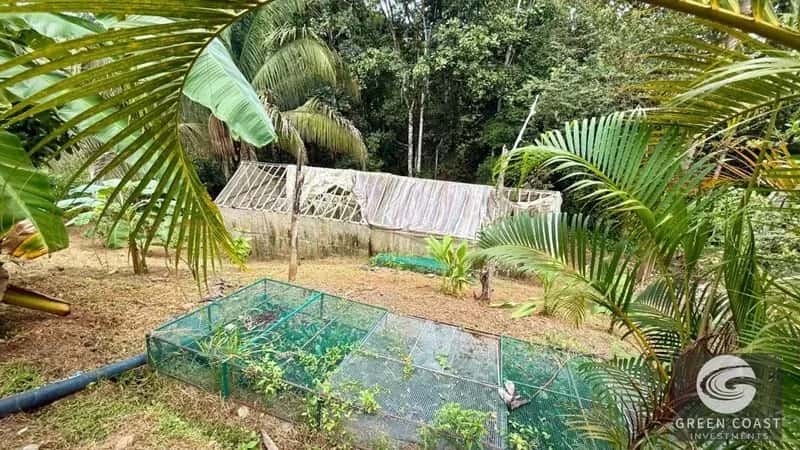
Eco-Homestead with Food Forest & Spring Water in Puriscal — Buyer's Guide for Costa Rica Real Estate
For buyers seeking prime properties Costa Rica offers, an eco-homestead opportunity has emerged in the mountains of Puriscal. This guide details how to secure a self-sufficient, off-grid lifestyle featuring a mature food forest and certified private spring water. Priced at USD 290,000, this featured property represents a high-value alternative to the high-density urban developments of the Central Valley.
In our years on this coast, we have watched modern investors increasingly prioritize resource security. The demand for rural acreage with independent water rights has surged. This guide provides the essential market context, ecological data, and legal steps required to successfully acquire and manage an agricultural estate in Costa Rica's permaculture corridor.
Understanding the local microclimate, soil hydrology, and water concession laws is critical to making a secure, long-term investment.
---
Executive Summary: Puriscal's Agricultural Shift
The definition of prime properties Costa Rica offers is undergoing a structural shift. Buyers are moving away from high-density urban condos in Escazú toward self-sufficient eco-homesteads in Puriscal. In our years on this coast, we have seen this transition driven by buyers prioritizing microclimate advantages, highly fertile volcanic soils, and independent water security over traditional suburban luxury. While conventional luxury developments offer proximity to San José, they do not provide the agricultural freedom and resource autonomy required for long-term sustainability.
```
+-----------------------------------------------------------------------+
| MARKET SHIFT IN COSTA RICA REAL ESTATE |
+-----------------------------------------------------------------------+
| TRADITIONAL LUXURY (Escazú/Santa Ana) --> ECO-HOMESTEADS (Puriscal)|
| - High-density urban condos --> - Low-density acreage |
| - Strict HOA restrictions --> - Agricultural freedom |
| - Municipal water dependence --> - Private spring water |
| - High cost per square meter --> - High-value land utility|
+-----------------------------------------------------------------------+
```
Decentralization and the Shift to Autonomy
For years, international buyers equated premium real estate with gated communities in the western suburbs of the Central Valley. However, modern homesteaders are realizing that these conventional developments restrict agricultural activities, pesticide-free land management, and off-grid infrastructure.
Puriscal has emerged as the premier alternative, offering the ideal elevation for year-round temperate living alongside the geographic isolation necessary for secure, independent food and water systems. If you are ready to transition to a more self-reliant lifestyle, you can view listings currently available in this agricultural corridor.
Central Valley Market Context and Valuation
To understand the value proposition of rural eco-homesteads, one must examine the broader Central Valley real estate landscape. Currently, there are 304 active listings in the Central Valley market. Property values across this region span a massive spectrum, with prices starting at USD 40,000 for raw, undeveloped parcels and reaching up to USD 90,000,000 for massive commercial tracts and luxury estates.
The average Central Valley price stands at USD 1,534,866, a figure heavily inflated by high-end suburban developments. In contrast, the featured Puriscal eco-homestead is priced at USD 290,000. This represents an accessible, high-value entry point into the market, offering complete infrastructure, mature food forests, and private water sources at a fraction of the regional average.
The Modern Buyer Dilemma
Consider the scenario of a North American couple seeking food security and off-grid infrastructure. Initially, they target traditional gated communities near San José, assuming these developments offer the highest standard of living. However, they quickly discover that strict homeowners association (HOA) regulations prohibit livestock, extensive permaculture installations, and independent water catchment systems.
By redirecting their search to Puriscal, they find that a single-family eco-homestead provides the structural freedom to cultivate a diverse food forest, secure private spring water rights, and live entirely off the grid—all while remaining within a two-hour drive of the capital and the central Pacific coast near Jacó. To better understand the regional geography and its strategic benefits, buyers can explore the area and its unique microclimates.
Is Puriscal Considered Part of the Central Valley, and What Makes Its Climate Unique?
Puriscal is geographically positioned on the southwestern edge of Costa Rica's Central Valley, serving as a mountainous bridge that connects the highland metropolitan corridor to the Central Pacific coast near Jacó. While it shares cultural ties with the Central Valley, its specific topography creates a distinct transition zone. This strategic location makes it a highly sought-after area for buyers searching for prime properties Costa Rica offers, particularly those prioritizing agricultural self-sufficiency and comfortable living conditions.
```
[ SAN JOSÉ / CENTRAL VALLEY ]
|
| (approx. 1.5 - 2 Hours)
v
[ PURISCAL ] <-- Elevation: 800m - 1,100m
| Temperate "Eternal Spring"
| (approx. 1 Hour)
v
[ JACÓ / PACIFIC COAST ]
```
Elevation and Temperature Advantages
The region sits at an elevation range of 800 to 1,100 meters (approximately 2,620 to 3,600 feet) above sea level. This altitude provides a distinct climate advantage over both the coastal lowlands and the higher-altitude urban centers. Residents experience cooler, refreshing mountain breezes that are absent in the humid coastal plains of the Pacific, while enjoying far less humidity and congestion than the core cities of San José. Temperatures here remain remarkably stable, hovering between 65°F and 82°F year-round.
The 'Eternal Spring' Microclimate
This elevation range produces an "eternal spring" microclimate, which is highly beneficial for both residential living and permaculture. The consistent temperatures and predictable rainfall patterns eliminate the need for artificial heating or cooling systems, drastically reducing long-term energy costs for eco-homesteaders.
For agricultural production, this microclimate supports year-round cultivation. Unlike drier coastal regions or frost-prone highland peaks, Puriscal allows for the continuous harvesting of a wide variety of fruit trees, tubers, and vegetables without seasonal interruptions.
Puriscal Real Estate Market Context
Because of these favorable environmental conditions, Puriscal has become a focal point for buyers seeking sustainable acreage. The local real estate market reflects a diverse range of opportunities, from raw acreage to developed estates. Currently, there are 304 active listings in the region, with prices ranging from USD 40,000 for small agricultural parcels up to USD 90,000,000 for massive developmental tracts, yielding an average market price of USD 1,534,866. This inventory highlights the growing demand for secure land investments in this climatic sweet spot.
---
Detailed Breakdown: Soil, Water, and Permaculture Viability
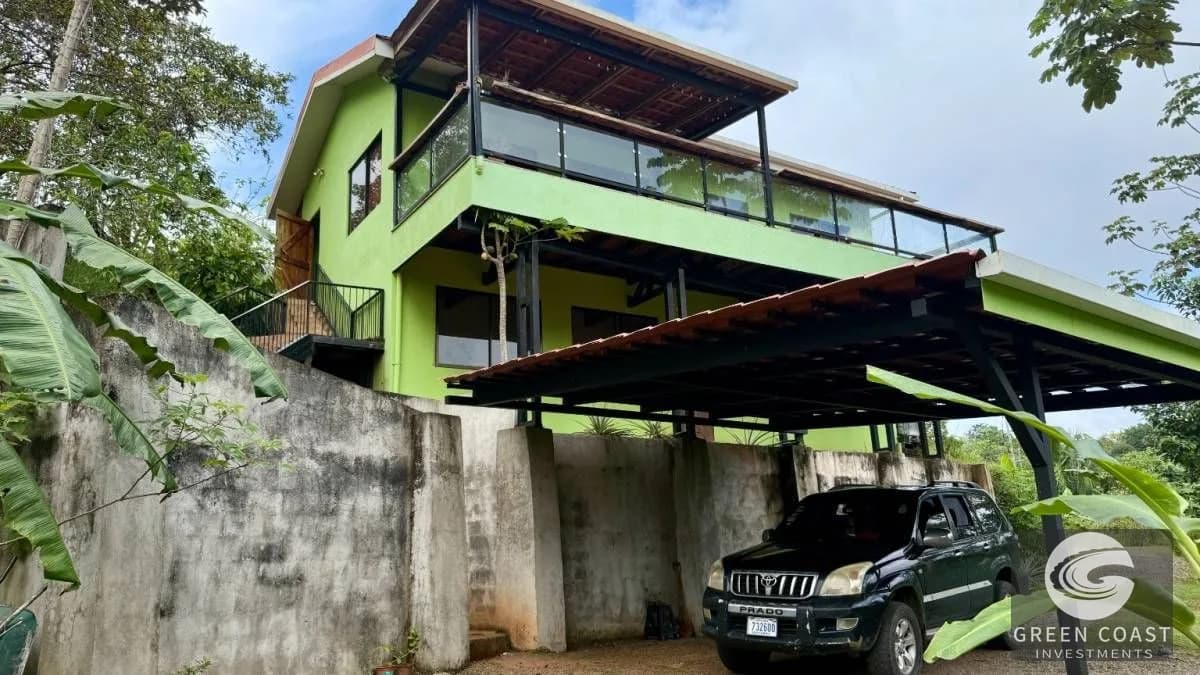
Puriscal stands out among prime properties Costa Rica offers because of its highly fertile, volcanic clay-loam soil and abundant water resources, which provide the ideal foundation for a self-sustaining eco-homestead. While residential suburbs closer to San José prioritize high-density development, Puriscal retains its agricultural heritage. This region features a nutrient-rich soil profile that supports deep-rooting fruit trees, tubers, and intensive organic vegetable beds, making it a premier destination for permaculture buyers.
Volcanic Clay-Loam and Hydrology
The soil in Puriscal is a weathered volcanic clay-loam, characterized by excellent nutrient-holding capacity and a structure that, when managed correctly, allows for deep root penetration. According to the Instituto Meteorológico Nacional de Costa Rica, Puriscal receives an average annual rainfall of approximately 2,500 to 3,000 mm. This high volume of precipitation requires proactive land management.
To prevent soil erosion and nutrient runoff during the heavy rains of the green season, permaculture designers must utilize the natural topography. Implementing keyline design, swales, and terracing slows down water runoff, spreads it across the landscape, and sinks it into the water table. This active water harvesting keeps the soil hydrated throughout the dry season, ensuring your food forest thrives year-round.
```
Rainfall: 2,500 - 3,000 mm / year
│
▼
┌─────────────────────────────┐
│ Keyline Design & Swales │
└──────────────┬──────────────┘
│ (Slows & spreads water)
▼
┌─────────────────────────────┐
│ Volcanic Clay-Loam Hydration│
└──────────────┬──────────────┘
│ (Sinks water to water table)
▼
┌─────────────────────────────┐
│ Year-Round Food Production │
└─────────────────────────────┘
```
Agricultural Zoning: Puriscal vs. Escazú and Santa Ana
For buyers seeking productive land, traditional Central Valley suburbs like Santa Ana and Escazú cannot compete with Puriscal. Escazú and Santa Ana are dominated by high-density residential zoning, soaring land prices, and depleted soils paved over by urban expansion.
In contrast, Puriscal offers genuine agricultural zoning, larger acreage, and undisturbed soil biology. The local market reflects this diversity in land use. Currently, there are 304 active listings in the region, with a price range of USD 40,000 to USD 90,000,000, and an average price of USD 1,534,866. This market inventory includes everything from small raw-land parcels to massive, multi-million-dollar estates, allowing homesteaders to secure substantial acreage with clean natural springs at a fraction of the cost per square meter found in suburban San José.
How Do I Legally Secure Private Spring Water Rights on a Costa Rican Property?
To legally secure private spring water rights on a Costa Rican property, you must obtain a formal water concession (concesión de agua) from the Ministry of Environment and Energy (MINAE). In Costa Rica, all water resources are owned by the state. Consequently, having a physical spring on your land does not grant you the legal right to use it; you must hold an active, registered concession tied to your property's title.
The Legal Distinction: Ownership vs. Concession
Owning a piece of land with a bubbling natural spring does not equate to owning the water itself. Under Costa Rican law, water is a public good. If you use water from an unregistered spring on your property, you are technically doing so illegally, which risks future fines or shutoffs. A concesión de agua is a legally binding, long-term right granted by MINAE's Water Department (Dirección de Agua) that permits a specific volume of water extraction for domestic, agricultural, or ecological use.
The MINAE Application Reality
Applying for a new water concession is a slow administrative process. The MINAE concession processing timeline typically spans 12 to 24 months for new applications. This lengthy timeframe makes pre-existing, fully registered concessions incredibly valuable to buyers. When evaluating prime properties Costa Rica offers—where active listings total 304, ranging in price from USD 40,000 to USD 90,000,000 with an average price of USD 1,534,866—properties with active concessions command a premium because they eliminate years of bureaucratic waiting.
Due Diligence Steps for US and Canadian Buyers
To protect your investment during the purchasing process, your real estate attorney must verify the legal status of the water source before you close on the property.
Request the Concession Number: Ask the seller for the specific MINAE file number (número de expediente*).
Verify Active Status: Have your attorney check the Dirección de Agua* database to confirm the concession is active, in good standing, and registered for the correct volume of water.
Confirm Property Alignment:* Ensure the concession is registered to the exact finca/folio real number of the property you are purchasing.
Check for Environmental Protections:* Verify that the spring does not fall within a restricted forestry reserve or a protected area that would limit your homesteading plans.
Structure the Escrow:* If the concession is still pending, structure your purchase agreement with a portion of the funds held in escrow until MINAE grants final approval.
---
Case Example: The $290,000 Puriscal Eco-Homestead Spotlight
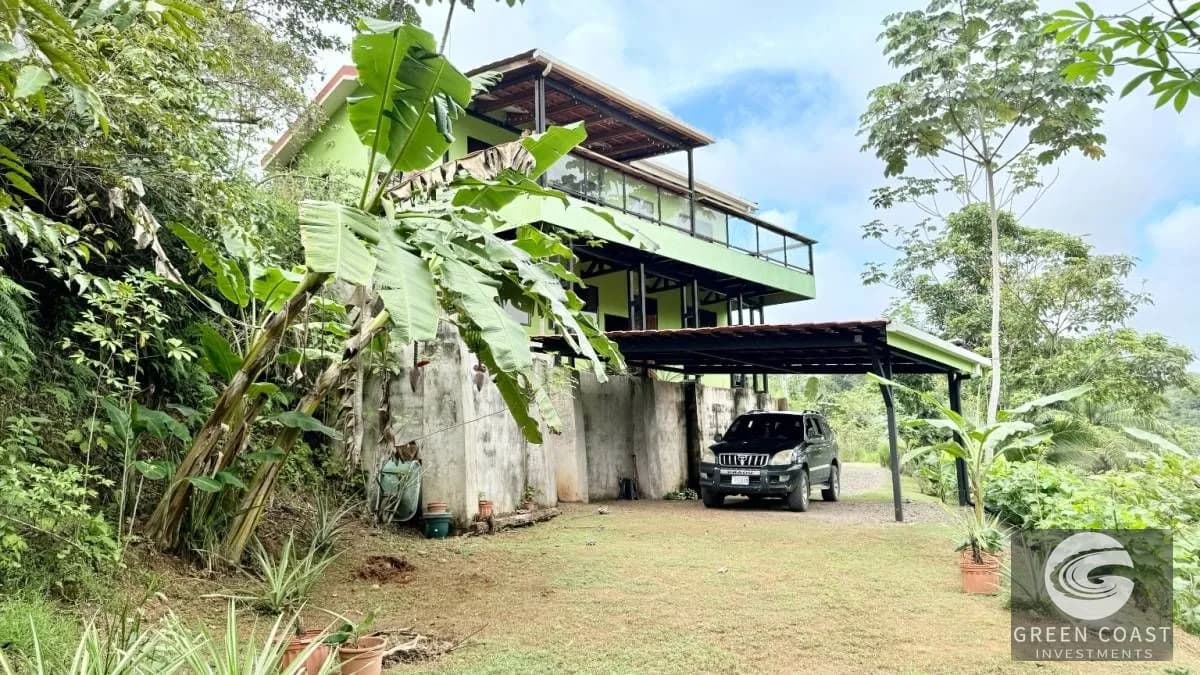
A USD 290,000 eco-homestead in Puriscal represents one of the most practical entry points for buyers seeking self-sufficiency among prime properties Costa Rica offers. This specific property profile features a move-in-ready, sustainable home integrated with a mature, active food forest and a certified onsite natural spring. By choosing this location over conventional luxury corridors, buyers secure complete resource independence at a fraction of the cost of standard Central Valley estates. For those ready to make this transition, the Eco-Homestead with Food Forest & Spring Water in Puriscal stands out as a premier example of ecological value.
Financial Comparison: Maximizing Capital and Land Utility
Acquiring this Puriscal homestead offers a stark financial advantage when compared to broader regional averages. According to current market data, there are 304 active listings in the region, spanning a price range of USD 40,000 to USD 90,000,000, with an average market price of USD 1,534,866.
By selecting the USD 290,000 Puriscal property, buyers realize an average regional price difference of USD 1,244,866 in savings compared to the Central Valley average. This 80% cost reduction allows investors to preserve liquid capital, which can be redirected into permaculture development, solar arrays, or off-grid infrastructure, rather than overpaying for speculative residential square footage.
```
+-------------------------------------------------------------+
| Financial Comparison: Puriscal vs. Central Valley Average |
+-------------------------------------------------------------+
| Central Valley Average Listing: USD 1,534,866 |
| Puriscal Eco-Homestead Price: USD 290,000 |
|-------------------------------------------------------------|
| Total Capital Savings: USD 1,244,866 |
+-------------------------------------------------------------+
```
Resource Independence as the Ultimate Asset Hedge
The true value of this homestead lies in its existing ecological infrastructure. Unlike bare land, which requires years of soil preparation and canopy growth, a property with a mature food forest provides immediate yields of citrus, avocado, mango, and medicinal plants.
In our years on this coast, we have seen that buyers aren't just purchasing real estate; they are securing resource independence. A registered spring and established food forest in Puriscal represent a reliable hedge against global supply chain instability. Securing a property with these active ecological assets mitigates the inflation of food and utility costs. The presence of a legally registered, year-round gravity-fed spring ensures a reliable water supply independent of municipal networks, cementing the property's status as a highly functional, resilient asset.
What Are the Steps to Establishing a Self-Sustaining Food Forest in Puriscal?
Establishing a self-sustaining food forest in Puriscal requires a structured, multi-phase permaculture design that transitions degraded pastureland into a highly productive, multi-layered ecosystem. The average time to food forest self-sufficiency is 3 to 5 years for established perennial yields, at which point the system requires minimal external inputs.
In the local real estate market, properties with the water resources and soil quality to support these systems are highly sought after. Currently, active listings in the region total 304 properties, with a price range of USD 40,000 to USD 90,000,000, and an average price of USD 1,534,866, reflecting the premium placed on prime properties Costa Rica offers for agricultural and ecological purposes.
```
┌─────────────────────────────────────────────────────────────────────────┐
│ FOOD FOREST DEVELOPMENT TIMELINE │
├─────────────────────────────────────────────────────────────────────────┤
│ PHASE 1: Soil & Slope (Months 0-6) │
│ - Plant Vetiver Grass on contours for slope stabilization │
│ - Sow Mucuna / Velvet Bean to inject nitrogen and suppress weeds │
│ │
│ PHASE 2: Canopy Layer (Months 6-18) │
│ - Plant Avocado, Mango, Citrus, and Rambutan │
│ - Interspace with Gliricidia Sepium (Madero Negro) for chop-and-drop │
│ │
│ PHASE 3: Understory (Months 18-36+) │
│ - Integrate Ginger and Turmeric in dappled shade │
│ - Plant Katuk and Chaya for continuous perennial greens │
└─────────────────────────────────────────────────────────────────────────┘
```
Phase 1: Soil Preparation and Slope Stabilization
The initial phase focuses on building soil biology and securing the terrain. Puriscal’s rolling topography requires immediate erosion control, particularly during the green season.
Nitrogen-Fixing Cover Crops:* Plant herbaceous green beans and mucuna (velvet bean) to rapidly inject nitrogen into the soil and suppress invasive pasture grasses.
Slope Stabilization:* Install contour lines of vetiver grass. Vetiver’s massive, vertical root system holds the hillside soil in place, prevents landslides, and creates natural terraces over time.
Phase 2: Canopy Layer Establishment
Once the soil biology is activated and the ground is stabilized, you can introduce the upper and middle canopy layers. This layer provides shade, wind protection, and the primary fruit harvest.
Native and Adapted Fruit Trees: Plant mamon chino* (rambutan), mango, avocado, and various citrus varieties.
Support Trees: Interspace these fruit producers with fast-growing support trees like madero negro (Gliricidia sepium*), which are regularly chopped back to provide mulch and organic matter for the fruit trees.
Phase 3: Understory Integration
With the canopy starting to filter the intense tropical sun, you can introduce shade-tolerant species that occupy the lower vertical strata of the forest.
Rhizomes and Tubers:* Plant turmeric and ginger, which thrive in the dappled light beneath the fruit trees and offer high-value yields.
Perennial Greens:* Integrate katuk and Chaya (spinach tree) to provide a continuous source of leafy greens without the need for replanting.
---
Checklist: Due Diligence for Purchasing Agricultural and Eco-Properties
Acquiring agricultural land for homesteading in Costa Rica requires a specialized due diligence process that goes far beyond standard residential property checks. Buyers evaluating prime properties Costa Rica offers for permaculture, food forests, or off-grid living must systematically verify boundary alignments, secure legal water access, analyze soil health, and confirm year-round physical accessibility before executing a purchase contract.
Data from the national registry highlights the diversity of the current market, showing 304 active listings with a price range of USD 40,000 to USD 90,000,000, and an average price of USD 1,534,866. To successfully navigate this inventory and secure a viable homestead, use the following checklist:
1. Water Rights and Concession Verification
[ ] Verify the existence of a registered concesión de agua with MINAE's Dirección de Agua*.
[ ] Confirm the concession file number (número de expediente) is active and matches the property's folio real* (title registry number).
[ ] If the water source is a municipal connection (Asada), obtain a formal letter of water availability (carta de disponibilidad de agua*).
* [ ] Test the water quality at an accredited laboratory to ensure it is free of agricultural runoff and heavy metals.
2. Topography and Boundary Alignment
[ ] Hire an independent surveyor to verify the property lines against the official registered survey map (plano catastrado*).
* [ ] Identify any natural borders, such as rivers or creeks, and ensure the required environmental setbacks (typically 15 meters in rural areas and 50 meters near springs) are respected.
* [ ] Assess the slope angles to determine buildable areas and potential erosion risks during the rainy season.
3. Soil and Agricultural Viability
* [ ] Conduct a soil core test to analyze pH levels, organic matter percentage, and nutrient composition (nitrogen, phosphorus, potassium).
* [ ] Check for historical pesticide use, especially if the land was previously used for intensive cattle ranching or mono-crop farming.
* [ ] Confirm that the soil drainage capacity is sufficient to prevent root rot in fruit trees during periods of heavy rainfall.
4. Legal Title and Zoning Restrictions
[ ] Perform a complete title search in the National Registry (Registro Nacional*) to confirm the property is free of liens, mortgages, and annotations.
[ ] Verify the zoning regulations with the local municipality (municipalidad*) to ensure there are no restrictions on agricultural activities, livestock, or off-grid building structures.
* [ ] Confirm the property does not overlap with protected forestry reserves or national parks.
5. Infrastructure and Access
* [ ] Assess the road access during both the dry and green seasons; confirm if a 4x4 vehicle is required for year-round entry.
[ ] Verify easement rights (servidumbres*) if the property is accessed via a private road crossing neighboring land.
* [ ] Evaluate the feasibility of solar power installation by measuring daily solar exposure and shading from surrounding ridges.