
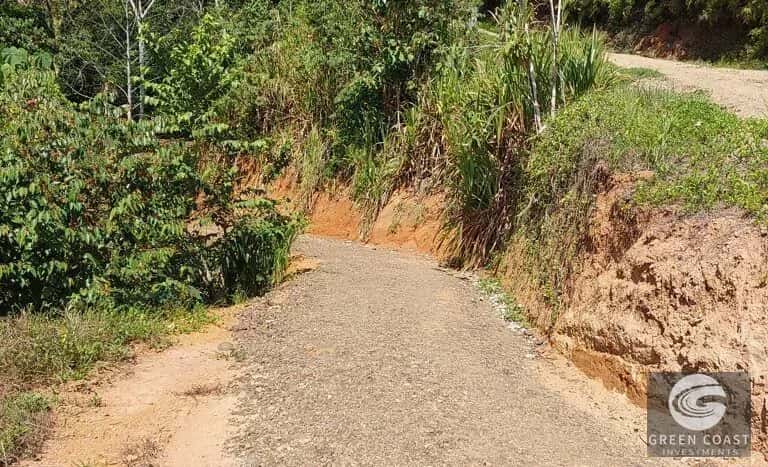
Why Invest in Large-Scale Land Development in Costa Rica?
For buyers comparing active inventory, see Expansive 125-Acre Costa Rican Estate with Creek & Springs - Ready for Developme.
Investing in large-scale land development in Costa Rica presents significant opportunities for US and Canadian buyers looking for investment profiles beyond typical residential properties. The country's stable democracy, strong commitment to sustainability, and rapidly expanding tourism sector make it an attractive destination for ventures like eco-lodges, agricultural enterprises, and master-planned communities. This environment encourages substantial growth for undeveloped land, particularly parcels with natural amenities such as creeks and springs. This is a stark contrast to the often-inflated property values found in established markets like Huntington Beach.
Costa Rica's appeal comes from several core advantages. Its political stability provides a secure environment for long-term investments, reducing risks often associated with emerging markets. The national dedication to environmental preservation aligns with the global demand for sustainable development, making projects focused on ecological tourism or responsible agriculture highly desirable. Consistent growth in tourism, driven by the country's natural beauty and diverse ecosystems, ensures a steady demand for hospitality and recreational developments. This creates a fertile ground for developers to conceptualize and execute projects that cater to an international clientele seeking authentic, nature-centric experiences.
Market Dynamics and Growth Potential
The Costa Rican real estate market for large undeveloped land offers a compelling investment case. Unlike mature markets where appreciation can be incremental, Costa Rica provides a diverse market with substantial growth potential. Currently, 8 active listings for large land parcels range from USD 345,000 to USD 90,000,000, with an average price of USD 11,965,500. This wide range indicates a market with varied opportunities, from accessible entry points to significant, high-value developments. The presence of natural features like creeks and springs often enhances a property's appeal and potential for value appreciation. These elements are crucial for sustainable development and attract a premium from environmentally conscious buyers and developers alike. This dynamic contrasts sharply with areas where land scarcity and high demand have already driven up prices, such as Huntington Beach property values, where significant capital outlay often yields less proportional growth for undeveloped parcels. Investing in Costa Rica allows for strategic acquisition of assets with inherent natural value, positioning developers to capitalize on both current market trends and future appreciation driven by sustainable growth and increasing international interest.
Spotlight: The 125-Acre Costa Rican Estate with Creek & Springs – A Developer's Opportunity

The "Expansive 125-Acre Costa Rican Estate with Creek & Springs - Ready for Development!" is a rare and compelling opportunity for developers seeking significant land in a growing market. This featured property, currently listed at USD 369,000, offers 125 acres of undeveloped land, complete with a natural creek and multiple natural springs. Its "ready for development" status means initial due diligence and zoning considerations are favorable, streamlining the path for future projects.
Strategic Advantages of Large-Scale Undeveloped Land
Investing in a property of this magnitude offers several strategic advantages for developers. The 125-acre size allows for substantial and diverse development options, from eco-tourism resorts and agricultural ventures to private residential communities or a combination. The natural creek and multiple springs significantly enhance the property's value, providing a sustainable water source and contributing to a lush, attractive environment. This natural infrastructure can support self-sufficiency initiatives, reducing reliance on external utilities and enhancing the long-term viability of any development. Large undeveloped parcels in Costa Rica, particularly those with natural water features, tend to appreciate steadily, offering a strong hedge against inflation and a solid foundation for long-term value creation.
Market Positioning and Opportunity
Priced at USD 369,000, this 125-acre estate is an attractive offering within the broader Costa Rican land market. For context, active listings for similar "LOT" type properties nationwide currently range from USD 345,000 to USD 90,000,000, with an average price of USD 11,965,500 across 8 listings. This specific property’s price point positions it as an accessible entry into large-scale land ownership, especially considering its natural assets and development readiness. It represents a significant opportunity for investors looking to capitalize on Costa Rica's growing appeal without the higher initial capital outlay often associated with developed properties or smaller, more expensive parcels in established tourist hubs. The potential for substantial returns through thoughtful development and subdivision makes this estate a compelling choice for those with a vision for large-scale projects.
Key Permits for Developing a 125-Acre Estate in Costa Rica

Developing a 125-acre estate in Costa Rica requires a strategic approach to permitting. This starts with fundamental land use and construction approvals, and extends to specialized concessions for large-scale projects. Key permits include the Uso de Suelo (land use permit) from the local municipality, the Permiso de Construcción (construction permit) obtained after architectural and engineering plans are approved, and the Viabilidad Ambiental (environmental viability) assessment from SETENA (Secretaría Técnica Nacional Ambiental). For a property of this size, additional permits for subdivision, water rights, and specific project types are critical.
General Development Permits
The initial phase involves securing the Uso de Suelo, which dictates what type of development is permissible on your specific parcel. This permit is issued by the municipal planning department and is foundational for all subsequent approvals. Following this, detailed architectural and engineering plans must be submitted to the local municipality for a Permiso de Construcción. Concurrently, an environmental impact assessment leading to a Viabilidad Ambiental from SETENA is mandatory for most significant developments, especially those involving natural resources like creeks and springs. This assessment ensures the project adheres to Costa Rica's stringent environmental protection laws.
Permits for Large Acreage and Specialized Projects
For a 125-acre estate, subdivision is a common strategy, necessitating a Fraccionamiento (subdivision permit). This allows for the legal division of the large parcel into smaller, developable lots. Given the presence of a creek and springs, a Concesión de Agua (water concession permit) from the Dirección de Aguas of the Ministry of Environment and Energy (MINAE) is essential to legally utilize these natural water sources for development purposes. Project-specific permits will also be required; for instance, if you plan a hotel, specific tourism permits from ICT (Instituto Costarricense de Turismo) will be needed. Agricultural projects would require permits from MAG (Ministerio de Agricultura y Ganadería). The average price for active listings of large land parcels in Costa Rica is USD 11,965,500, with a range of USD 345,000–90,000,000 across 8 active listings, underscoring the significant investment and the need for meticulous planning.
Expert Guidance and Project Timeline
The complexity and timeline for securing these permits for a large-scale project cannot be overstated. Engaging local experts from the outset is paramount. This includes experienced Costa Rican attorneys specializing in real estate and environmental law, civil engineers familiar with local building codes, and environmental consultants who can guide the SETENA process efficiently. Their expertise is invaluable in avoiding costly delays and ensuring compliance. Large-scale projects typically involve a multi-year permitting process, requiring patience and sustained effort.
Securing Water Rights for Natural Springs and Creeks
Foreign buyers can secure water rights for natural springs and creeks on their Costa Rican property by applying for a water concession (Concesión de Agua) from the Dirección de Aguas (DA) for private use, or AyA (Instituto Costarricense de Acueductos y Alcantarillados) if connecting to a municipal system. This process requires demonstrating a legitimate need for the water and often involves detailed hydrological studies and environmental impact assessments to ensure sustainable use and compliance with Costa Rican water law.
Understanding Costa Rican Water Law
Costa Rican water law dictates that all water, regardless of its location, is considered part of the public domain. This means that even if a spring or creek originates on or flows through your private property, the water itself is not privately owned. Instead, property owners are granted the right to use the water through a concession, provided it doesn't negatively impact other users or the environment. This distinction is crucial for any developer considering large-scale projects, as it underscores the need for official approval to utilize these natural resources.
The Concession Process
Obtaining a Concesión de Agua involves a multi-step application to the Dirección de Aguas (DA), a division of the Ministry of Environment and Energy (MINAE). The application typically requires detailed plans for water usage, proof of property ownership, and technical studies. For properties with natural springs and creeks, specific requirements include comprehensive hydrological studies to assess water availability, flow rates, and potential environmental impacts. An environmental impact assessment (EIA) may also be mandatory, particularly for larger development projects, to ensure adherence to Costa Rica's stringent environmental protection regulations. The process can be complex and time-consuming, often requiring expert legal and engineering consultation.
Value of Pre-existing Water Rights
The existence of pre-existing water rights or concessions significantly enhances a property's development potential and market value. A property with an established and valid Concesión de Agua streamlines the development timeline by removing a major hurdle for new construction or agricultural projects. When evaluating large estates, such as the 125-acre property with a creek and springs, verifying the status of any existing water rights is a critical due diligence step. This can be a substantial advantage, especially given the current market for large land parcels, where active listings range from USD 345,000 to USD 90,000,000, with an average price of USD 11,965,500. Properties with secured water rights are often more attractive to investors seeking efficient project commencement.
Strategies for Subdividing and Developing Large Land Parcels in Costa Rica
Developing large land parcels in Costa Rica requires a strategic approach. It begins with comprehensive feasibility studies, followed by meticulous master planning, a deep understanding of local zoning, and often, a phased development strategy. This systematic process helps mitigate risks and maximize the investment potential of expansive properties, such as the 125-acre estate with its natural creek and springs.
Initial Feasibility and Analysis
Before any ground is broken, a thorough feasibility study is crucial. This involves:
Topographical Analysis:* Understanding the lay of the land, including slopes, elevations, and natural drainage patterns, is essential for optimal layout and construction. This analysis helps identify suitable building sites, areas prone to erosion, and natural water flow paths, which are critical for sustainable development and infrastructure planning.
Soil Testing:* Assessing soil composition and stability informs decisions about building foundations, agricultural suitability, and infrastructure placement. Different soil types have varying load-bearing capacities and drainage characteristics, impacting construction costs and agricultural viability.
Access Roads:* Evaluating existing access and planning for new internal road networks is vital for parcel accessibility and future traffic flow. This includes considering the condition of public roads leading to the property and designing an efficient internal road system that minimizes environmental impact while providing convenient access to all subdivided lots or development zones.
Utility Availability:* Confirming the presence and capacity of water, electricity, and internet infrastructure, or planning for their extension, is non-negotiable for any development. This involves assessing the nearest connection points for public utilities and estimating the costs and timelines for bringing these services to the property. For properties with natural water sources, the feasibility of utilizing these for potable water or irrigation must also be evaluated.
Master Planning for Diverse Uses
With the foundational data in hand, a comprehensive master plan can be crafted. This plan should consider diverse uses to enhance the property's value and appeal:
Residential Lots:* Designing various lot sizes and configurations to cater to different buyer segments. This could include larger estate lots for privacy, smaller lots for vacation homes, or clustered housing developments, all while respecting the natural topography and features.
Eco-Tourism Components:* Integrating elements like nature trails, observation decks, or small lodges to capitalize on Costa Rica's strong eco-tourism market. This not only generates revenue but also enhances the property's appeal by offering unique experiences that align with the country's environmental ethos.
Agricultural Zones:* Designating areas suitable for sustainable farming, which can provide a revenue stream and enhance the property's self-sufficiency. This might include organic farming, permaculture, or cultivation of local crops, adding to the property's value proposition.
Conservation Areas:* Setting aside portions of the land to preserve natural habitats, especially around the creek and springs, which not only complies with environmental regulations but also adds significant value and appeal. These areas can serve as green buffers, wildlife corridors, and recreational spaces, enhancing the quality of life for residents or guests.
Understanding Zoning Regulations (Plan Regulador)
Navigating Costa Rica's zoning regulations, known as the Plan Regulador, is fundamental. These municipal plans dictate permissible land uses, building densities, setbacks, and other development parameters. Understanding the specific Plan Regulador for your chosen region will directly impact the subdivision potential and the types of development allowed on your 125-acre estate. Early consultation with local planning authorities and experienced Costa Rican real estate attorneys is highly recommended to ensure compliance and avoid costly delays. The Plan Regulador can vary significantly between municipalities, making localized expertise indispensable.
Phased Development Strategies
Given the scale of a 125-acre property, a phased development approach is often the most prudent strategy. This allows developers to:
Manage Investment:* Allocate capital incrementally, reducing upfront financial exposure. This approach allows for better financial control and adaptation to market changes.
Mitigate Risk:* Adjust plans based on market response to initial phases, rather than committing to a full-scale development immediately. Feedback from early buyers or market trends can inform subsequent phases, optimizing the project's direction.
Generate Early Revenue:* Sell or develop initial parcels to fund subsequent phases, creating a self-sustaining development cycle. This can significantly improve the project's cash flow and reduce reliance on external financing.
Currently, active listings for large land parcels in Costa Rica range from USD 345,000 to USD 90,000,000, with an average price of USD 11,965,500. This wide range underscores the importance of strategic development to optimize returns on such significant investments.
Financing Options for Large Undeveloped Land in Costa Rica
For US and Canadian buyers interested in large undeveloped land in Costa Rica, traditional bank financing can be challenging due to the inherent risks associated with undeveloped parcels and the complexities of international lending. However, several viable alternative financing options exist, including seller financing, private lending, specialized real estate funds, and equity partnerships, which can facilitate the acquisition of substantial properties like the 125-acre estate.
Challenges with Traditional Bank Financing
Securing conventional bank loans for undeveloped land in Costa Rica as a foreign buyer is often difficult. Costa Rican banks typically prefer to finance developed properties with established income streams or existing structures, viewing raw land as a higher risk. Furthermore, cross-border lending involves additional legal and financial hurdles that can deter traditional institutions. These hurdles include differing legal frameworks, currency exchange risks, and the perceived difficulty of collateralizing undeveloped land in a foreign jurisdiction. This makes exploring non-traditional avenues a necessity for many international investors.
Exploring Seller Financing
Seller financing can be a highly attractive option, particularly for motivated sellers of large parcels. In this arrangement, the seller acts as the lender, offering terms that might include a down payment and a structured payment plan over a set period. This can provide flexibility and avoid the stringent requirements of traditional banks. Negotiating favorable terms, such as interest rates, repayment schedules, and potential balloon payments, is key to making seller financing work for both parties. This option often streamlines the transaction process and can be tailored to the specific needs of the buyer and seller.
Private Lending and Specialized Funds
Private lenders and specialized real estate funds cater specifically to international investors and unique property types like large undeveloped land. These entities often have a greater appetite for risk and a deeper understanding of the Costa Rican market. While interest rates might be higher than traditional bank loans, the accessibility and speed of approval can make them a valuable resource. These funds are designed to facilitate larger, more complex transactions that traditional banks shy away from, often offering more flexible terms and a quicker closing process. They typically have a network of local experts who can assist with due diligence and legal requirements.
Equity Partnerships and Joint Ventures
For significant land acquisitions, equity partnerships and joint ventures offer another compelling financing strategy. By pooling resources with other investors, developers, or local partners, buyers can share the financial burden and leverage collective expertise. This approach not only reduces individual risk but also opens doors to larger-scale projects that might be unattainable otherwise. These partnerships can be particularly effective for ambitious developments, where shared vision and capital are crucial for success. Partners can bring different strengths to the table, such as local market knowledge, development experience, or access to additional capital.
When comparing investment in undeveloped land to the broader Costa Rican real estate market, it's worth noting the diverse opportunities available. Active listings: 8. Price range USD 345,000–90,000,000, average USD 11,965,500. This wide range indicates that while large undeveloped parcels may require alternative financing, they are part of a dynamic market with significant potential for appreciation and development.
Environmental Regulations for Developing Land with Natural Springs and Creeks
Developing land with natural springs and creeks in Costa Rica requires adherence to stringent environmental regulations designed to protect the country's rich biodiversity and water resources. The primary regulatory bodies are the Ministry of Environment and Energy (MINAE) and the National Environmental Technical Secretariat (SETENA). MINAE sets the overarching environmental policies and conservation goals, while SETENA is responsible for evaluating and approving environmental impact assessments (EIAs) for development projects. Understanding these regulations is crucial for any developer looking to capitalize on the unique natural features of a property, especially one of 125 acres with significant water sources.
Protection Zones Around Water Sources
A critical aspect of environmental regulation involves "Zonas de Protección" or protection zones around water sources. These zones mandate specific setbacks from rivers, creeks, and natural springs where development is restricted or prohibited to safeguard water quality and riparian ecosystems. For rivers and significant creeks, these zones can extend 10 to 50 meters from the banks, depending on the water body's width and classification. Natural springs often have even stricter protection, with a 100-meter radius typically designated as a protected area. These regulations directly impact the buildable footprint of a 125-acre estate, requiring careful planning to integrate development harmoniously with the natural landscape and ensure compliance. Developers must accurately map these zones to determine the actual developable area.
Environmental Impact Assessments (EIA) for Large-Scale Projects
Any large-scale development, particularly one involving 125 acres and impacting natural water sources, will necessitate a comprehensive Environmental Impact Assessment (EIA). The EIA process, overseen by SETENA, evaluates the potential environmental effects of a project and proposes mitigation measures. This assessment covers various aspects, including hydrology, biodiversity, soil stability, waste management, and socio-economic impacts. The complexity and duration of the EIA can vary significantly based on the project's scope and potential environmental sensitivity. For properties with multiple springs and a creek, the EIA will rigorously examine water usage, wastewater treatment plans, and the preservation of aquatic habitats. The EIA process typically involves public consultation and requires detailed studies conducted by certified environmental consultants.
Sustainable Development Practices and Marketing Opportunities
Costa Rica strongly encourages sustainable development practices. For a 125-acre estate, this translates into requirements and opportunities for reforestation, implementing advanced wastewater treatment systems, and integrating renewable energy solutions. Developers can incorporate native plant species in landscaping, establish green corridors, and plan for minimal disruption to existing ecosystems. Embracing these practices not only ensures regulatory compliance but also offers a significant marketing advantage. Promoting a development based on its ecological stewardship and commitment to sustainability resonates strongly with environmentally conscious buyers, potentially enhancing property values. This approach differentiates a project from others, similar to how sustainable features can influence property values in areas like Huntington Beach. With active listings ranging from USD 345,000 to USD 90,000,000 and an average of USD 11,965,500, a commitment to environmental responsibility can be a key differentiator in the Costa Rican real estate market. Sustainable practices can also lead to long-term operational cost savings and increased resilience against environmental changes.
Investment Returns: Large Undeveloped Land vs. Developed Properties in Costa Rica
Investing in large undeveloped land in Costa Rica, particularly a property like the 125-acre estate with a creek and springs priced at USD 369,000, offers a distinct long-term value appreciation potential compared to developed properties. While developed properties provide immediate rental income or personal use, undeveloped land, especially with unique natural features, allows for significant value creation through strategic development and market timing. This strategy leverages Costa Rica's ongoing infrastructure development, robust tourism growth, and strong conservation efforts to maximize future returns.
Long-Term Value Appreciation of Undeveloped Land
The long-term value appreciation of large undeveloped land parcels in Costa Rica is driven by several key factors. Properties with unique natural features, such as creeks and springs, are increasingly sought after for eco-tourism, sustainable development, and private estates, commanding premium prices as land becomes scarcer. The initial acquisition cost of USD 369,000 for 125 acres positions this specific estate as an accessible entry point into a market where active listings range from USD 345,000 to USD 90,000,000, with an average of USD 11,965,500. This stark contrast highlights the potential for substantial equity growth as development plans materialize and the property's inherent value is realized. The appreciation is not merely passive but actively created through thoughtful planning and execution.
Comparing ROI Potential with Developed Properties
When comparing the Return on Investment (ROI) potential, developed properties in established areas might offer immediate cash flow through rentals or quicker resale. However, the ROI on undeveloped land, though requiring more upfront planning and capital for development, can be significantly higher due to the added value created. A developed property's value is largely established, whereas a large undeveloped parcel allows an investor to shape its future, dictating its highest and best use. This could involve subdividing into smaller, high-value lots, creating an eco-resort, or establishing a private sanctuary, each path adding substantial value beyond the initial purchase price. The potential for exponential growth through strategic development often outweighs the incremental gains of already developed assets.
Factors Influencing Appreciation
Appreciation for large undeveloped land is heavily influenced by external factors. Ongoing infrastructure development, such as improved roads and utilities, directly enhances accessibility and desirability. Costa Rica's consistent tourism growth drives demand for unique accommodations and experiences, making properties with natural attractions highly valuable. Furthermore, the country's strong commitment to conservation efforts can limit new development in certain areas, increasing the value of existing developable land, particularly those with natural water sources. Economic stability, foreign investment trends, and government policies supporting sustainable development also play a significant role in long-term appreciation.
Investment Trajectory: 125-Acre Estate vs. Other Properties
The 125-acre estate, priced at USD 369,000, offers a fundamentally different investment trajectory than higher-value developed properties or even comparisons to Huntington Beach property values. While Huntington Beach properties are subject to mature market dynamics and relatively predictable appreciation, the Costa Rican estate presents an opportunity for transformative value creation. Its low entry price relative to the sheer acreage and natural amenities means that even modest development or strategic subdivision can yield exponential returns, far exceeding the incremental gains typically seen in established, high-value developed markets. This property represents a chance to invest in potential, rather than established value, appealing to those seeking significant long-term capital appreciation through strategic development. The ability to create a bespoke development tailored to market demands provides a unique advantage.
Frequently Asked Questions About Developing Large Land in Costa Rica
Yes, a foreigner can own 100% of land in Costa Rica, making it an attractive option for international developers. This direct ownership simplifies the acquisition process compared to some other foreign real estate markets. For large undeveloped parcels, such as the 125-acre estate featured, understanding the nuances of property taxes, permitting timelines, and potential incentives for sustainable development is crucial for a successful investment.
Foreign Ownership and Property Taxes
Foreigners enjoy the same property ownership rights as Costa Rican citizens, including 100% freehold ownership of land. Property taxes on undeveloped land in Costa Rica are generally low, typically around 0.25% of the registered property value annually. This favorable tax structure can significantly reduce holding costs during the initial development phases, allowing more capital to be allocated towards the development itself. Additionally, there are no restrictions on foreign ownership of coastal properties beyond the 50-meter public zone, further simplifying acquisition.
Permitting Process for Large Developments
The permitting process for a large development in Costa Rica can be complex and requires patience. While timelines vary greatly depending on the project's scope, environmental impact, and specific location, it's realistic to expect the entire process to take anywhere from 18 months to several years. This includes securing environmental impact assessments (EIA), municipal permits, and specific approvals for water usage from natural springs and creeks. Each step involves detailed documentation, technical studies, and reviews by multiple government agencies. Working with experienced local legal counsel and development consultants is essential to streamline this process, ensuring all requirements are met and potential delays are minimized.
Incentives for Eco-Friendly Developments
Costa Rica is renowned for its commitment to environmental protection and offers various incentives for eco-friendly and sustainable developments. These can include tax breaks, expedited permitting for projects with certified green building practices, and access to specialized financing for initiatives that promote conservation or renewable energy. Developers focusing on sustainable practices, especially when dealing with properties featuring natural springs and creeks, may find a more supportive regulatory environment. Certifications like the Certification for Sustainable Tourism (CST) can also provide marketing advantages and access to specific tourism markets.
Risks Associated with Developing Large Land Parcels
Developing large land parcels in Costa Rica, while offering significant upside potential, does come with inherent risks. These include potential delays in the permitting process, unforeseen environmental challenges such as geological instability or protected species discovery, fluctuations in local market demand, and the need for robust infrastructure development. Understanding local labor laws, ensuring proper title due diligence to avoid disputes, and having a comprehensive risk management strategy are vital. This strategy should include contingency planning for budget overruns, market shifts, and regulatory changes. Currently, the market for large land parcels shows active listings ranging from USD 345,000 to USD 90,000,000, with an average price of USD 11,965,500, indicating a diverse range of investment opportunities and associated risk profiles that require careful assessment.