
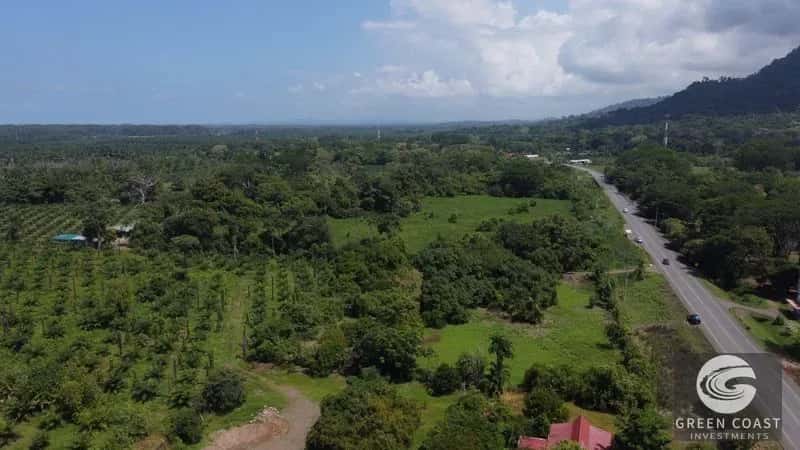
Why Invest in Highway Frontage Development Land Near Manuel Antonio?
For buyers comparing active inventory, see Highway Frontage & Segregation Potential Near Manuel Antonio & Dominical.
Investing in highway frontage development land near Manuel Antonio offers strong opportunities due to high visibility, accessibility, and the region's robust tourism growth. This strategic location between Manuel Antonio and Dominical provides access to two major tourist hubs, driving consistent demand for commercial ventures, residential developments, and hospitality projects. Furthermore, larger parcels often allow for phased development or the sale of smaller, individual lots, maximizing investor returns.
Manuel Antonio real estate, particularly parcels with direct highway access, stands out for developers. The constant influx of tourists to Manuel Antonio National Park and its surrounding beaches creates a sustained need for accommodations, retail, dining, and various services. This demand translates directly into a strong market for new construction and expansion projects. The area's appeal isn't limited to short-term visitors; a growing expatriate and remote worker community also fuels demand for long-term residential options.
The corridor connecting Manuel Antonio and Dominical is particularly attractive. This stretch of highway acts as a vital artery, linking two distinct yet complementary tourist destinations. Properties along this route benefit from traffic flow generated by visitors traveling between the surf-centric Dominical and the nature-rich Manuel Antonio. This dual market access enhances investment appeal, broadening the potential customer base for any development.
Consider the Highway Frontage & Segregation Potential Near Manuel Antonio & Dominical, currently listed at USD 210,000 as DEVELOPMENT_LAND in MANUEL ANTONIO QUEPOS. This type of offering exemplifies the value proposition. The ability to segregate a larger parcel means an investor can develop a portion while retaining or selling off other sections, adapting to market conditions and optimizing capital deployment. This flexibility is a key advantage for maximizing profitability over time.
Current market data for Manuel Antonio real estate further underscores the investment potential. There are 49 active listings for development land, with prices ranging from USD 48,600 to USD 5,000,000, and an average price of USD 671,288. This range indicates a diverse market with opportunities for various investment scales, but the consistent activity highlights the underlying demand for land suitable for development.
What are the Zoning Regulations for Development Land Near Manuel Antonio and Dominical?

Understanding the zoning regulations for development land near Manuel Antonio and Dominical is critical for any investor. In the Quepos canton, which encompasses Manuel Antonio, and extending into the Puntarenas province towards Dominical, municipal zoning ordinances dictate the permissible uses, setbacks, building heights, and density for any given parcel. These regulations are primarily outlined in each municipality's Plan Regulador (Regulatory Plan), a publicly accessible document that defines the urban and rural development framework. For commercial highway frontage, specific zones often permit retail, services, hospitality, and light industrial uses, while residential zones are designated for single-family homes, multi-family dwellings, or condominiums. Mixed-use zoning, increasingly common along major arteries, allows for a combination of commercial and residential applications within a single development, offering flexibility for investors.
Commercial vs. Residential Zoning Specifics in Quepos/Manuel Antonio
Along the main highways connecting Quepos, Manuel Antonio, and south towards Dominical, zoning often distinguishes between commercial and residential uses. Commercial zones typically have more lenient setback requirements from the highway right-of-way, allowing for greater visibility and accessibility for businesses. Building heights in these areas might also permit multi-story structures to maximize usable space. In contrast, residential zoning often imposes stricter setbacks, lower building height limits, and density caps to preserve residential character and green spaces. For example, a commercial parcel might allow for 70% lot coverage with a three-story building, while a residential parcel nearby could be limited to 40% coverage and two stories. Verifying the specific Plan Regulador for your target municipality (Quepos for Manuel Antonio, or Osa for Dominical) is essential to confirm these details. These plans also detail requirements for parking, green areas, and infrastructure contributions.
Environmental Protection Zones and SETENA Requirements
Beyond municipal zoning, environmental protection zones significantly impact development potential, particularly in ecologically sensitive areas surrounding Manuel Antonio National Park and along the coast. The National Environmental Technical Secretariat (SETENA) is the governing body responsible for evaluating and approving environmental impact assessments (EIAs) for nearly all development projects in Costa Rica. Projects located within or adjacent to protected areas, mangroves, river buffer zones, or areas with high biodiversity will face rigorous scrutiny and potentially more restrictive development parameters, regardless of the municipal zoning. This can include larger setbacks from natural features, limits on impervious surfaces, and requirements for sustainable building practices. All active listings in the Manuel Antonio and Dominical corridor currently range from USD 48,600 to USD 5,000,000, with an average price of USD 671,288, reflecting the diverse development potential and regulatory considerations across this region.
How Does Highway Frontage Impact the Value and Development Potential of Land in Quepos?

Highway frontage significantly enhances both the value and development potential of land in Quepos, primarily due to unparalleled visibility and accessibility. For commercial ventures such as hotels, restaurants, or retail establishments, direct highway access translates into increased customer traffic and brand exposure, which are critical for profitability. Similarly, residential developments benefit from the ease of access for residents and service providers, making these parcels highly attractive for future homeowners or renters. This superior positioning generally leads to higher land appreciation rates compared to comparable non-frontage parcels, reflecting the inherent strategic advantage.
When considering development types, it's crucial to weigh the trade-offs associated with highway frontage. While commercial properties thrive on visibility, residential developments might require strategic design to mitigate noise and traffic impacts, ensuring privacy and tranquility for residents. This could involve setback requirements, soundproofing, or natural barriers. Despite these considerations, the fundamental advantage of access often outweighs potential drawbacks, especially as the region continues to grow.
Infrastructure improvements play a pivotal role in maximizing the value of highway-frontage properties. Ongoing enhancements to roads, the expansion of utility services (water, electricity), and the increasing availability of high-speed internet in the Manuel Antonio and Dominical corridor directly impact development feasibility and overall property values. Properties with existing or readily available access to these essential services are inherently more valuable and easier to develop. As of recent market data, active listings for land in the area show 49 parcels with a price range from USD 48,600 to USD 5,000,000, averaging USD 671,288. This broad range reflects various factors, including, prominently, the presence and quality of highway frontage and existing infrastructure. Investing in highway-frontage land in Quepos positions buyers to capitalize on the region's continued growth and the enduring demand for accessible, well-connected properties.
What is the Process for Segregating a Large Land Parcel in Costa Rica for Future Sale or Development?
Segregating a large land parcel in Costa Rica, known as segregación, involves legally subdividing a larger property into smaller, independent lots for individual sale or phased development. This process is crucial for maximizing the value of extensive holdings, especially in high-demand areas near Manuel Antonio and Dominical, where active listings for development land range from USD 48,600 to USD 5,000,000, with an average price of USD 671,288.
The segregation process begins with engaging a licensed topographer or surveyor to create new cadastral plans (planos catastrados) for each proposed new lot. These plans must accurately delineate boundaries, dimensions, and access points. Once the new plans are drafted, they require approval from the local municipality. This municipal approval confirms that the proposed subdivisions comply with local zoning regulations and urban planning requirements, including minimum lot sizes and public road access. Following municipal approval, a Costa Rican notary public drafts the segregation deed, formally registering the new parcels. This deed is then submitted to the National Registry (Registro Nacional) to update the property records, assigning each new lot its own unique property identification number (folio real).
Costs and Key Considerations for Segregation
The costs associated with land segregation typically include surveyor fees, which vary based on the parcel's size and complexity, as well as notary public fees (often a percentage of the property's declared value) and registration taxes. It is paramount that the original large parcel has a clear title, free of encumbrances or disputes, before initiating segregation. Any liens or legal issues on the master property must be resolved beforehand to ensure a smooth process for the new individual titles. The existence of duly registered planos catastrados for both the original and new parcels is fundamental, as these legal documents define the precise boundaries and legal existence of each property. This meticulous process ensures that each new lot is legally recognized and can be transacted independently, providing clear ownership for future buyers or developers.
Crucial Infrastructure Considerations for Manuel Antonio Development Land
When planning segregation, especially for development land near Manuel Antonio, careful consideration of existing and planned infrastructure is essential. This includes access to public roads, water lines, electricity, and sewage systems. The viability and cost-effectiveness of extending these services to newly segregated lots can significantly impact their market value and development potential. Proximity to existing infrastructure reduces development costs and accelerates project timelines, making the segregated parcels more attractive to investors.
Long-Term Investment & Rental Market for Development Land in the Manuel Antonio/Dominical Corridor
Segregating land in the Manuel Antonio/Dominical corridor strategically positions an investor to capitalize on the region's robust long-term investment and rental market. Smaller, well-planned lots are highly desirable for residential construction, boutique hospitality ventures, or commercial spaces catering to the growing tourism and expat communities. This targeted approach allows for phased development and sales, mitigating risk and optimizing returns over time.
Crucial Infrastructure Considerations for Manuel Antonio Development Land
Successful development near Manuel Antonio hinges on a thorough understanding of existing infrastructure. Key considerations include reliable water sources, electricity, internet connectivity, road access, and waste management. Proactive assessment of these elements directly impacts project feasibility, budget, and long-term property value. The region, with 49 active listings ranging from USD 48,600 to USD 5,000,000 (average USD 671,288), presents diverse opportunities, but infrastructure readiness is paramount.
Water Access: ASADA Connections vs. Well Permits
Water access is often the primary infrastructure concern. Properties with existing connections to an ASADA (Administración de Sistemas de Acueductos y Alcantarillados) water system offer the most straightforward path. Verifying the capacity of the ASADA to serve your proposed development is essential. For properties without ASADA access, obtaining a well permit from MINAE (Ministerio de Ambiente y Energía) is an alternative, though this process can be lengthy and requires hydrogeological studies. Understanding the water table and potential drilling costs is crucial for financial planning.
Electricity and Telecommunications
The national utility, ICE (Instituto Costarricense de Electricidad), provides electricity throughout most of the region. Confirming the availability of the grid and the capacity at the property's specific location is vital. For larger developments, upgrades to the existing electrical infrastructure may be necessary. Internet and telecommunications have seen significant improvements, with fiber optic lines becoming more prevalent in developed areas. For more remote parcels, satellite internet remains an option, but speed and reliability should be carefully evaluated for development needs.
Road Access and Waste Management
Reliable road access is fundamental. Properties directly on public highways benefit from government maintenance, while private access roads require a clear understanding of maintenance responsibilities and agreements. The condition of these roads, especially during the rainy season, can significantly impact accessibility and construction logistics. Waste management and sewage solutions vary. For smaller developments, septic systems are common, requiring proper design and permitting. Larger projects may necessitate more sophisticated wastewater treatment plants, adhering to stringent environmental regulations. Analyzing the current and planned infrastructure improvements—including road paving, utility expansions, and fiber optic deployments—in the Manuel Antonio/Dominical corridor provides a detailed analysis of how these enhancements can significantly impact property values and accelerate development feasibility.
Long-Term Investment & Rental Market for Development Land in the Manuel Antonio/Dominical Corridor
Investing in development land within the Manuel Antonio/Dominical corridor offers substantial long-term appreciation potential, often outperforming existing properties due to the opportunity for value creation through strategic development. The rental market here exhibits robust demand across various property types, driven by sustained tourism growth and a growing expatriate community. Factors such as continued infrastructure improvements, including road upgrades and utility expansion, directly influence the return on investment (ROI) by enhancing accessibility and desirability.
Raw development land in this region has historically shown strong appreciation trends. Unlike existing homes, which are subject to depreciation and maintenance costs, undeveloped parcels gain value through market demand, zoning changes, and the potential for higher-density projects. As of recent data, active land listings in the broader area number 49, with a price range from USD 48,600 to USD 5,000,000, averaging USD 671,288. This wide range reflects the diverse opportunities available, from smaller residential lots to expansive commercial development sites.
Rental Market Dynamics for Developed Properties
The rental market in Manuel Antonio and Dominical is highly segmented. Vacation rentals, particularly luxury villas and eco-lodges, command premium rates, fueled by international tourism. Long-term residential rentals also see consistent demand from expatriates, remote workers, and local professionals seeking quality housing. Commercial leases for retail, restaurants, and services benefit from both tourist traffic and the expanding local population. Developing properties specifically tailored to these demands can yield significant rental income. For instance, a well-planned development of vacation rental units can achieve higher occupancy rates and daily averages compared to a single-family home, maximizing ROI.
Influencing Factors for Return on Investment
Several key factors will continue to influence the ROI for development land in this corridor. Sustained tourism growth, supported by improved international flight access and marketing efforts, directly increases demand for accommodations and services. Ongoing infrastructure development, such as enhanced road networks connecting Manuel Antonio to Dominical and beyond, improves accessibility and reduces travel times, making properties more attractive. The robust local economy, driven by tourism and a growing service sector, provides a stable environment for commercial ventures and residential demand.
Comparative Investment Returns: Raw Land vs. Existing Properties
While purchasing existing income properties offers immediate cash flow, the long-term investment appreciation for raw land development often presents a more compelling proposition. Developing a property allows an investor to control the design, quality, and market positioning, thereby creating a product that meets specific market gaps or demands. For example, developing a multi-unit vacation rental complex on raw land can generate significantly higher rental yields and capital appreciation than purchasing an existing single-family home. The value added through thoughtful development, coupled with the inherent appreciation of the land itself, often leads to superior overall returns over a 5-10 year horizon. This strategy allows investors to capitalize on the increasing scarcity of prime development parcels in a high-demand tourist destination.
How Can US and Canadian Buyers Finance Development Land Purchases in Costa Rica?
For US and Canadian buyers looking to finance development land purchases in Costa Rica, local financing options are generally limited, especially for raw land, often requiring significant down payments or collateral. The most common and often most straightforward approaches involve cash purchases, private financing, or leveraging existing assets like home equity lines of credit (HELOCs) from your home country.
Local Costa Rican banks are typically hesitant to offer loans for undeveloped land to foreign buyers, preferring properties with existing structures or a proven income stream. When they do, the terms can be less favorable, with higher interest rates and shorter amortization periods compared to what you might find in North America. Given the active listings of 49 properties in the Manuel Antonio area, with a price range from USD 48,600 to USD 5,000,000 and an average of USD 671,288, many buyers find that a cash purchase streamlines the acquisition process significantly.
Exploring Seller Financing and External Capital
Seller financing presents a viable option, particularly for larger parcels or sellers motivated for a quicker sale. This involves the seller acting as the bank, providing a loan to the buyer, often with a substantial down payment (typically 20-50%) and agreed-upon interest rates and repayment schedules. Negotiating favorable seller financing terms requires clear communication, a well-structured offer, and often the assistance of a local real estate attorney to draft a robust agreement protecting both parties. Due diligence on the property and the seller's financial standing is crucial.
Alternatively, many US and Canadian buyers utilize their existing financial resources. A Home Equity Line of Credit (HELOC) or a refinance of a primary residence can provide the necessary capital at potentially lower interest rates than local Costa Rican options. Other strategies include self-directed IRAs (if structured correctly for real estate investments) or private loans from individuals or investment groups.
Legal Considerations for Cross-Border Transactions
Regardless of the financing method, engaging experienced legal counsel in Costa Rica is paramount for cross-border transactions. A Costa Rican attorney will ensure the property title is clear, all taxes are current, and the purchase agreement adheres to local laws. They will also advise on the most efficient way to hold title (e.g., in a corporation or individually) and any foreign exchange regulations. Understanding the legal framework for transferring funds internationally and registering the property in Costa Rica is critical to a successful and secure investment.
Navigating Environmental Impact Assessments (SETENA) for Development Projects
To successfully develop land in Costa Rica, particularly in ecologically sensitive areas like the Manuel Antonio corridor, understanding and complying with the National Environmental Technical Secretariat (SETENA) is paramount. SETENA is the governmental body responsible for evaluating and approving the environmental viability of all development projects, ensuring they adhere to Costa Rica's stringent environmental protection laws. An Environmental Impact Assessment (EIA) is generally required for any project that could potentially alter the environment, including most commercial or large-scale residential developments, especially those near protected areas, rivers, or coastlines.
The SETENA process typically begins with an initial consultation to determine the project's scope and the specific environmental studies required. This is followed by the submission of detailed studies covering aspects like hydrology, biodiversity, soil, and socio-economic impacts. Public hearings may be mandated for larger projects, allowing community input. Finally, SETENA reviews all documentation and, if satisfactory, grants environmental viability approval. Common challenges include lengthy review periods, complex technical requirements, and potential opposition from local environmental groups. Mitigating these often involves proactive engagement with stakeholders, thorough upfront planning, and ensuring all submitted documentation is comprehensive and accurate.
Given the ecological significance of the Manuel Antonio and Dominical regions, working with experienced local environmental consultants is not just advisable, but essential. These professionals possess an intimate knowledge of local ecosystems, specific regulatory nuances, and established relationships within SETENA, significantly streamlining the approval process. They can help identify potential environmental risks early, design sustainable development strategies, and prepare robust EIAs that meet SETENA's stringent standards, thereby minimizing delays and costly revisions. For buyers considering development land in this corridor, where active listings range from USD 48,600 to USD 5,000,000 with an average price of USD 671,288, a well-executed environmental strategy is a critical component of a successful investment.
Manuel Antonio Real Estate: Your Development Land FAQs Answered
For those eyeing Manuel Antonio real estate for development, understanding the nuances of local regulations and processes is key. Typical timelines for obtaining development permits in Quepos can vary significantly, often ranging from 6 months to over a year, depending on the project's complexity and the efficiency of various governmental agencies, including the municipality and SETENA (the environmental agency). Specific restrictions apply to building near the coast (within the Maritime Terrestrial Zone) and rivers, requiring specialized permits and adherence to setback regulations. Critical due diligence steps for development land include verifying clear title, reviewing zoning and land use plans, conducting environmental impact studies, and confirming access to utilities. Property tax on undeveloped land in Costa Rica is generally 0.25% of the registered property value annually. Yes, you can subdivide land without immediate development, though this process itself requires municipal approval and adherence to local planning regulations.
Development Permit Timelines & Coastal/River Restrictions
Obtaining development permits in the Quepos area, including Manuel Antonio, is a multi-stage process. Initial municipal permits are required, followed by environmental viability approval from SETENA, and then construction permits. The complexity of your project, from a single-family home to a multi-unit commercial development, directly impacts the timeline. Expect a minimum of 6 months for simpler projects, potentially extending to 18 months or more for larger, more intricate developments requiring extensive environmental assessments.
Building near the coast falls under the Maritime Terrestrial Zone (ZMT) law, which dictates a 200-meter setback from the high tide line. The first 50 meters is public zone, and the subsequent 150 meters is concession zone, requiring a concession from the municipality for development. Building near rivers also involves specific setbacks, usually 50 meters from the riverbank, which are strictly enforced to protect riparian ecosystems and prevent erosion.
Essential Due Diligence for Development Land Purchases
When considering Manuel Antonio real estate for development, comprehensive due diligence is non-negotiable. This includes:
Title Verification:* Ensure a clear title free of encumbrances, liens, or disputes through a thorough review of the property's folio real at the National Registry.
Zoning and Land Use:* Confirm the property's zoning classification with the local municipality (Municipalidad de Quepos) to understand permitted uses and building densities.
Environmental Impact Assessment (EIA):* For many development projects, an EIA is mandatory and must be approved by SETENA. Understanding potential environmental constraints early is crucial.
Utility Access:* Verify the availability and capacity of essential utilities such as water (ASADA or AyA), electricity (ICE), and road access.
Topographical Survey:* A recent survey is vital to confirm boundaries, topography, and potential buildable areas.
Property Tax and Land Subdivision in Costa Rica
Property tax on undeveloped land in Costa Rica is applied at a flat rate of 0.25% of the registered property value. This value is typically updated every five years, or when a property is transferred. It's important to budget for this annual expense, especially for larger parcels of land.
Subdividing land without immediate development is a common strategy for investors. This process, known as "segregation," involves creating smaller, legally independent parcels from a larger one. It requires a municipal permit, a registered surveyor to create new plano catastral (cadastral plans) for each new parcel, and registration of these new parcels at the National Registry. This can be an effective way to enhance the value and marketability of a large landholding.
Currently, there are 49 active listings for development land in the Manuel Antonio area, with prices ranging from USD 48,600 to USD 5,000,000, and an average price of USD 671,288.