
Why Should You Buy Property in Jacó, Costa Rica Right Now?
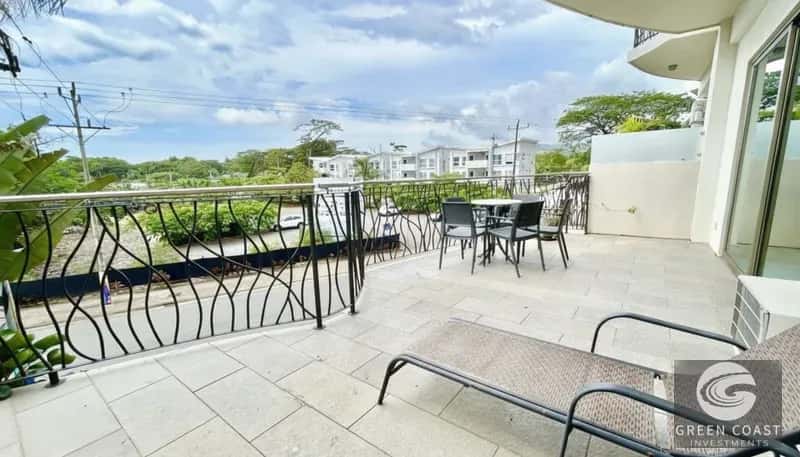
For buyers comparing active inventory, see Jaco Boutique Hotel 2-Bed Lock-Off Condo with Resort Amenities.
If you want to buy property in Jacó, Costa Rica, the timing is driven by a unique combination of infrastructure, accessibility, and market demand. Jacó stands as the closest fully developed beach town to Juan Santamaría International Airport (SJO) in San José. In our years on this coast, we have watched Route 27 transform how foreigners and locals alike approach the Central Pacific. This geographical advantage allows investors and vacationers to land in Costa Rica and reach the Pacific coast in under two hours. This ease of access fuels a consistent, year-round rental market powered by both international tourists and weekend travelers from the Central Valley.
The Entry-Level Luxury Sweet Spot
To capitalize on this demand, buyers look for assets that balance acquisition costs with high rental utility. A prime example is the featured USD 255,000 2-bedroom lock-off boutique hotel condo. This property represents a strategic entry-level luxury asset. Because of its lock-off design, owners can split the unit into two separate rental spaces—a one-bedroom suite and a studio—maximizing occupancy rates and rental yields in a market that thrives on flexible accommodation options.
Analyzing the Jacó Real Estate Market Data
To understand the value of this USD 255,000 boutique condo, it helps to analyze the broader regional inventory. The local market currently features 231 active listings, with prices spanning a wide range from USD 50,000 for basic off-beach properties up to USD 989,000,000 for massive master-planned development tracts.
This vast spread results in a high average listing price of USD 5,214,713. This average is heavily skewed upward by ultra-luxury estates, mega-mansions, and commercial parcels in the neighboring Los Sueños Resort and Marina corridor.
```
Jacó Market Inventory at a Glance:
| Metric | Value (USD) |
| :--- | :--- |
| Active Listings | 231 |
| Price Range | USD 50,000 – USD 989,000,000 |
| Average Price | USD 5,214,713 |
| Featured Lock-Off Condo | USD 255,000 |
```
For individual investors, this data reveals that the USD 255,000 price point sits well below the regional average, offering an accessible entry point into a premium market. By securing a titled, resort-style asset at this valuation, buyers acquire a rental property positioned directly in the path of Jacó's ongoing coastal growth.
Why Is a 2-Bedroom 'Lock-Off' Condo a Strategic Investment in Jacó?

Investors targeting the Pacific coast are increasingly choosing 2-bedroom lock-off condos to maximize yield and operational flexibility. When you buy property in Jacó, Costa Rica, this specific architectural configuration allows you to split a single titled property into two independent, self-contained rental units. By offering two separate entryways, distinct keyless access systems, and private bathrooms for each section, a lock-off condo doubles your inventory without doubling your acquisition costs, property taxes, or HOA fees.
The Mechanics of the Lock-Off Configuration
A lock-off condo consists of a primary suite—typically featuring a full kitchen, living area, bedroom, and bathroom—connected via an inner double-door system to an adjacent studio suite, which contains a bedroom, bathroom, and kitchenette. Because both units sit under a single property title, you avoid paying multiple municipal taxes or separate luxury home taxes. This layout allows you to adapt to market demand in real-time, offering three distinct rental configurations:
The Full 2-Bedroom Suite:* Rented as a cohesive, spacious unit for families or larger groups traveling together.
The Dual-Stream Option:* Rented simultaneously to two entirely unrelated parties, such as a couple in the primary suite and a solo traveler in the studio.
The Owner-Occupied Model:* You can live in one side of the property while generating active rental income from the other, preserving your privacy without sacrificing cash flow.
Maximizing Occupancy Rates in the Jacó Market
In the competitive Jacó short-term rental market, versatility directly correlates with profitability. Standard 2-bedroom condos often suffer from occupancy bottlenecks during shoulder seasons when family travel declines. Lock-off configurations solve this issue by tapping into the high-volume solo traveler and couple demographics. Historical rental data in the Central Pacific region indicates that lock-off properties achieve a 15% to 20% boost in annual occupancy rates compared to traditional, rigid 2-bedroom layouts.
The demand for highly adaptable real estate in Jacó is reflected in the broader market dynamics. Currently, active listings in the area stand at 231 properties. While the overall price range spans from USD 50,000 to USD 989,000,000, with a statistically skewed average price of USD 5,214,713 due to ultra-luxury estate compounds, the entry point for premium resort-style lock-off condos remains accessible for buyers seeking optimized cash-on-cash returns. By securing a lock-off unit, you position your portfolio to capture premium nightly rates from two separate reservation pipelines simultaneously.
How Do Costa Rica's Rental Tax (IVA) and Income Tax Laws Apply to US and Canadian Buyers?

US and Canadian buyers who buy property in Jacó, Costa Rica to generate rental income are subject to two primary tax obligations: a 13% Value Added Tax (IVA) on short-term rentals under 30 days, and a progressive income tax on net rental earnings. Non-resident owners must register with the Costa Rican tax authority (Ministerio de Hacienda) through a local corporation (typically an S.A. or Limitada) to legally collect, report, and remit these taxes. Costa Rican tax law allows for strategic deductions, including property management fees and maintenance costs, to minimize your overall tax liability.
Understanding the 13% IVA (Value Added Tax) on Short-Term Rentals
If you rent your Jacó lock-off condo on a short-term basis (defined as bookings under one month), you must charge a 13% IVA tax rate on the nightly rate. This tax is paid by the guest, not the owner, but you are legally responsible for collecting and filing it.
If you use platforms like Airbnb or VRBO, they often collect this tax automatically at the point of booking. However, your local accountant must still file a monthly IVA declaration (Formulario D-140) to reconcile these amounts with Hacienda. Rentals extending beyond 31 consecutive days to the same tenant are exempt from the 13% IVA, which is a key consideration if you balance your calendar between high-yield vacation rentals and stable, mid-term tenants.
Corporate and Personal Income Tax Obligations for Non-Residents
Beyond the monthly IVA, the net income generated by your Jacó property is subject to annual income tax. Most foreign buyers purchase real estate through a local corporate entity to simplify this process.
Some owners opt for a flat monthly or quarterly payment structure based on gross revenue under the Simplified Tax Regime (Regimen Simplificado). Under the standard regime, corporate tax rates scale progressively based on gross income, ranging from 5% to 30% of net profits. Currently, the Jacó real estate market reflects a broad spectrum of investment scales, with 231 active listings ranging in price from USD 50,000 to USD 989,000,000, and an average listing price of USD 5,214,713. For high-end boutique properties, structuring your income tax correctly is vital to protecting your yield.
Legal Tax Minimization and Deductible Expenses
You do not have to pay tax on your gross revenue. Costa Rican tax law allows for the deductibility of local expenses directly related to the operation and preservation of your rental property. To claim these deductions, every expense must be backed by an official electronic invoice (factura electrónica).
Property Management Fees:* The fees paid to your local property manager are 100% tax-deductible.
Maintenance and Repairs:* HOA fees, painting, plumbing repairs, and appliance replacements can be deducted.
Marketing and Utilities:* Internet, electricity, and advertising costs incurred to secure bookings are fully deductible.
Can I Use My US Self-Directed IRA or Canadian RRSP to Buy Property in Jacó?
Yes, you can use your US Self-Directed IRA (SDIRA) or Canadian Registered Retirement Savings Plan (RRSP) to buy property in Jacó, Costa Rica. This strategy allows you to acquire real estate—such as a high-yield 2-bedroom lock-off condo—using pre-tax retirement funds. However, to maintain retirement account compliance with the IRS and CRA, the transaction must be structured as a strict arm's length transaction, meaning you cannot personally use, manage, or profit directly from the property outside of the retirement account.
The Step-by-Step SDIRA Process for US Buyers
For US citizens, purchasing titled real estate in Jacó requires a custodian that permits alternative asset investments.
First, transfer funds from your traditional IRA or 401(k) to a specialized SDIRA custodian. Next, form a Costa Rican Limitada (LLC). The SDIRA purchases 100% of the shares of this newly formed entity, granting the IRA "checkbook control" for faster execution. The Costa Rican corporation then purchases the titled Jacó property. All funds for the purchase, closing costs, and future HOA fees must originate directly from the SDIRA account, and all rental income generated by the lock-off condo must be paid directly back into the SDIRA account to preserve its tax-advantaged status.
RRSP Structures for Canadian Investors
Canadian buyers face a more restrictive regulatory environment, as Canadian financial institutions rarely allow direct holding of foreign real estate within an RRSP. To bypass this, Canadians must utilize specialized offshore structures. This typically involves establishing an offshore mutual fund trust or a specialized corporation that qualifies as an eligible investment for RRSPs. The RRSP then purchases shares in this entity, which in turn purchases the titled property in Jacó. Due to the complexity of CRA regulations, working with a specialized cross-border tax attorney is mandatory.
Strict IRS and CRA Personal Use Restrictions
The most critical aspect of using retirement funds to buy property in Jacó is the absolute prohibition of personal use. Under both IRS and CRA rules, the property is strictly an investment asset.
No Personal Vacationing:* You, your spouse, your parents, and your children cannot stay in the condo for even a single night.
No Sweat Equity:* You cannot personally paint, repair, or manage the property. All maintenance must be performed by third-party professionals and paid for directly from the retirement account.
No Self-Dealing:* You cannot rent the property to family members, nor can you use personal funds to pay for property expenses like property taxes or HOA fees.
Violating these arm's length transaction rules can result in the immediate disqualification of your retirement account, forcing a full distribution of the asset value and triggering tax penalties. With Jacó's real estate market currently showing 231 active listings ranging from USD 50,000 to USD 989,000,000—with a highly skewed average of USD 5,214,713 due to ultra-luxury estates—utilizing retirement funds provides a mechanism to secure a cash-flowing lock-off condo in this high-demand coastal corridor.
How Does Escrow Work in Costa Rica, and Is My Deposit Safe with SUGEF Regulations?
Your earnest money deposit is secure when you buy property in Jacó, provided you route your funds through a SUGEF-registered escrow agent. SUGEF (Superintendencia General de Entidades Financieras) is Costa Rica’s national financial regulatory authority. In our years on this coast, we have always advised buyers that real estate brokerages and private attorneys cannot legally hold buyer deposits in their personal or business accounts. Instead, all transaction funds must be held by a licensed, third-party escrow company that complies with strict SUGEF anti-money laundering (AML) regulations, ensuring your capital is protected throughout the closing process.
The SUGEF Escrow Setup and Timeline
Setting up an escrow account is one of the first steps after signing a reciprocal purchase and sale agreement. The entire setup process typically takes 2 to 3 weeks. During this window, the escrow agent drafts the escrow agreement, coordinates with the closing notary, and initiates the mandatory onboarding process for the buyer.
This timeline is dependent on how quickly you submit your documentation. Because Jacó’s real estate market is highly active—with 231 active listings ranging from USD 50,000 to USD 989,000,000, and an average listing price of USD 5,214,713—escrow companies strictly adhere to these timelines to keep transactions moving efficiently.
Know Your Customer (KYC) and Source of Funds for US and Canadian Buyers
To comply with SUGEF standards and international banking laws, US and Canadian buyers must complete a rigorous Know Your Customer (KYC) profile. This process prevents delays when executing international wire transfers. You will be required to provide a high-resolution color copy of your passport, a recent utility bill or tax statement, and source of funds documentation. This documentation can include tax returns (W-2 or T4), corporate financial statements, brokerage account statements, or certified bank statements showing the origin of the investment capital. If you are funding your purchase through the sale of another asset, such as a primary residence in the US or Canada, you must provide the signed closing disclosure or settlement statement.
Using a SUGEF-compliant escrow agent eliminates the risk of seller default or misappropriation of funds. The agent acts as a neutral stakeholder. Your deposit is only released to the seller once all contractual contingencies are met, title search reports are cleared by your attorney, and the final transfer deed (escritura) is ready for signature at the National Registry.
What Are the Real HOA and Maintenance Costs for Resort-Style Amenities in Jacó?
When you buy property in Jacó, Costa Rica, understanding your ongoing Homeowners Association (HOA) fees is critical to calculating your true net yield. In the Jacó market—which currently features 231 active listings ranging from entry-level condos starting at USD 50,000 up to ultra-luxury estates priced at USD 989,000,000, with a market-wide average listing price of USD 5,214,713—HOA fees vary depending on the development's scale. For a boutique, walk-to-beach 2-bedroom lock-off condo, typical HOA fees range from USD 250 to USD 450 per month. In contrast, master-planned resort communities like nearby Los Sueños command USD 600 to USD 1,000+ per month due to high-overhead infrastructure like golf courses, marinas, and expansive private roadways.
What Do Boutique Resort HOA Fees Cover?
Boutique developments in Jacó package their operational costs into a single monthly fee to keep overhead lean while maintaining resort-quality standards. In a premium boutique project, your HOA fee typically covers:
24/7 Gated Security:* On-site guards, surveillance systems, and secure access gates.
Pool and Common Area Maintenance:* Daily cleaning of the resort-style pool, landscaping, and upkeep of fitness centers or sun decks.
Backup Utility Systems:* Maintenance of high-capacity backup water tanks and common-area generators, which are essential for uninterrupted guest stays.
Administration and Insurance:* Master property insurance for the building's exterior shell and professional property administration.
The Direct Impact of HOA Fees on Your Net ROI
High HOA fees are a significant drain on short-term rental yields. For investors looking to buy property in Jacó, Costa Rica, choosing a boutique development over a massive master-planned community directly impacts your bottom line.
Consider a 2-bedroom lock-off condo generating USD 45,000 in gross annual rental income. In a master-planned community with an USD 800 monthly HOA fee, you lose USD 9,600 annually (over 21% of your gross income) to cover community overhead. In a boutique walk-to-beach development with a USD 350 monthly HOA fee, your annual cost is only USD 4,200. This USD 5,400 annual savings goes straight to your net cash flow, raising your net ROI by 1.2% to 1.8% on the purchase price. Leaner boutique HOA structures allow owners to weather low-season occupancy dips better than those saddled with high-overhead master-planned fees.
What Are the Property Management Fees and Net ROI Expectations in the Jaco Corridor?
To maximize your investment when you buy property in Jaco Costa Rica, you must understand the local rental yields and operational costs. In the Jacó corridor, professional property management fees typically range from 20% to 30% of gross rental revenue for full-service management. After subtracting these fees, HOA dues, local taxes, and utilities, boutique lock-off condos in Jacó generate a net ROI of 6% to 9% annually.
What Do Full-Service Property Management Fees Cover?
The 20% to 30% management fee is an all-inclusive rate designed to keep your investment passive. Because Jacó is a high-volume tourism market, managing a short-term rental from abroad is impractical. Local property managers handle the entire operational pipeline, which includes:
Marketing and Channel Management:* Listing your property across platforms like Airbnb, Booking.com, and VRBO, while optimizing dynamic pricing algorithms.
Guest Services:* Handling 24/7 guest inquiries, key exchange, check-ins, check-outs, and on-site concierge services.
Housekeeping and Maintenance:* Coordinating professional cleanings between guests, conducting inventory checks, and addressing emergency repairs.
Local Tax Compliance:* Collecting and remitting the mandatory 13% value-added tax (IVA) to the Costa Rican tax authority (Hacienda).
Net ROI Calculation for a USD 255,000 Lock-Off Condo
To understand how these expenses impact your bottom line, let us look at a realistic financial projection for a USD 255,000 two-bedroom lock-off condo in Jacó.
Assuming a conservative 65% occupancy rate at an average daily rate (ADR) of USD 180, the property generates a gross annual rental income of USD 42,705. Here is how the net cash flow breaks down:
Gross Rental Revenue:* USD 42,705
Property Management Fee (25%):* -USD 10,676
HOA Fees (USD 300/month):* -USD 3,600
Utilities (Electricity/High-Speed Internet):* -USD 2,800
Property Taxes & Luxury Tax (approx. 0.5%):* -USD 1,275
Annual Maintenance & Reserve Fund:* -USD 1,500
Total Annual Expenses:* USD 19,851
Net Annual Income:* USD 22,854
Net ROI:* 8.96%
This 8.96% return is achievable for lock-off configurations, as you can rent the unit as a full two-bedroom condo or as two separate studio rentals, doubling your booking opportunities.
The Jacó real estate market remains active, though pricing varies depending on proximity to the beach and luxury finishes. Currently, there are 231 active listings in the area, with a price range spanning from USD 50,000 to USD 989,000,000, yielding an average listing price of USD 5,214,713. While ultra-luxury estates skew the average upward, the USD 250,000 to USD 350,000 range represents a strong segment for boutique condos that deliver consistent rental income.
How Do Maritime Zone (ZMT) Concession Laws Compare to Fully Titled Land in Jacó?
When you buy property in Jacó, Costa Rica, you will encounter two distinct ownership structures: fully titled land and Maritime Zone (Zona Marítimo-Terrestre or ZMT) concession land. Fully titled property grants you 100% fee-simple ownership rights—the same absolute ownership security found in the US and Canada—allowing you to hold the deed in your name or under a Costa Rican corporation indefinitely. In contrast, a concession is a long-term lease granted by the local municipality for government-owned land, which comes with strict foreign ownership limits, renewal requirements, and development restrictions.
Understanding the 200-Meter Rule and the Jacó Exception
Costa Rica’s shoreline is governed by Law No. 6043, which divides the beachfront into two distinct zones measured from the high-tide line:
The Public Zone (First 50 Meters):* This strip is completely public. No private construction is permitted, ensuring open access to the beach for everyone.
The Restricted/Concession Zone (Next 150 Meters):* In most of the country, this land can only be occupied via a municipal concession.
However, Jacó Beach is a rare exception. Because Jacó's land registry predates the 1977 maritime laws, much of the beachfront and near-beachfront land is fully titled right up to the 50-meter public zone marker. The featured USD 255,000 boutique 2-bedroom lock-off condo sits on 100% fully titled property, giving foreign buyers ownership security without the administrative hurdles of municipal leases.
The Risks of Concession Land in Nearby Playa Hermosa
Investing in concession land, such as in nearby Playa Hermosa, introduces specific operational hurdles and legal restrictions that do not apply to titled Jacó real estate:
Foreign Ownership Caps:* By law, foreigners cannot own more than 49% of a concession-holding corporation unless they have resided in Costa Rica for at least five years.
Renewal Risks: Concessions are typically granted for 5 to 20 years. While renewals are standard, they require navigating municipal bureaucracy, paying ongoing canon fees, and ensuring the property complies with the local regulatory plan (Plan Regulador*).
Financing Obstacles:* Traditional banks rarely finance concession properties, making them harder to resell.
The peace of mind that comes with fully titled land is reflected in the local market dynamics. Currently, there are 231 active listings in the area, ranging in price from USD 50,000 to USD 989,000,000, with an average price of USD 5,214,713. Securing a fully titled, turnkey boutique condo at the USD 255,000 price point allows buyers to bypass the complexities of the ZMT law while positioning themselves in Jacó’s liquid, titled real estate market. For a closer look at our active inventory and to find the right property for your portfolio, you can browse our curated Costa Rica real estate listings.