
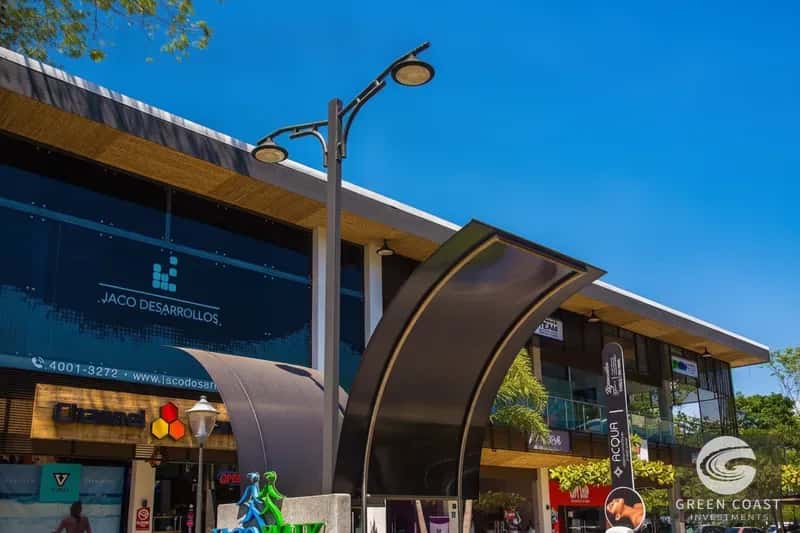
Why Should You Buy Property in Jacó, Costa Rica for Commercial Development?
Shifting your investment focus from traditional residential vacation homes to commercial hospitality assets is a highly effective strategy for securing high-yield returns in the Central Pacific region. While the local residential market is saturated with individual condo listings, the commercial sector offers scalable growth.
In our years on this coast, we have seen that the premier opportunity in this space is Jacó Walk Phase 3, a pre-approved, shovel-ready 56-room luxury boutique hotel and commercial development priced at USD 1,500,000. Investing in this mixed-use asset allows buyers to capture both high-end tourism spending and steady commercial lease income, bypassing the operational challenges of the single-family rental market.
Moving Beyond Passive Residential Rentals to High-Yield Commercial Assets
Many international buyers initially look to buy property jaco costa rica offers with the intention of purchasing a beachfront condo or a private villa. However, passive residential rentals face seasonal fluctuations, high homeowners association (HOA) fees, and intense competition on short-term rental platforms.
In contrast, an active commercial hospitality asset like Jacó Walk Phase 3 provides diversified revenue streams. By combining a 56-room luxury boutique hotel with premium commercial spaces, investors benefit from nightly room rates, food and beverage operations, and long-term retail leases. This mixed-use model mitigates risk and delivers a higher yield per square foot than standard residential real estate.
Understanding the Jacó Commercial Market Data
The demand for commercial space in Jacó is driven by its position as the closest major beach town to San José and the Juan Santamaría International Airport (SJO). This geographical advantage ensures a steady flow of both international tourists and affluent weekend travelers from the Central Valley.
To put the USD 1,500,000 purchase price of Jacó Walk Phase 3 into perspective, consider the broader local market dynamics. Currently, there are 212 active listings in the region, with prices ranging from USD 50,000 to USD 989,000,000, and an average listing price of USD 5,574,725.
| Market Metric | Value (USD) |
| :--- | :--- |
| Minimum Listing Price | $50,000 |
| Maximum Listing Price | $989,000,000 |
| Average Listing Price | $5,574,725 |
| Active Regional Listings | 212 listings |
| [Jaco Walk Phase](https://greencoastinvestments.com/en/properties/jaco-walk-phase-3-approved-56-room-luxury-boutique-hotel-commercial-project-with-0e8d57ec) 3 Price | $1,500,000 |
At USD 1,500,000, Jacó Walk Phase 3 sits well below the market average while offering fully approved permits and a prime location, making it an exceptionally valued entry point for institutional or private developers looking to establish a footprint in Costa Rica's most visited coastal destination.
---
How Does the Jaco, Los Sueños, and Playa Hermosa Real Estate Market Compare?

Investors looking to buy property in Jaco, Costa Rica, must understand the distinct market dynamics across the regional corridor spanning Jacó, Los Sueños, and Playa Hermosa. While the residential sector in this coastal belt is highly saturated with luxury condominiums and vacation rentals, prime commercial development land remains scarce. This supply imbalance creates a unique entry point for developers, as the regional real estate market is currently dominated by high-end residential listings that inflate overall pricing metrics without offering the high-yield potential of mixed-use commercial projects.
Regional Market Data and Price Distortions
Our analysis of the current MLS data for the Jacó, Los Sueños, and Playa Hermosa corridor reveals a highly skewed market landscape.
With only 212 active listings in the region, inventory is tight. However, the average regional price of USD 5,574,725 is heavily skewed by ultra-luxury residential estates and massive, undeveloped land parcels priced up to USD 989,000,000. For investors, this statistical skew highlights the undervalued nature of a fully approved commercial project like Jaco Walk Phase 3. At a list price of USD 1,500,000—complete with municipal permits and environmental clearances—this project sits far below the regional average while offering immediate development potential.
Commercial Scarcity vs. Residential Saturation
The three micro-markets along this corridor serve entirely different consumer profiles, which directly impacts commercial viability:
Los Sueños:* Known for its marina and luxury golf resort condos, this micro-market has reached near-total build-out. Residential prices are premium, but commercial spaces are tightly controlled and rarely come to market.
Playa Hermosa: Famed for its black-sand surf beaches, Hermosa maintains strict zoning laws under the regulatory plan (Plan Regulador*), limiting large-scale commercial footprint expansion.
Jacó Central:* As the commercial heartbeat of the Central Pacific, Jacó is the only hub capable of supporting high-density, mixed-use tourism.
Because most developers have focused on building residential high-rises, the demand for upscale boutique hospitality and integrated retail has outpaced supply. Acquiring a shovel-ready commercial parcel in the center of Jacó allows developers to bypass the years of bureaucratic delays that typically plague raw land purchases in Costa Rica.
---
What Municipal Permits and SETENA Environmental Clearances Are Already Secured for Phase 3?

Jaco Walk Phase 3 is a development asset that bypasses the traditional bureaucratic hurdles of Costa Rican construction by offering fully secured municipal permits and SETENA (Secretaría Técnica Nacional Ambiental) environmental clearances for a 56-room luxury boutique hotel and integrated commercial space. In the Garabito municipality, securing these approvals independently can take foreign investors anywhere from 18 to 36 months. By delivering a pre-approved project, this development allows you to buy property in Jacó, Costa Rica, and transition immediately into the construction phase, eliminating the carrying costs and regulatory friction that typically stall large-scale commercial acquisitions.
The Garabito Municipal Regulatory Framework and Zoning
The Garabito Municipality governs development in Jacó under strict regulatory frameworks designed to manage the town's rapid urbanization. Jaco Walk Phase 3 holds a coveted Commercial / Mixed-Use Hospitality zoning designation. This specific classification is highly restricted in the downtown corridor, as it permits both high-density lodging and high-foot-traffic retail on a single parcel.
The municipal approvals secure:
* An approved capacity of 56 luxury rooms, optimized for maximum occupancy and premium ADR (Average Daily Rate).
* Integrated ground-floor commercial spaces designed for high-end retail, wellness, or culinary tenants.
Pre-cleared utility connections, including high-capacity water hookups (pajas de agua*) and electrical grid integration, which are difficult to secure in high-demand coastal zones.
The Value of Pre-Approved SETENA Environmental Clearances
In Costa Rica, environmental preservation is a constitutional mandate. Any multi-unit commercial or hospitality project must undergo rigorous environmental impact assessments by SETENA. For international buyers, the SETENA application process is often a complex maze of soil studies, hydrological assessments, and archaeological clearances.
With Phase 3, the SETENA environmental license is already fully issued and active. This clearance guarantees that the planned 56-room layout complies with all local ecological laws, including waste management, water runoff, and green space ratios. Having this license in hand reduces development risk, shielding your capital from the threat of environmental litigation, zoning disputes, or costly design overhauls.
Contextualizing Jacó's Commercial Market Value
The risk mitigation provided by these permits is valuable when analyzing the current local inventory. In the regional market, there are currently 212 active listings with a price range of USD 50,000 to USD 989,000,000, and an average price of USD 5,574,725. Raw land listings within this pool carry regulatory risks, whereas Jaco Walk Phase 3 stands out as a highly secure, institutional-grade asset. By purchasing a property with active, transferable permits, you bypass the speculative phase of development and secure an immediate foothold in Jacó’s luxury hospitality sector.
---
Why Is the Mixed-Use Commercial and Hospitality Model Outperforming Traditional Rentals?
The mixed-use commercial and hospitality model in Jacó outperforms traditional residential rentals because it captures multiple revenue streams while leveraging built-in, high-volume foot traffic. Unlike standalone condos that rely solely on seasonal tourism, integrated developments like Jaco Walk Phase 3 benefit from an established open-air retail ecosystem. This synergy drives higher occupancy rates and premium average daily rates (ADR) by offering guests immediate access to dining, wellness, and retail, which reduces marketing costs and increases guest spend per stay. For investors looking to buy property jaco costa rica has to offer, this commercial integration represents a highly resilient asset class.
The Power of Integrated Foot Traffic and Shared Amenities
Standalone luxury rentals in Jacó often struggle with isolation, where guests must arrange transport for every meal or amenity. Jaco Walk Phase 3 eliminates this friction. By integrating a 56-room luxury boutique hotel directly into the existing, highly successful Jaco Walk open-air lifestyle center, the property inherits a constant flow of affluent locals and international visitors.
This integration directly impacts hospitality performance metrics:
Higher ADR Premium:* Guests pay a premium for the convenience of having top-tier restaurants, cafes, and boutiques steps from their lobby.
Lower Customer Acquisition Costs (CAC):* The retail hub acts as a natural billboard, capturing walk-in bookings and repeat business from visitors who initially came only to dine or shop.
Diversified Revenue Streams:* Investors benefit from both the high-margin hospitality operations and the stable, long-term commercial lease income from ground-floor retail tenants.
Catering to the Modern North American Remote Worker
The shift in travel demographics has changed what buyers and renters look for in Costa Rican real estate. The market is currently driven by affluent US and Canadian digital nomads, remote executives, and luxury travelers who demand walkable, connected lifestyles. These travelers require high-speed fiber-optic connectivity, premium workspaces, and immediate access to social hubs.
According to current market data for commercial and mixed-use opportunities in the region, there are currently 212 active listings with a price range of USD 50,000 to USD 989,000,000, and an average price of USD 5,574,725. This wide pricing spectrum highlights the scale of institutional investment entering the central coast. By targeting the high-end, walkable niche, the mixed-use model captures the segment of these North American arrivals who stay longer and spend more than traditional weekend tourists.
---
How Does Investing in a Jaco Boutique Hotel Compare to Buying a Luxury Condo in Los Sueños?
Investing in a multi-key commercial hospitality asset like the Jaco Walk Phase 3 boutique hotel yields higher yield potential, operational efficiency, and capital appreciation than purchasing a single-family luxury condo in nearby Los Sueños or Playa Hermosa. While a residential condo in a mature resort community offers passive, localized lifestyle returns, it limits your earning potential to a single tenancy. In contrast, a 56-room commercial mixed-use development allows investors to scale operations, capture diverse revenue streams from retail and lodging, and command a stronger market valuation.
To put the market scale into perspective, those looking to buy property in Jaco Costa Rica will find an active commercial and residential market. Currently, there are 212 active listings in the area, with a price range spanning from USD 50,000 to USD 989,000,000, and an average listing price of USD 5,574,725. This high average price reflects the growing dominance of premium, institutional-grade commercial tracts over standard residential inventory.
Operational Efficiency and Cost Scaling
Owning scattered residential condos in Los Sueños or Playa Hermosa introduces fragmented operational challenges. Each individual unit requires separate property management fees, utility accounts, maintenance schedules, and HOA dues.
A centralized 56-room boutique hotel consolidates these overhead expenses. With a single, dedicated on-site management team, marketing budget, and maintenance staff, the cost per key drops. This operational synergy maximizes net operating income (NOI) in a way that individual residential units cannot match.
Capital Appreciation: Commercial Land vs. Mature Residential
The capital appreciation curve for residential condos in mature master-planned communities like Los Sueños has largely stabilized. These markets are developed, leaving little room for sudden surges in equity.
Conversely, commercial land in downtown Jacó—especially a shovel-ready, mixed-use project like Jaco Walk Phase 3—occupies prime, high-density real estate. As Jacó continues its evolution into a luxury coastal hub, premium commercial parcels with approved permits experience rapid land value appreciation. Investors secure not just a building, but a high-barrier-to-entry commercial asset in the heavily trafficked pedestrian zone of the Central Pacific coast.
---
What Are the Specific Tax Incentives and Repatriation Rules for US and Canadian Buyers?
North American investors who buy property in Jacó, Costa Rica for commercial developments like Jaco Walk Phase 3 can leverage favorable corporate structures, straightforward capital repatriation laws, and strategic tax write-offs. Costa Rica does not restrict foreign ownership of real estate, meaning US and Canadian buyers enjoy the same constitutional property rights as local citizens. By structuring the acquisition through a local corporate entity, international investors can optimize their tax exposure while ensuring the legal transfer of commercial profits back to their home countries.
This regulatory environment drives interest in the local market. Currently, there are 212 active listings in the region, with a price range of USD 50,000 to USD 989,000,000, and an average price of USD 5,574,725, reflecting a robust inventory of both entry-level parcels and high-value commercial development tracts.
Utilizing the Sociedad Anónima (S.A.) for Asset Protection
To buy property in Jacó, Costa Rica for commercial purposes, foreign investors typically establish a Sociedad Anónima (S.A.). This corporate structure acts similarly to a US C-Corporation, shielding personal assets from business liabilities.
Asset Isolation:* Holding the real estate and hotel operations within an S.A. isolates the commercial asset from personal liability.
Share Transferability:* Equity in an S.A. can be transferred via share certificates, simplifying future joint ventures or exit strategies.
Local Governance:* The structure requires a board of directors (president, secretary, and treasurer) and a resident agent, which is typically your local real estate attorney.
Capital Repatriation to the US and Canada
Costa Rica has no currency controls or restrictions on repatriating foreign capital. Investors can transfer profits, dividends, and initial investment capital back to the US or Canada.
To ensure compliance with international anti-money laundering (AML) standards, all incoming and outgoing wire transfers must be backed by clear accounting trails. When repatriating dividends from an S.A. to foreign shareholders, a standard 15% withholding tax applies at the Costa Rican source. However, under US tax law, investors can often claim a Foreign Tax Credit (FTC) to mitigate double taxation on these funds.
Commercial Deductions and Depreciation Strategies
Costa Rican tax law allows commercial property owners to offset gross income through structured deductions. For a mixed-use project like Jaco Walk Phase 3, these write-offs improve net operating income.
Asset Depreciation:* Buildings and permanent structures can be depreciated over a standard 30-year period, while machinery, hotel equipment, and vehicles can be depreciated over 5 to 10 years.
Operational Deductions:* All ordinary and necessary expenses incurred to generate taxable income—including local property management fees, marketing costs, insurance premiums, and maintenance—are fully deductible.
Territorial Tax System:* Costa Rica taxes income on a strictly territorial basis. Only income generated within the borders of Costa Rica is subject to local corporate income tax, which tops out at 30% for high-revenue commercial entities.
---
Frequently Asked Questions About Commercial Property in Jacó
Can foreign investors legally own 100% of a commercial property in Costa Rica?
Yes. Foreign investors can legally acquire 100% fee simple ownership of commercial real estate and business entities in Costa Rica, enjoying the same constitutional property rights as local citizens. This legal framework allows international buyers to purchase, develop, and operate commercial ventures—such as the Jaco Walk Phase 3 project—without the requirement of a local partner or majority Costa Rican ownership.
What is the difference between Fee Simple Ownership and Maritime Zone Concessions?
When you buy property in Jacó, Costa Rica, understanding the distinction between titled land and concession land is critical. Most of the commercial corridor in Jacó, including the Jaco Walk development, is situated on fully titled, fee simple land. This means you hold absolute ownership of the property deed.
Conversely, beachfront land within the Maritime Terrestrial Zone (ZMT)—defined as the first 200 meters from the high-tide line—is subject to concession laws. The first 50 meters are public land where private construction is prohibited. The remaining 150 meters are restricted concession lands. Foreigners cannot own more than 49% of a corporation that holds a beachfront concession unless they have established five years of legal residency. Because Jaco Walk Phase 3 is located on fully titled land outside the ZMT, international buyers can secure 100% ownership of both the land and the commercial operations without navigating these restrictive concession laws.
What infrastructure support does the Garabito Municipality provide?
The canton of Garabito, which governs Jacó, has upgraded its municipal infrastructure to support high-density, mixed-use commercial projects. Unlike more remote coastal regions of Costa Rica, Jacó benefits from robust public and private utility frameworks.
Key infrastructure advantages in the region include:
Water Security:* High-capacity aqueduct systems managed by AyA (the national water utility) ensure reliable water hookups for large-scale hospitality developments.
Advanced Telecommunications:* Redundant fiber-optic internet networks run throughout the commercial center, supporting high-bandwidth operations for boutique hotels and retail spaces.
Paved Access and Drainage:* Garabito’s municipal planning office has invested in modern storm drainage systems and paved road networks to mitigate seasonal flooding and handle high traffic volumes.
These municipal provisions reduce the pre-development risk and utility installation costs typically associated with raw land investments in Central America.
What does the overall Jacó commercial real estate market look like?
The commercial market in Jacó remains active, characterized by a wide range of investment entry points. Currently, there are 212 active listings in the region. Property prices span from USD 50,000 for small retail spaces to USD 989,000,000 for massive development tracts, yielding an average listing price of USD 5,574,725. This average reflects the growing volume of institutional-grade, high-density commercial assets and luxury mixed-use developments entering the market to meet international demand.