
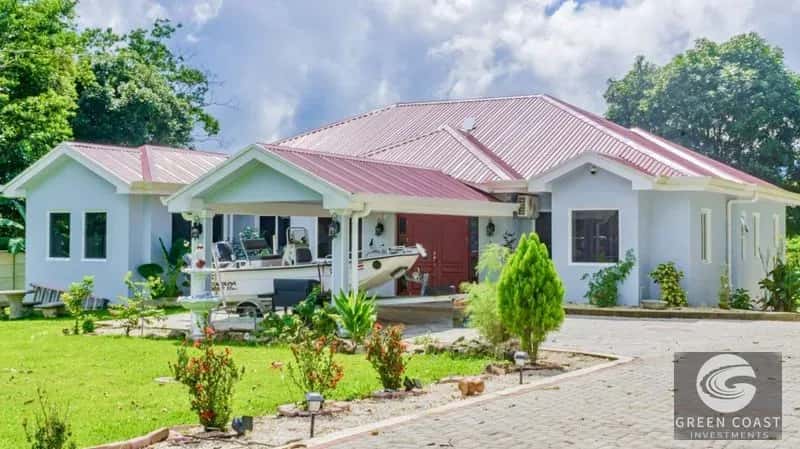
How Foreigners Buy Property Near Lake Arenal & Guanacaste: Step by Step
For buyers comparing active inventory, see Lakefront Executive Estate on Peninsula | Pool, Chef's Kitchen & Mountain Views .
Foreigners can purchase property in Costa Rica with the same rights and legal protections as citizens; there are no restrictions on foreign ownership. The process involves several key steps: defining property needs and budget, engaging a local real estate expert, making offers and negotiating, and fulfilling legal requirements with the help of a reputable attorney and notary public. For those considering guanacaste homes for sale, understanding this structured approach is crucial. Currently, there are 12 active listings in Guanacaste, with prices ranging from USD 130,000 to USD 90,000,000, and an average price of USD 8,107,000.
Initial Steps and Expert Guidance
Your journey begins by clearly defining your property needs and establishing a realistic budget. Consider factors like location (e.g., Lake Arenal versus coastal Guanacaste), property type (e.g., residential, commercial, land), and desired amenities. Once your criteria are established, an experienced local real estate agent, like those at Green Coast Investments, provides market insights, access to listings, and guidance through the Costa Rican real estate market. They will help you identify suitable guanacaste homes for sale and arrange property viewings.
Offer, Negotiation, and Legal Framework
Once you find a property of interest, your agent will assist in preparing an offer. This typically involves a reservation deposit, often 10% of the purchase price, which secures the property while due diligence is conducted. The negotiation process can involve counter-offers and adjustments to terms, all facilitated by your agent. From a legal standpoint, foreign buyers have the option to purchase property individually or through a Costa Rican corporation (Sociedad Anónima or S.A.). While individual ownership is straightforward, a corporation can offer advantages for asset protection, estate planning, and potential tax benefits, particularly for income-generating properties. Your attorney will advise on the best structure for your specific circumstances.
The Role of Professionals and Due Diligence
A reputable Costa Rican attorney and a notary public are indispensable throughout the buying process. The attorney conducts comprehensive due diligence, ensuring the property's title is clear, free of liens, and registered correctly in the National Registry (Registro Nacional). The notary public, a legal professional with specific authority in Costa Rica, is responsible for drafting and executing the public deed of sale, which legally transfers ownership.
Your due diligence checklist should include:
Title Search: Verification of ownership and absence of encumbrances. This involves reviewing the property's folio real* (property registration number) in the National Registry to confirm the registered owner, any mortgages, easements, or other legal burdens.
Property Survey:* Confirmation of boundaries and land area. A certified topographer should conduct a new survey or verify an existing one against the National Registry records to ensure accuracy and prevent boundary disputes.
Zoning and Land Use: Ensuring the property's intended use is permitted. This requires checking with the local municipality (municipalidad*) for zoning regulations and land use plans that may affect development or specific activities on the property.
Permits:* Checking for valid construction or environmental permits if applicable. For existing structures, verify that all construction was done with proper permits. For future development, understand the process and requirements for obtaining necessary permits.
Utility Access:* Confirming availability of water, electricity, and internet. This involves verifying connections with local utility providers (e.g., AyA for water, ICE for electricity) and assessing the quality and reliability of internet service in the specific area.
Property Taxes: Verifying current tax status and no outstanding debts. Obtain a certification from the local municipality confirming all property taxes (Impuesto de Bienes Inmuebles*) are paid up to date.
By following these steps and engaging experienced professionals, foreign buyers can confidently acquire property in Lake Arenal and Guanacaste.
Why Lake Arenal Properties Offer Better Value Than Coastal Guanacaste Real Estate?

Lake Arenal properties often present a superior value proposition compared to coastal Guanacaste real estate due to a unique blend of microclimate advantages, lifestyle benefits, and robust investment potential. While coastal areas like Tamarindo or Nosara command premium prices for their proximity to beaches, Lake Arenal offers more expansive land, cooler temperatures, and a tranquil environment, often at a lower per-square-meter cost. For instance, a Lakefront Executive Estate, priced at USD 1,300,000, exemplifies the kind of luxury and space available near the lake that would be significantly more expensive on the coast.
Lake Arenal's Unique Microclimate vs. Coastal Guanacaste
The microclimate around Lake Arenal is a significant differentiator. Unlike the consistently hot and often humid conditions of coastal Guanacaste, Lake Arenal benefits from a cooler, more temperate climate. Average temperatures near the lake are typically 5-10 degrees Fahrenheit lower than on the coast, providing a more comfortable living environment year-round. Rainfall is also more consistent around Lake Arenal, contributing to lush, green landscapes, while coastal Guanacaste experiences a more pronounced dry season. Wind conditions are another factor; Lake Arenal is renowned for steady breezes, ideal for windsurfing and sailing, whereas coastal properties can experience more intense, sometimes unpredictable, sea breezes. This cooler, greener environment reduces the reliance on air conditioning and offers a refreshing alternative to the often sweltering coast. The consistent rainfall supports a vibrant ecosystem, attracting diverse wildlife and creating a natural setting distinct from the drier coastal plains.
Lifestyle and Investment Potential
The lifestyle advantages of Lake Arenal versus coastal Guanacaste are distinct. Coastal Guanacaste offers beach life, surfing, and a more developed tourist infrastructure, which can mean higher traffic and a faster pace. Lake Arenal, conversely, provides a serene, nature-centric lifestyle focused on outdoor activities like kayaking, fishing, hiking, and birdwatching. It appeals to those seeking tranquility, community, and a deeper connection with nature. The communities around Lake Arenal, such as Nuevo Arenal and Tronadora, are often characterized by a mix of local residents and expatriates, fostering a close-knit atmosphere.
From an investment perspective, both regions offer appreciation, but Lake Arenal’s current market dynamics suggest strong value. While coastal areas have seen rapid price increases, Lake Arenal is still an emerging market for luxury properties, offering greater potential for future appreciation as infrastructure develops and more buyers discover its unique appeal. The market data for the broader region shows active listings ranging from USD 130,000 to USD 90,000,000, with an average price of USD 8,107,000, indicating a wide spectrum of opportunities. The relative affordability of high-quality properties near Lake Arenal, like the aforementioned Lakefront Executive Estate, positions them as excellent long-term investments with significant upside. As the region gains more recognition for its natural beauty and outdoor activities, demand is expected to grow, further supporting property values.
What Are the Best Financing Options for Foreigners Buying in Guanacaste?

Foreigners buying guanacaste homes for sale typically find the most straightforward financing through cash purchases or seller financing. While local bank financing is challenging for non-residents, international financing can be an option. Understanding all associated closing costs is crucial for any purchase. Currently, active listings in Guanacaste range from USD 130,000 to USD 90,000,000, with an average price of USD 8,107,000, illustrating the diverse market.
Cash Purchases
Cash purchases remain the most common and often preferred method for foreign buyers in Costa Rica. This approach simplifies the transaction process, reduces closing times, and can offer a stronger negotiating position. Sellers often favor cash offers due to their certainty and speed. Given the complexities of securing traditional loans as a non-resident, many international investors budget for an all-cash acquisition to streamline their entry into the market. This method also avoids interest payments and loan origination fees, potentially reducing the overall cost of the acquisition.
Seller Financing
Seller financing can be a viable alternative, especially for properties where the seller is motivated or has a clear exit strategy. Terms vary widely but typically involve a substantial down payment (often 30-50% or more) with the remaining balance paid over a shorter period, usually 1-5 years, at an agreed-upon interest rate. This option can be particularly attractive for those who prefer not to tie up all their capital immediately or face challenges with traditional lenders. Always ensure a robust legal agreement is in place, outlining all terms, interest rates, payment schedules, and default clauses. A Costa Rican attorney should draft and register the mortgage deed to protect both buyer and seller.
Local Bank Financing
Securing financing from Costa Rican banks as a non-resident is generally difficult. Local banks have stringent requirements, often demanding Costa Rican residency, a strong credit history within the country, and a significant down payment (typically 50% or more). The application process can be lengthy and involves extensive documentation, including proof of income and assets from your home country, all translated and notarized. Interest rates may also be higher compared to what you might find in your home country. For these reasons, local bank financing is rarely the primary option for foreign buyers. Even if approved, the loan-to-value ratio is often conservative, meaning a larger down payment is required.
International Financing Options
Some foreign buyers explore financing options through banks or financial institutions in their home countries. This can involve leveraging existing assets or obtaining a loan against property in their country of origin, then using those funds for the Costa Rican purchase. For example, a buyer might secure a home equity loan or a line of credit against a property they own in the US or Canada. Consult with financial advisors familiar with international real estate transactions and cross-border lending regulations. The feasibility depends heavily on your financial profile and the lending policies of institutions in your home country. This method often provides more favorable interest rates and terms than local Costa Rican options for non-residents.
Understanding Closing Costs and Associated Fees
Regardless of the financing method, buyers must account for closing costs and associated fees, which typically range from 2.5% to 4% of the purchase price. These costs include:
Transfer Taxes:* Approximately 1.5% of the registered property value, a government tax on the transfer of ownership.
Notary Fees:* Typically 1.25% to 1.5% of the purchase price. The notary public is responsible for drafting and executing the public deed of sale and registering it.
Registration Fees:* Minor fees paid to the National Registry for recording the new ownership.
Legal Fees:* Separate from notary fees, these cover the attorney's services for due diligence, contract review, and general legal advice throughout the process.
Stamp Taxes:* Various small government stamps required for the deed.
Budget for these expenses in addition to the property’s purchase price. Engaging a reputable local attorney is critical to ensure all fees are transparent and legally sound.
What Due Diligence is Essential for Lakefront Estates in Guanacaste?
Thorough due diligence is crucial when purchasing lakefront estates in Guanacaste to protect your investment and ensure a smooth transaction. This involves a comprehensive review of legal, environmental, and structural aspects of the property. For example, active listings for Guanacaste homes for sale currently range from USD 130,000 to USD 90,000,000, with an average price of USD 8,107,000, highlighting the significant financial commitment involved.
Legal and Registration Checks
The first step is a meticulous title search and property registration verification through the Registro Nacional (National Registry). This confirms the legal owner, identifies any liens, encumbrances, or pending legal disputes, and ensures the property's boundaries are accurately recorded. A qualified Costa Rican attorney will review the "estudio de título" (title study) to guarantee clear ownership. This study will detail the property's history, any current mortgages, easements (like rights of way for neighbors or utility lines), and any judicial annotations that could affect the title. Alongside this, a professional land survey is essential to verify the property's exact boundaries and ensure they align with the Registro Nacional records, preventing future boundary disputes. The survey should clearly mark the property's perimeter and any existing structures.
Water Rights and Utilities
For rural Guanacaste properties, especially those outside established gated beach communities, understanding water rights and utility hookups is critical. Many lakefront estates rely on well systems for water supply, making it imperative to verify the legality of the well, its permits from the Dirección de Aguas (Water Directorate), and the quality and quantity of the water through testing. For properties connected to municipal water, confirm the service connection and any associated fees with AyA (Acueductos y Alcantarillados). Electricity and internet availability also need verification, as infrastructure can vary significantly in less developed areas. This includes checking the capacity of the electrical service and the types of internet available (fiber optic, fixed wireless, satellite). Green Coast Investments can assist in verifying these crucial details, including the necessary permits for well extraction.
Environmental and Zoning Compliance
Lakefront properties are often subject to specific environmental regulations and concessions, particularly those within protected zones or near water bodies. It is vital to determine if the property falls under any environmental protection laws (e.g., maritime zone, protected forest areas, buffer zones around the lake) that might restrict development or usage. Any concessions for lake access or specific land use must be thoroughly reviewed for validity and transferability. This involves consulting with the local municipality and potentially MINAE (Ministry of Environment and Energy). Zoning compliance with local municipal plans is also essential to ensure your intended use for the property is permitted. For example, some areas may have restrictions on building height, density, or commercial activities.
Property Inspections and Permits
Before finalizing any purchase, comprehensive inspections are necessary. These include structural integrity checks, electrical system evaluations, and plumbing system assessments. These inspections can uncover hidden defects or potential costly repairs. It is advisable to hire independent, qualified inspectors. Furthermore, verify that all existing structures have the necessary construction permits (permisos de construcción) from the municipality and that any past renovations or additions were legally compliant. Understanding the permitting process for future development plans is also a key component of due diligence, as obtaining new permits can be a lengthy and complex process. This includes understanding local building codes and environmental impact assessment requirements.
What Are the Real Property Taxes on Luxury Homes in Guanacaste?
Property taxes on luxury homes in Guanacaste are relatively low compared to many North American and European countries, typically ranging from 0.25% to 0.35% of the registered property value annually. Additionally, luxury properties may be subject to the 'Impuesto Solidario,' or Luxury Home Tax, and owners should budget for ongoing maintenance and insurance costs.
Property Tax and Maintenance Cost Comparisons: Lakefront vs. Coastal
When considering guanacaste homes for sale, it's crucial to understand the cost differences between lakefront estates and coastal properties. While municipal property tax rates (Impuesto de Bienes Inmuebles) are uniform across Guanacaste at 0.25% of the registered property value, maintenance costs can vary significantly due to microclimates. For instance, coastal properties near Tamarindo or Nosara often face higher wear and tear from salt air and humidity, potentially increasing exterior maintenance (e.g., paint, roofing, metal fixtures) and appliance longevity issues. The constant exposure to sun and salt can accelerate the degradation of materials. Pool maintenance, a significant expense for luxury properties, may also differ. Lakefront properties near Arenal, with their cooler, less humid climate, might experience lower algae growth in pools compared to the hotter, more humid coastal areas, potentially reducing chemical and cleaning needs. However, Lake Arenal properties might require more attention to landscaping due to more consistent rainfall and lush vegetation.
Understanding the Luxury Home Tax (Impuesto Solidario)
The 'Impuesto Solidario para el Fortalecimiento de Programas de Vivienda' (Solidarity Tax for the Strengthening of Housing Programs), commonly known as the Luxury Home Tax, applies to residential properties exceeding a certain declared value. This tax is progressive, with rates increasing based on the property's value. It's an annual tax, and the thresholds and rates are updated periodically by the Costa Rican tax authorities. The thresholds are typically adjusted for inflation. For high-value guanacaste homes for sale, especially those at the higher end of the current market (active listings range from USD 130,000 to USD 90,000,000, with an average of USD 8,107,000), this tax can be a notable additional expense. It is calculated on the declared value of the construction and land, not just the purchase price, and must be paid annually.
Estimated Maintenance Costs for Luxury Properties
Beyond property taxes, owners of luxury properties in Guanacaste should budget for substantial annual maintenance. This includes:
Pool Maintenance:* Expect to pay USD 150-300 per month for professional cleaning and chemical balancing. This cost can fluctuate based on pool size and usage.
Garden and Landscaping:* For expansive luxury estates, professional gardening services can range from USD 200-800 per month, depending on the size and complexity of the landscaping, including tree trimming, lawn care, and irrigation system maintenance.
Security:* Many luxury properties employ private security or utilize advanced alarm systems, adding to monthly expenses. This can range from alarm monitoring services to full-time security personnel, depending on the property's size and location.
Utilities:* Even with efficient systems, electricity for air conditioning, water for irrigation, and high-speed internet are ongoing costs. Electricity rates can be higher in Costa Rica than in some other countries, especially with heavy AC usage.
General Repairs:* Budget for unexpected repairs to appliances, plumbing, electrical systems, and structural components. A contingency fund is always advisable.
Pest Control:* Regular pest control services are often necessary in a tropical climate.
Insurance Considerations
Property insurance, while not mandatory, is highly recommended for luxury homes. Policies can cover fire, natural disasters (including seismic activity and tropical storms), theft, and liability. Given the potential for seismic activity and tropical storms, comprehensive coverage provides peace of mind. The cost of insurance will vary based on the property's value, construction materials, location (e.g., flood zones), and the extent of coverage. It is advisable to obtain quotes from multiple reputable insurance providers in Costa Rica.
Can Property Purchase Help Me Get Residency in Costa Rica?
Yes, purchasing property in Costa Rica, particularly in regions like Guanacaste, can be a direct pathway to obtaining residency through specific investment visa programs. While property ownership itself doesn't automatically grant residency, it serves as a qualifying asset for the Inversionista (Investor) visa and can complement applications for Pensionado or Rentista visas. This offers a distinct advantage compared to other provinces, as the strong real estate market in Guanacaste provides ample opportunities to meet investment thresholds.
Investor Visa (Inversionista) Requirements and Benefits
The Inversionista visa is the most direct route for property owners seeking residency. To qualify, you must demonstrate an investment of at least USD 150,000 into a business or property in Costa Rica. Given the current market for Guanacaste homes for sale, with active listings ranging from USD 130,000 to USD 90,000,000 and an average price of USD 8,107,000, meeting this threshold through property acquisition is highly feasible. The investment can be in a single property or multiple properties. Benefits of the Inversionista visa include the ability to reside in Costa Rica, apply for permanent residency after three years, and import household goods tax-free. Unlike other visa categories, the Inversionista visa typically allows for a more direct path to proving financial solvency through a tangible asset. This visa also allows the applicant to include their spouse and dependent children under 25.
Pensionado and Rentista Visa Options
While not solely dependent on property purchase, owning property can strengthen applications for Pensionado and Rentista visas. The Pensionado visa requires proof of a lifetime pension of at least USD 1,000 per month from a government or private institution. The Rentista visa requires proof of a stable, passive income of at least USD 2,500 per month for at least two years, or a deposit of USD 60,000 in a Costa Rican bank. For both, having a home in Guanacaste demonstrates a clear intention to reside in the country and provides a stable address, which can be viewed favorably by immigration authorities. These visas focus on income, but property ownership can simplify the process of establishing roots and fulfilling residency requirements by providing a permanent address and demonstrating integration.
The Role of Property Ownership in Residency Applications
Property ownership in Guanacaste serves as concrete evidence of your investment and commitment to Costa Rica. For the Inversionista visa, the property itself is the qualifying investment, and the deed of sale serves as primary proof. For Pensionado and Rentista visas, it provides a stable base and can be used to demonstrate financial stability and integration into the local economy. This is particularly relevant in areas like Guanacaste, where the real estate market is robust and well-documented, making it easier to verify asset values with immigration authorities. Owning property also simplifies the process of establishing utilities and other services, which are often prerequisites for residency.
Process and Timeline for Obtaining Residency
The process for obtaining residency typically involves submitting an application to the Directorate General of Migration and Foreigners (DGME) with all required documentation, including:
Proof of investment (for Inversionista*), such as the property deed.
Proof of income (for Pensionado/Rentista*), such as bank statements or pension letters.
* A criminal background check from your country of origin.
* A birth certificate.
* Marriage certificate (if applying with spouse).
* Fingerprints taken in Costa Rica.
* Registration with the Costa Rican social security system (CAJA).
All foreign documents must be apostilled or legalized by a Costa Rican consulate and translated into Spanish by an official translator in Costa Rica. The timeline can vary, but generally, it takes between 6 to 12 months from the submission of a complete application to receive initial approval. It’s highly recommended to work with a qualified Costa Rican immigration attorney to ensure all requirements are met and to navigate the bureaucratic process efficiently.
Can I Get High-Speed Internet at Lake Arenal Properties?
Yes, high-speed internet is increasingly available at Lake Arenal properties, though the reliability and speed can vary depending on the specific location within this expansive region of Guanacaste. While some more developed areas benefit from fiber optic connections, rural properties typically rely on satellite internet or fixed wireless solutions. Green Coast Investments helps buyers understand the infrastructure realities for each property, ensuring you have the connectivity needed for remote work or staying connected. Beyond internet, we also assess road conditions, distance to essential services, and proximity to Liberia International Airport (LIR), critical factors for a comfortable lifestyle in inland Guanacaste.
Internet & Cellular Service: Rural vs. Developed Areas
The availability of reliable internet and cellular service is a key consideration for many foreign buyers. In more established communities around Lake Arenal, such as Nuevo Arenal or Tronadora, you'll often find access to fiber optic internet, providing speeds comparable to those in major US cities. Providers like ICE (Kolbi) and private companies are expanding fiber optic networks. However, properties situated in more remote or undeveloped areas may depend on satellite internet providers like Starlink or local fixed wireless services. These options can still provide sufficient speeds for streaming and remote work, but may have higher latency or be subject to weather interference. Cellular coverage, while generally good along main routes, can become spotty in very secluded locations. Green Coast Investments conducts thorough checks on internet and cellular infrastructure for every listing, providing transparent details on what to expect for each specific property.
Road Conditions & Accessibility
Road conditions around Lake Arenal and inland Guanacaste are a significant factor in daily life. While main highways leading to the region (e.g., Route 142) are well-maintained and paved, many secondary roads, especially those accessing private properties or smaller communities, can be unpaved, gravel, or dirt, and may require a 4x4 vehicle, particularly during the rainy season (May to November). During heavy rains, some unpaved roads can become challenging to traverse. Accessibility to key amenities like grocery stores, restaurants, and local markets varies widely. Some properties offer convenient access within a short drive, while others may require longer trips. For example, a typical Guanacaste home for sale near Lake Arenal might be 1.5 to 2 hours from larger shopping centers in Cañas or Tilarán, which offer a wider range of goods and services.
Distance to Liberia International Airport (LIR) & Medical Facilities
The distance to Liberia International Airport (LIR) is a crucial point for international buyers. From the Lake Arenal region, LIR is generally a 1.5 to 2.5-hour drive, depending on your exact location around the lake and current road conditions. This is comparable to or slightly further than many popular beach towns in Guanacaste, such as Tamarindo or Playas del Coco. Access to medical facilities is also important. While smaller clinics (EBAIS) and pharmacies are available in towns like Nuevo Arenal or Tilarán for basic care, for more comprehensive medical care, residents typically travel to larger hospitals in Cañas, Tilarán, or Liberia, which offer a broader range of specialists and emergency services. Understanding these travel times is essential for planning medical needs and international travel.
Currently, there are 12 active listings for properties that fit the description of guanacaste homes for sale in the Lake Arenal area, with a price range of USD 130,000–90,000,000 and an average price of USD 8,107,000.
What is the Rental Income Potential for Guanacaste Properties?
The rental income potential for properties in Guanacaste, including both the Lake Arenal region and coastal areas like Papagayo and Tamarindo, is generally strong, driven by Costa Rica's robust tourism industry. However, the seasonality and target demographics differ significantly between these regions, impacting potential yields. While coastal Guanacaste properties often experience higher peak season rates and occupancy due to beach tourism, Lake Arenal properties can offer more consistent year-round appeal for nature enthusiasts and those seeking a cooler climate, potentially leading to a more stable income stream outside of traditional high seasons.
Rental Income Dynamics: Lake Arenal vs. Coastal Guanacaste
Properties in popular coastal areas such as Tamarindo, Flamingo, and the Papagayo Gulf typically see their highest rental demand during the dry season (December to April), with significant spikes around holidays like Christmas, New Year's, and Easter. These areas attract a mix of families, surfers, and luxury travelers seeking sun and sand. Rental rates can be significantly higher during these peak periods, but occupancy may drop during the green season. Lake Arenal, conversely, appeals to eco-tourists, adventure seekers interested in windsurfing, kayaking, and hiking, and those drawn to the cooler mountain air and stunning volcano views. This diverse appeal can lead to a more distributed rental demand throughout the year, potentially mitigating the sharp seasonal dips often experienced on the coast. For instance, while coastal properties might see a lull during the green season (May to November), Lake Arenal's natural beauty and activities remain attractive, drawing visitors seeking a different kind of tropical experience.
Factors Influencing Rental Yields
Several factors critically influence rental yields for guanacaste homes