
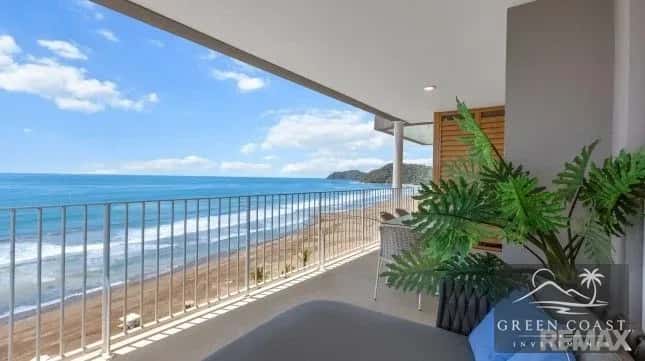
Luxury 3BR Corner Penthouse | 12th Floor Oceanfront | Lock-Off Suite | Jaco Beach — Buyer's Guide for Costa Rica Real Estate
This luxury 3-bedroom corner penthouse occupies the 12th floor of an oceanfront Jacó Beach development and is currently listed at USD 724,000. The property represents the only active listing in this specific luxury penthouse category within the Jaco real estate market. The unit includes a lock-off suite configuration that enables dual rental income streams, panoramic ocean views from the top floor, and direct access to one of Costa Rica's most established beach tourism markets.
This buyer's guide covers market conditions, purchasing procedures, legal requirements, and investment considerations for acquiring this high-end coastal property. International investors seeking income-generating real estate, luxury homebuyers looking for a primary or secondary residence, and experienced portfolio managers expanding into Central American markets will find detailed information about ownership structures, financing realities, due diligence processes, and practical lifestyle considerations specific to this oceanfront location.
Overview
This buyer's guide provides comprehensive information for investors and homebuyers interested in a luxury 3-bedroom corner penthouse located on the 12th floor of an oceanfront development in Jacó Beach. The property features a lock-off suite configuration at USD 724,000, representing the sole active listing in this specific luxury penthouse category within the current Jaco real estate market.
Who This Guide Is For
This resource addresses several distinct buyer profiles in the Jaco real estate market.
International investors seeking income-generating properties in Costa Rica's Pacific coast will find detailed information about the lock-off suite feature, which enables dual rental streams from a single unit. The 12th-floor oceanfront position commands premium rental rates and strong occupancy potential in Jacó's established tourism market.
Luxury homebuyers looking for a primary or secondary residence with ocean views and modern amenities can evaluate whether this corner penthouse configuration meets their lifestyle requirements. The guide addresses ownership structures, residency options, and property management considerations specific to high-end coastal real estate.
Experienced real estate investors expanding their Central American portfolios will benefit from market context comparing this listing to broader trends in Jacó's luxury segment. With only one active listing in this price range (USD 724,000), understanding the competitive landscape and valuation metrics becomes essential for making informed acquisition decisions.
First-time Costa Rica buyers receive guidance on the legal framework, financing options, due diligence processes, and cultural considerations unique to purchasing property in Jacó. The guide clarifies common misconceptions and provides realistic timelines for completing transactions in this jurisdiction.
Market Context

The Jacó real estate market currently shows limited inventory for luxury oceanfront penthouses, with just one active listing priced at USD 724,000. This 3-bedroom corner penthouse on the 12th floor represents a unique opportunity in a market segment where premium beachfront properties rarely become available, particularly units with lock-off suite configurations that enable rental income flexibility.
Current Inventory and Pricing
Active listings in this specific category—luxury oceanfront penthouses in Jacó—total just one property at USD 724,000. This pricing reflects the premium commanded by true beachfront positioning, top-floor location, and the added value of a lock-off suite design. The scarcity of comparable inventory indicates strong absorption rates for properly priced oceanfront units in established developments along Jacó Beach.
The USD 724,000 price point positions this penthouse in the upper tier of Jacó's condominium market, where buyers typically seek properties with proven rental histories and professional management infrastructure. Properties at this level generally feature high-end finishes, resort-style amenities, and legal structures that accommodate both personal use and investment returns.
Local Market Comparisons
Buyers evaluating this penthouse typically compare it against several property categories within the Jacó area. Standard 3-bedroom condominiums without oceanfront positioning or penthouse features generally trade between USD 400,000 and USD 550,000 in similar developments. Non-corner units on lower floors within the same building may offer USD 100,000 to USD 150,000 in savings but sacrifice the panoramic ocean views and enhanced privacy that corner penthouses provide.
Alternative considerations include beachfront houses in nearby communities like Hermosa Beach or Esterillos, where buyers can find standalone homes in the USD 600,000 to USD 900,000 range. These properties typically require more hands-on management and may lack the amenity packages and on-site rental programs that condominium developments offer.
Some buyers also evaluate newer developments in the Herradura area, approximately 10 minutes north, where modern construction and marina access appeal to a different buyer profile. These properties often command similar or higher prices but place buyers farther from Jacó's established restaurant scene, nightlife, and surf culture that attracts consistent rental demand year-round. Those interested in comparing options across the region can explore the area to understand how different communities meet varying investment and lifestyle objectives.
Investment Performance Metrics
The lock-off suite configuration distinguishes this penthouse from standard 3-bedroom units by creating two independent rental spaces within a single ownership structure. This design allows owners to rent the main penthouse and the lock-off suite separately, potentially generating higher combined rental income than a traditional single-unit configuration. During peak tourism seasons (December through April and July through August), oceanfront penthouses in Jacó command nightly rates 40-60% higher than non-oceanfront units on lower floors.
Occupancy rates for professionally managed oceanfront properties in established Jacó developments typically range from 60-75% annually, with higher percentages for units enrolled in active rental programs. The 12th-floor position maximizes ocean views while minimizing noise from street-level activity, a combination that appeals to premium renters willing to pay higher rates for superior positioning.
In our years on this coast, we've observed that top-floor oceanfront units in limited-supply buildings tend to maintain value more consistently during market corrections. The single active listing in this category suggests either strong historical absorption or limited original inventory, both factors that support price stability for well-maintained units.
Seasonal Demand Patterns
Jacó's tourism market operates year-round, unlike some Costa Rican beach destinations that experience significant seasonal fluctuations. The town's proximity to San José (90 minutes) attracts weekend visitors from the Central Valley throughout the year, providing baseline rental demand even during traditional low seasons. International tourism peaks align with North American winter months and summer vacation periods, while domestic Costa Rican visitors increase during local holiday weeks (Easter, Christmas, and mid-year school breaks).
Surf conditions remain consistent across most months, drawing a dedicated surf tourism segment that books accommodations during shoulder seasons when rates decrease but wave quality remains high. This diversified demand base—combining international tourists, domestic weekend visitors, and surf travelers—creates more stable occupancy patterns than resort areas dependent solely on seasonal international arrivals.
The lock-off suite configuration particularly benefits from this demand diversity. During periods of lower overall tourism, owners can rent only the lock-off suite at competitive rates while maintaining personal use of the main penthouse, or vice versa. This flexibility allows responsive pricing strategies that maximize revenue across varying market conditions.
Property Features and Configuration

The 3-bedroom corner penthouse occupies the entire 12th floor corner position, providing 180-degree ocean views and exposure on two sides. Corner units receive enhanced natural light, cross-ventilation, and privacy compared to center units with single-aspect exposure. The top-floor location eliminates noise from upstairs neighbors and typically includes higher ceilings than lower floors.
Lock-Off Suite Design
The lock-off suite functions as a self-contained unit with separate entrance, bedroom, bathroom, and kitchenette. This configuration allows the space to operate independently from the main penthouse, creating two distinct rental products within a single ownership. The main penthouse retains two bedrooms, full kitchen, living areas, and primary ocean-view terraces.
When rented separately, the lock-off suite appeals to couples or solo travelers seeking oceanfront accommodations at lower price points than the full 3-bedroom penthouse. The main unit attracts families or groups requiring more space. When combined, the full 3-bedroom configuration accommodates larger groups willing to pay premium rates for exclusive top-floor oceanfront access.
This dual-use capability provides operational flexibility unavailable in standard condominium designs. Owners can adjust their rental strategy based on booking patterns, personal use schedules, and market conditions without sacrificing potential revenue from vacant space.
Building Amenities and Services
Oceanfront condominium developments in Jacó typically include resort-style amenities that support both owner use and rental operations. Common features include multiple swimming pools, fitness facilities, on-site restaurants or bars, concierge services, and secured parking. These amenities reduce the need for owners to invest in standalone property improvements while providing rental guests with expected vacation resort features.
Professional property management services handle rental marketing, guest communications, cleaning, maintenance, and financial reporting. Management fees typically range from 20-30% of gross rental income, with higher percentages for companies providing comprehensive services including guest support and maintenance coordination. Buildings with established rental programs offer centralized booking systems, professional photography, and integration with major vacation rental platforms.
Security features in upper-tier developments include 24-hour staffing, controlled access points, surveillance systems, and secure parking. These elements appeal to international owners who occupy their units seasonally and rely on professional management during absence periods.
Buying Process
Foreign buyers can legally own property in Costa Rica with the same rights as citizens, except within 50 meters of the high tide line (maritime zone). This luxury penthouse in Jacó falls outside restricted zones, allowing direct fee-simple ownership through a Costa Rican corporation or personal name. Most investors choose the corporation structure for privacy, asset protection, and easier future transfers. Your attorney will establish this entity during the purchase process, with annual maintenance costs around $300–600.
Due Diligence Requirements
The due diligence period typically spans 30-45 days following purchase agreement execution. Your attorney conducts comprehensive title research through Costa Rica's National Registry (Registro Nacional), verifying clean title, absence of liens, current property tax status, and homeowners association payment history. For condominium purchases, this review extends to the condominium regime documents (reglamento de condominio), building permits, construction declarations, and any existing rental agreements or management contracts.
Maritime zone verification confirms the property's location outside restricted coastal areas. While this penthouse clearly falls outside the 50-meter restriction zone, your attorney will obtain official certification from the municipality. This documentation becomes essential for title insurance and future resale.
The physical inspection should verify that the unit's actual configuration matches registered plans, confirm the condition of major systems (HVAC, plumbing, electrical), and assess any deferred maintenance issues. For a 12th-floor oceanfront unit, particular attention to window seals, waterproofing, and salt-air corrosion becomes important. Request maintenance records for building-wide systems including elevators, backup generators, water systems, and structural elements.
Review the homeowners association's financial statements for the previous three years, current reserve fund balances, and any planned special assessments. Buildings with inadequate reserves may face unexpected capital calls for major repairs. Examine meeting minutes for ongoing disputes, pending litigation, or significant maintenance issues under discussion.
Timeline and Escrow Procedures
The typical closing timeline spans 60–90 days from accepted offer to final transfer. After signing a purchase agreement with a 10% deposit held in escrow, your attorney conducts the due diligence described above. The escrow agent—typically an attorney or established escrow company—holds the deposit in a segregated account and releases funds only upon successful completion or according to agreement terms if the transaction terminates.
The purchase agreement should specify contingencies including satisfactory due diligence results, clear title delivery, and verification of all property representations. Include specific deadlines for each contingency period and clear procedures for deposit return if contingencies aren't satisfied.
During the due diligence period, arrange property insurance effective from closing date. Costa Rican insurance companies and international carriers operating in Costa Rica offer property coverage, though earthquake and flood insurance may require separate policies or endorsements. Confirm that the homeowners association's master policy covers building structure and common areas, while your individual policy covers unit interiors and personal liability.
Closing Costs Breakdown
Buyers should budget 3–5% of the purchase price for closing costs. Transfer tax equals 1.5% of the registered value or purchase price (whichever is higher). Legal fees typically run 1–1.5%, covering title research, document preparation, and registry filing. Additional expenses include:
Notary fees (approximately $500)
Corporate formation if applicable ($800–1,200)
Stamps and registration fees (0.5%)
Title insurance (optional but recommended, approximately 0.5-1% of purchase price)
Property survey verification ($300-500)
Translation services for documents ($200-400)
With this penthouse listed at $724,000, expect total closing costs between $21,720–36,200. Some sellers cover transfer tax as a negotiation point, though this remains uncommon in the Jaco real estate market. Clarify responsibility for each cost category during offer negotiations to avoid surprises at closing.
Corporate Ownership Structure
Most foreign buyers establish a Costa Rican corporation (Sociedad Anónima) to hold property title. This structure provides several advantages over personal ownership:
Privacy protection: Corporate ownership keeps buyer names out of public registry records. Only the corporation name appears on title documents.
Asset protection: The corporate entity separates the property from personal assets, limiting liability exposure.
Estate planning: Transferring ownership through share transfers avoids probate procedures and simplifies inheritance planning. Heirs receive corporation shares rather than going through Costa Rican succession processes.
Resale efficiency: Future sales can occur through share transfer rather than property transfer, potentially reducing transfer taxes and simplifying transactions.
The corporation requires a minimum of two shareholders and three officers (president, secretary, treasurer). Nominees—often provided by your attorney's firm—can fill these roles while you maintain beneficial ownership through bearer shares or registered shares. Annual maintenance includes filing reports with the tax authority and maintaining a registered agent, costing $300-600 yearly.
Financing Considerations
Costa Rican banks rarely finance foreign buyers, and U.S. lenders won't mortgage international properties. Most transactions proceed as cash purchases, though some developers offer owner financing with 30–50% down payments. For this oceanfront unit, verify whether the developer or current owner provides financing terms.
Alternative financing options include:
Home equity lines of credit: Borrowing against U.S. property equity provides capital for Costa Rica purchases while maintaining domestic tax deductions on interest payments.
Portfolio loans: Some international lenders and private banks offer loans secured by investment portfolios rather than the property itself.
Self-directed IRA purchases: Qualified retirement accounts can purchase foreign real estate as investments, though strict IRS rules govern personal use and income distribution.
Developer financing: When available, seller financing typically requires 30-50% down payment with 5-10 year terms at interest rates 2-4 points above U.S. mortgage rates.
Cross-collateralization: Pledging other owned properties as collateral for private loans, though this increases risk exposure.
Cash purchases eliminate financing contingencies, strengthen negotiating position, and accelerate closing timelines. Sellers often prefer cash offers even at slightly lower prices due to transaction certainty.
Closing Procedures
Your closing occurs at the notary's office, where all parties sign the transfer deed (escritura). Costa Rican notaries are attorneys with special certification who authenticate documents and ensure legal compliance. The notary reviews all due diligence documentation, verifies party identities, confirms payment arrangements, and prepares the transfer deed.
The escritura includes complete property description, purchase price, payment terms, and any special conditions. All parties sign before the notary, who then files documents with the National Registry. Ownership transfers once the registry records the new deed—typically 5–10 business days after signing.
Payment typically occurs through wire transfer to the seller's account, with the notary verifying receipt before releasing signed documents to the registry. Some transactions use escrow accounts that release funds upon registry confirmation, providing additional security for buyers.
Request certified copies of all closing documents including the recorded deed, corporate documents if applicable, paid property tax certificates, HOA payment confirmations, and title insurance policies. Store these documents securely and provide copies to your property manager and any future rental management companies.
Ownership Costs and Obligations
Beyond the purchase price and closing costs, budget for ongoing ownership expenses that affect both personal use and investment returns.
Property Taxes
Costa Rica assesses property taxes (impuesto sobre bienes inmuebles) at approximately 0.25% of the registered property value annually. The municipality determines assessed value based on construction costs, land value, and property characteristics. Assessments typically fall below market value, resulting in effective tax rates lower than the nominal 0.25%.
For a property registered at $724,000, annual property taxes would approximate $1,810, though the actual assessment may differ from purchase price. The municipality bills quarterly, with payments due in January, April, July, and October. Late payments incur penalties and interest charges.
Property tax obligations remain current as a condition of legal property transfer. Your attorney verifies paid status during due diligence, and sellers must provide proof of payment through the most recent billing period.
Homeowners Association Fees
Condominium developments charge monthly HOA fees covering common area maintenance, amenities operation, insurance, security, landscaping, and reserve fund contributions. Fees vary significantly based on development amenities, building age, and management quality.
Oceanfront buildings with extensive amenities (multiple pools, fitness facilities, restaurants, 24-hour security) typically charge $400-800 monthly for 3-bedroom penthouses. Top-floor units may incur higher fees due to increased square footage or exclusive amenities. Request the current fee schedule and review historical increases to project future costs.
HOA fees for this specific property should be verified directly with the development management. Review the association's budget to understand how fees are allocated and whether reserve fund contributions adequately cover anticipated capital improvements.
Utilities and Services
Monthly utility costs for a 3-bedroom oceanfront penthouse in Jacó typically include:
Electricity: $150-300 monthly depending on air conditioning use, with higher costs during hot season (March-May). Costa Rica's electricity rates are higher than U.S. averages, and oceanfront units often run AC continuously during rental periods.
Water: $30-60 monthly for normal use. Oceanfront developments typically include water in HOA fees or charge minimal amounts.
Internet and cable: $60-100 monthly for high-speed internet and cable television packages suitable for rental guests.
Telephone: $30-50 monthly if maintaining a landline, though many owners rely solely on mobile phones.
Garbage collection: Often included in HOA fees or municipal taxes.
Total monthly utilities typically range $270-510 for owner-occupied units. Rental properties incur higher costs due to increased AC use and guest consumption patterns. Professional property managers typically handle utility payments and include costs in monthly owner statements.
Insurance
Property insurance costs vary based on coverage limits, deductibles, and included perils. Standard policies cover fire, theft, and liability, while earthquake and flood coverage require additional premiums or separate policies. Annual insurance costs for a $724,000 oceanfront penthouse typically range $1,500-3,000.
The homeowners association maintains master insurance covering building structure and common areas, but individual unit owners need separate policies for interior improvements, personal property, and liability coverage. Verify the association's coverage limits and ensure your individual policy fills any gaps.
Rental properties should include commercial liability coverage protecting against guest injuries or property damage claims. Some insurance companies offer specialized vacation rental policies combining property coverage with loss-of-income protection and guest liability.
Property Management Fees
Professional property management companies charge 20-30% of gross rental income for comprehensive services including:
Rental marketing and booking management
Guest communications and support
Cleaning and turnover services
Maintenance coordination
Financial reporting and owner payments
Inventory management
Utility payment processing
Full-service management justifies higher fees (25-30%) while basic services (cleaning and maintenance only) may cost 15-20%. Properties enrolled in hotel-style rental programs operated by the development may incur different fee structures, sometimes including fixed monthly fees plus percentage of revenue.
For owners using the property personally while renting during absence periods, management fees apply only to rental periods. Calculate projected management costs based on anticipated occupancy rates and gross rental income to understand net investment returns.
Tax Implications
Property ownership in Costa Rica creates tax obligations in both Costa Rica and your home country. Understanding these requirements prevents unexpected liabilities and enables proper tax planning.
Costa Rican Tax Obligations
Property taxes: Discussed above at approximately 0.25% of assessed value annually.
Rental income tax: Costa Rica taxes rental income generated within the country. Property owners must register with the tax authority (Ministerio de Hacienda) and file annual tax returns reporting rental income. The tax rate structure applies progressive rates to net income (gross rental income minus allowable expenses):
0-4,000,000 colones: 10%
4,000,001-8,000,000 colones: 15%
Above 8,000,000 colones: 20%
Allowable deductions include property management fees, maintenance costs, utilities, property taxes, insurance, HOA fees, and depreciation. Maintain detailed records of all income and expenses to support deductions.
Corporate taxes: If holding property through a Costa Rican corporation, the entity must file annual tax returns even if generating no income. Corporations pay minimum annual tax based on gross assets, typically $300-500 for property-holding entities.
Capital gains tax: Property sales generate capital gains tax at 15% of the gain (sale price minus purchase price and improvements). Some exemptions apply for primary residences owned over two years, though foreign owners rarely qualify. The tax applies at closing, with the notary withholding the amount from sale proceeds.
U.S. Tax Considerations
U.S. citizens and residents must report worldwide income to the IRS, including rental income from Costa Rican properties. Report gross rental income and claim deductions for expenses on Schedule E. The same expense categories deductible in Costa Rica generally apply for U.S. tax purposes, though depreciation calculations differ.
Foreign tax credits allow U.S. taxpayers to offset Costa Rican taxes paid against U.S. tax liability on the same income, preventing double taxation. File Form 1116 to claim foreign tax credits for Costa Rican rental income taxes paid.
Foreign bank account reporting requirements (FBAR) apply if your combined foreign financial accounts exceed $10,000 at any point during the year. This includes Costa Rican bank accounts, rental escrow accounts, and HOA reserve accounts where you have signature authority. File FinCEN Form 114 annually to report foreign accounts.
FATCA reporting (Form 8938) may apply for foreign financial assets exceeding threshold amounts ($200,000 for single filers living in the U.S., higher thresholds for married couples and foreign residents).
Capital gains from foreign property sales receive the same tax treatment as U.S. real estate for U.S. tax purposes. Long-term capital gains rates (0%, 15%, or 20% depending on income) apply to properties held over one year. The foreign tax credit allows offsetting Costa Rican capital gains tax against U.S. liability.
Consult a tax professional experienced with foreign property ownership to ensure compliance with both countries' requirements and optimize your tax position.
Residency Options
Property ownership alone doesn't grant residency status in Costa Rica. Buyers planning extended stays should explore formal residency programs, each with specific requirements and benefits.
Pensionado (Retiree) Residency
The pensionado program targets retirees with guaranteed lifetime income from pensions, Social Security, or retirement accounts. Requirements include:
Minimum $1,000 monthly guaranteed income from pension or retirement source
Income must be permanent and verifiable
Background check and clean criminal record
Health certificate from Costa Rican doctor
Pensionado status grants two-year renewable residency, work restrictions (cannot earn Costa Rican income), and eligibility for certain tax benefits including duty-free import of household goods and one vehicle.
Rentista (Income-Based) Residency
The rentista program suits individuals with passive income from investments, rental properties, or other non-employment sources. Requirements include:
$2,500 monthly guaranteed income for two years ($60,000 total)
Income must be deposited in Costa Rican bank
Background check and clean criminal record
Health certificate from Costa Rican doctor
Rentista status grants two-year renewable residency with the same work restrictions as pensionado status. After three years of legal residency, rentistas can apply for permanent residency.
Investor Residency
Foreign nationals investing minimum amounts in Costa Rican businesses or real estate may qualify for investor residency. Real estate investment requires $200,000 minimum in registered property value. The investment must remain for the residency period, and applicants must demonstrate the investment benefits Costa Rica's economy.
Investor residency provides two-year renewable status, allows work in the invested business, and creates a path to permanent residency after three years.
Perpetual Tourist Status
Many foreign property owners maintain "perpetual tourist" status by exiting Costa Rica every 90 days to reset tourist visa periods. While technically legal, this approach provides no formal residency status, doesn't allow work authorization, and creates travel inconvenience. Immigration authorities may question frequent border crossings and deny entry if they suspect immigration law abuse.
Formal residency provides legal certainty, eliminates exit requirements, allows opening bank accounts and obtaining driver's licenses, and creates paths to permanent residency and eventual citizenship.
Lifestyle Considerations
Jacó's location, infrastructure, and cultural character create specific lifestyle attributes that differ from other Costa Rican beach communities.
Location and Accessibility
Jacó sits 90 minutes from San José's Juan Santamaría International Airport via well-maintained Highway 27. This proximity makes the town one of Costa Rica's most accessible beach destinations, supporting both tourism demand and owner convenience. Weekend trips from North America become practical with Friday evening arrivals and Sunday afternoon departures.
The town's central Pacific coast position provides easy access to multiple nearby beaches, national parks, and outdoor activities. Manuel Antonio National Park lies 45