
Why Are Costa Rica Expat Properties in the Arenal and Central Valley Regions Surging in Demand?
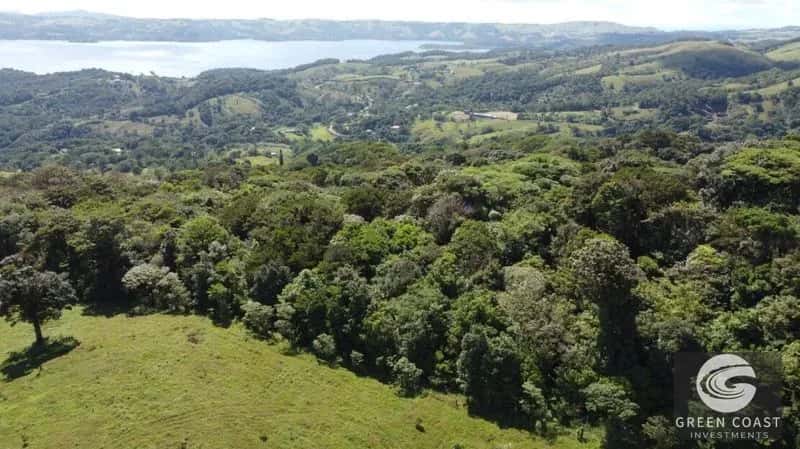
For buyers comparing active inventory, see Luxury 4.9-Hectare Arenal Farm with Panoramic Lake & Volcano Views.
Premium costa rica expat properties are experiencing a surge in demand because they offer a rare combination of sovereign security, natural beauty, and a tangible hedge against global economic volatility. In our years on this coast, we have seen international buyers increasingly seek out large-acreage parcels that combine residential privacy with agricultural viability. These dual-purpose estates allow expats to establish self-sufficient homesteads, cultivate organic crops, and secure generational wealth in a politically stable, ecologically progressive nation.
A prime example of this high-value agricultural-residential fusion is the featured 4.9-Hectare Arenal Farm. Priced at USD 300,000, this expansive tract of land offers panoramic lake and volcano views, representing a unique entry point for buyers who want the cool climate and fertile soil of the highlands without sacrificing modern infrastructure.
Comparing the Arenal Farm to the Regional Market
To understand the value proposition of this USD 300,000 Arenal estate, it helps to examine the broader regional real estate inventory. The market for acreage and estate homes in the surrounding Central Valley and highland corridors is highly diverse, catering to a wide range of budgets and development goals.
According to current market data, there are 80 active listings in the region. Property values across these listings span a wide price range of USD 40,000 to USD 3,800,000, reflecting everything from small raw-land lots to luxury equestrian estates. The average regional listing price currently sits at USD 565,895.
A High-Value Investment Hedge
Positioned at USD 300,000, the 4.9-Hectare Arenal Farm sits well below the regional average of USD 565,895, yet it delivers substantially more land than typical Central Valley listings in this price bracket. While a standard USD 300,000 budget in suburban San José or the hills near Jacó might secure a half-acre lot or a medium-sized condominium, this Arenal property provides over 12 acres of usable, fertile land. This price-to-acreage ratio makes it an exceptional vehicle for expats looking to maximize their purchasing power while securing a highly versatile asset.
---
How Does the 'Uso de Suelo' Affect My Plans to Build on a 4.9-Hectare Property?

The Uso de Suelo (land use permit) is the single most critical document dictating what, where, and how much you can build on a 4.9-hectare (49,000 square meters) property in Costa Rica. Issued by the local municipality (municipalidad), this document acts as the official zoning certificate. It determines whether your acreage is classified for agricultural, residential, or commercial use, and it outlines the building footprint limitations you must respect to obtain future construction permits. For buyers browsing the 80 active listings of costa rica expat properties in this category—which range in price from USD 40,000 to USD 3,800,000 with an average price of USD 565,895—securing an updated Uso de Suelo is the first line of defense against zoning surprises.
Agricultural Zoning vs. Residential Zoning Footprints
Understanding the distinction between agricultural and residential zoning is vital when planning an estate or hobby farm.
On one hand, multi-hectare parcels, such as a 4.9-hectare estate, are frequently zoned as agricultural (agrícola). To preserve the natural landscape and farming viability, municipalities restrict the maximum building footprint on agricultural land to between 10% and 25% of the total land area. On a 4.9-hectare (49,000 square meters) farm, a conservative 10% allowance still permits a massive 4,900 square meters (approximately 52,700 square feet) of structural footprint. This easily accommodates a primary villa, guest houses, worker quarters, and equestrian facilities.
Conversely, standard residential zoning allows for much higher coverage percentages (often 50% to 70%). However, it rarely applies to large acreage tracts in rural Arenal or the outskirts of the Central Valley.
Step-by-Step Zoning Verification for Expats
To protect your investment, you must verify the zoning compliance of the property during the due diligence period. Do not release funds from escrow until these steps are complete:
1. Request the Plano Catastrado: Obtain the official registered survey map (plano catastrado) from the seller, ensuring it has a unique registration number and is recorded in the National Registry (Registro Nacional).
2. Apply for a New Uso de Suelo: Have your real estate attorney or topographer apply for a fresh Uso de Suelo at the local municipality. Do not rely on an older document provided by the seller, as municipal zoning regulations change.
3. Verify Setbacks and Restrictions: Review the document for setbacks (retiros) from public roads, neighboring boundaries, and natural water sources. In the Arenal and Central Valley regions, protected springs or rivers require a building setback of 15 to 50 meters.
4. Confirm Utility Feasibility: Ensure the Uso de Suelo aligns with letters of feasibility from the local water association (ASADA) and the electricity provider, as the municipality will not grant building permits without confirmed utility access.
---
Can US and Canadian Buyers Secure Water Rights and Concession Wells for Private Estates?

US and Canadian buyers can legally secure water rights and concession wells for private estates in Costa Rica, but the process requires strict adherence to environmental laws. To obtain legal water access for a 4.9-hectare property, buyers must either connect to a local communal water system known as an ASADA (Asociación Administradora de los Sistemas de Acueductos y Alcantarillados Comunales) or register a private concession well directly with MINAE (Ministry of Environment and Energy). Without an officially recognized water source, municipalities will not issue building permits for residential construction or agricultural development.
ASADA Connections vs. Private MINAE Concessions
An ASADA connection is the simplest path to securing water, as the communal infrastructure is already managed and certified. However, for a sprawling 4.9-hectare hobby farm, relying solely on an ASADA may limit your agricultural operations.
A private registered concession well drilled on your property offers complete utility independence. While an ASADA provides potable water for domestic use, a MINAE-registered concession well allows you to tap into local aquifers for extensive irrigation, livestock, and large estate pools.
The Legal Process and Timelines with MINAE
Registering a private water concession is a multi-step legal process managed through the Dirección de Aguas (Water Directorate) of MINAE.
```
[Hydrological Study] ---> [Permit Application] ---> [Concession Approval]
(Certified Geologist) (Property Deeds/Plans) (Flow Rate & Duration)
```
First, a certified geologist must conduct a study to prove the aquifer's viability and ensure drilling will not negatively impact local water tables. Next, you submit the study, property deeds, and environmental impact plans to MINAE. Finally, MINAE grants the concession for a specific flow rate and duration (typically 10 to 15 years, renewable).
Buyers must plan for significant administrative delays. MINAE concession processing timelines generally range from 12 to 24 months. Because of these timelines, transactions involving undeveloped land often include escrow contingencies tied to water permit approvals.
Water Security for Hobby Farms
Water security is the single most critical factor for maintaining a 4.9-hectare hobby farm. Maintaining tropical landscaping, filling pools, and irrigating exotic fruit orchards requires high-volume water access.
For standard residential use, a flow rate of 0.5 to 1.0 liters per second (l/s) is typically sufficient. However, a hobby farm with agricultural ambitions requires a minimum of 1.5 to 3.0 l/s to sustain crops and livestock during the dry season.
Due Diligence Steps During the Transactional Phase
With 80 active listings in the region ranging from USD 40,000 to USD 3,800,000 (with an average price of USD 565,895), securing water rights directly impacts your property valuation. Before releasing funds from escrow, execute these due diligence steps:
Request the "Carta de Agua":* Obtain an official, recently dated letter from the local ASADA confirming availability and capacity to connect to the property.
Verify MINAE Registration: If the property advertises an existing well, have your attorney verify the MINAE concession number (número de expediente*) to ensure it is active, legally registered, and free of sanctions.
Perform Flow Rate and Potability Tests:* Hire an independent technician to test the well's actual flow rate and submit water samples to a certified lab to test for agricultural runoff or heavy metals.
---
How Do Central Valley and Arenal Microclimates Impact Year-Round Living and Hobby Farming?
The microclimates of the Arenal and Central Valley transition zones directly dictate the success of hobby farming and the cost of daily living, offering a rare sweet spot where high-altitude mountain breezes eliminate the need for energy-intensive air conditioning while rich volcanic soils maximize agricultural yields. In this specific transition zone, average annual temperatures range from a comfortable 64°F to 82°F (18°C to 28°C), paired with an average annual rainfall of 100 to 140 inches. This steady moisture, combined with cool wind patterns sweeping off Lake Arenal, creates a highly productive, self-sustaining ecosystem that is driving intense interest in the region. Currently, there are 80 active listings of costa rica expat properties in this category, with prices ranging from USD 40,000 to USD 3,800,000, and an average price of USD 565,895.
Soil Chemistry and Crop Selection for Permaculture
The agricultural viability of this 4.9-hectare tract rests on its volcanic soil composition. The earth here features deep, well-draining Andisols, characterized by high organic matter content and excellent water retention. The typical soil pH levels in this region range between 5.5 and 6.5, which is the ideal acidic-to-neutral sweet spot for nutrient absorption.
This specific soil profile and climate are perfect for several high-yield setups:
Specialty Coffee:* The elevation and volcanic acidity produce dense, high-quality Arabica beans.
Citrus and Exotic Fruits:* Persian limes, passion fruit, and rambutan thrive in the consistent humidity.
Permaculture and Food Forests:* The nutrient-dense topsoil easily supports multi-tiered agroforestry systems, including cacao, turmeric, ginger, and perennial greens.
Wind Patterns and Passive Cooling Economics
The local microclimate also functions as a natural climate control system for estates. Cool air currents flowing over Lake Arenal collide with the rising thermal currents of the mountain slopes, generating a continuous, refreshing draft.
For estate owners, this constant airflow means residential designs can rely on passive ventilation rather than mechanical cooling. By orienting a home to capture these wind patterns, you can maintain indoor temperatures of 70°F to 74°F year-round. Eliminating central air conditioning drastically reduces monthly utility bills, lowering the long-term operating costs of a large-scale estate compared to hotter, coastal markets.
---
What Are the Legal Requirements for Buying a Multi-Hectare Farm in Costa Rica?
Foreigners enjoy the same fee-simple ownership rights as Costa Rican citizens under Article 19 of the Costa Rican Constitution. This constitutional guarantee means you can legally own a multi-hectare farm in your own name, with no requirement for a local partner or residency. Currently, the market for costa rica expat properties includes 80 active listings ranging in price from USD 40,000 to USD 3,800,000, with an average price of USD 565,895. Acquiring these larger parcels requires adherence to specific legal protocols to secure your investment.
Corporate Structure and Asset Protection
While you can purchase property in your personal name, real estate attorneys strongly recommend establishing a local corporation—either a Sociedad Anónima (S.A.) or a Sociedad de Responsabilidad Limitada (S.R.L. or Limitada)—to hold the title. Purchasing through a corporation provides robust asset protection, shields you from personal liability, and simplifies future estate planning. It also streamlines utility setups, local tax filings, and the management of farm employees or caretakers.
The Role of the Notary Public and the National Registry
In Costa Rica, a notary public (Notario Público) must be a licensed attorney. The notary acts as a neutral officer of the state, drafting the transfer deed (Escritura Pública) and executing the transaction. Once both parties sign, the notary submits the deed to the National Registry (Registro Nacional) for official recording.
Standard real estate transaction closing costs typically range from 3% to 4% of the purchase price, which is customarily split 50/50 between the buyer and the seller. This fee covers:
* The notary's legal fees (set by a sliding scale regulated by law)
* Property transfer taxes (1.5% of the registered value)
* National Registry stamp duties and documentary stamps (approximately 0.8% combined)
Verifying Boundaries with the Plano Catastrado
For multi-hectare farms, securing a professional boundary survey is a critical step in the due diligence process. You must verify that the physical boundaries of the land align perfectly with the official survey map (Plano Catastrado) registered with the government.
Overlapping boundaries, old fence lines, and unregistered rights-of-way can lead to costly disputes with neighboring farms. Your attorney must cross-reference the Plano Catastrado with the National Registry database to confirm there are no pending judicial claims, overlapping titles, or agricultural easements on the property before funds are released from escrow.
---
What Are the Tax Implications of Owning Luxury Agricultural Land in Costa Rica?
Owning agricultural land in Costa Rica comes with a highly favorable tax structure compared to North America, characterized by a low flat-rate municipal property tax of 0.25% and strategic exemptions for agricultural acreage. While high-end residential estates face additional luxury taxes, large-scale acreage classified for agricultural use allows buyers of costa rica expat properties to optimize their annual tax liabilities. Currently, the local market reflects a diverse range of investment scales, with 80 active listings priced from USD 40,000 to USD 3,800,000, yielding an average price of USD 565,895. Understanding how these assets are assessed is key to managing your holding costs.
Municipal Property Tax (Impuesto Territorial)
The foundational tax on Costa Rican real estate is the Impuesto Territorial (municipal property tax). This is a flat annual rate of 0.25% assessed on the registered value of the property at the local municipality (municipalidad). For a property valued at the market average of USD 565,895, the annual municipal tax is just USD 1,414.74. This tax is paid quarterly, though many expats choose to pay the entire year upfront to simplify their accounting.
The Luxury Home Tax (Impuesto Solidario)
For high-end estates, the Impuesto Solidario (Luxury Home Tax) applies on a sliding scale from 0.25% to 0.55%. However, this tax applies strictly to the value of the residential construction and the immediate recreational land (such as manicured gardens and pools), not the agricultural acreage.
For the 2024 fiscal year, the taxable threshold for the luxury home tax is set at approximately USD 273,000 (adjusted annually in Costa Rican Colones). If the valuation of your physical villa, guest houses, and immediate residential footprint falls below this threshold, the property is entirely exempt from this tax, regardless of how valuable the surrounding 4.9 hectares of agricultural land may be.
Corporate Tax Obligations (Impuesto a las Personas Jurídicas)
Most expats purchase large tracts of land through a Costa Rican corporation (Sociedad Anónima or Sociedad de Responsabilidad Limitada). Holding land in a corporation requires paying the annual Impuesto a las Personas Jurídicas (Corporate Tax).
Inactive Corporations:* If the entity merely holds the property as an asset and does not generate income, the annual tax is a flat fee of approximately USD 120.
Active Corporations:* If you run a commercial farm or rent the estate, the corporation is deemed active, and the tax scales up to approximately USD 300 to USD 400 annually, depending on gross income.
Tax Optimization Strategies for Mixed-Use Estates
To minimize exposure to the luxury home tax and maximize agricultural deductions, buyers can legally segregate the residential footprint from the agricultural acreage. By registering the villa on a smaller portion of the plot and dedicating the remaining hectares to active agricultural use—such as timber, livestock, or fruit cultivation—you ensure the bulk of the land value is taxed at the base 0.25% municipal rate. Furthermore, operating a registered agricultural business allows you to write off farm equipment, maintenance, and labor costs against any local revenue generated on the estate.
---
What Are the Logistics of Importing High-End Farming Equipment and Building Materials?
Importing high-end farming equipment and building materials into Costa Rica requires navigating a structured customs process (Aduanas), paying duties that range from 1% to over 50%, and coordinating with licensed customs brokers (Agencias de Aduanas). While sourcing specialized agricultural machinery and premium finishes locally can be challenging, buyers of premier costa rica expat properties can successfully import these goods by utilizing established shipping routes from major US ports like Miami or Houston to Puerto Limón, which typically feature transit times of 5 to 10 days.
Sourcing Challenges and the Customs Clearance Process
Developing a 4.9-hectare estate often demands specialized agricultural machinery and high-end architectural finishes that are unavailable in local Costa Rican markets. When importing these items, goods must clear Aduanas at the port of entry.
Import duties vary significantly by category:
Heavy Agricultural Machinery:* Generally enjoys preferential tax treatment, with duties often ranging from 1% to 15% under specific agricultural incentive programs.
Luxury Fixtures and Finishes:* High-end lighting, premium plumbing fixtures, and specialized construction materials can face cumulative import taxes and duties ranging from 30% to 55%.
To avoid delays, retain a licensed Agencia de Aduanas based in San José or Puerto Limón before your cargo departs the US. These brokers manage the classification of goods under the Harmonized System (HS) codes, file the necessary import declarations (DUA), and ensure compliance with Ministry of Health or Ministry of Agriculture permits.
Importing vs. Sourcing Local Materials
Before shipping containers of finishes, compare the total landed cost of imports against high-quality Costa Rican alternatives.
| Material/Equipment Category | Imported Option (US Port to Limón) | Local Costa Rican Alternative |
| :--- | :--- | :--- |
| Structural & Finish Woods | Imported Oak/Teak (High duties + shipping) | Local Almendro, Guanacaste, or Teak (Duty-free) |
| Stone & Tile | Italian Marble / Custom Quartz (30%+ duty) | Local Travertine and volcanic stone |
| Agricultural Equipment | Specialized US tractors (5–10 day transit) | Standard local brands (Limited specialty models) |
Using local Costa Rican hardwoods and volcanic stone reduces material costs and aligns with the tropical aesthetic of high-end Central Valley and Arenal estates. For specialized solar grids, smart-home automation, and commercial-grade farming implements, importing remains the most viable path to achieving North American standards. This logistical balance is a key consideration for buyers exploring the regional market, where active listings currently sit at 80 properties, with a price range of USD 40,000 to USD 3,800,000, and an average price of USD 565,895.
---
Frequently Asked Questions About Costa Rica Expat Properties
Purchasing a multi-hectare estate in the Arenal or Central Valley regions is a major milestone for international buyers looking at costa rica expat properties. Currently, the market for these tracts is highly active, with 80 active listings ranging in price from USD 40,000 to USD 3,800,000, and an average price of USD 565,895. Navigating the legalities of residency, property management, and financing is essential to securing your investment.
Can I obtain residency in Costa Rica by purchasing this USD 300,000 farm?
Yes, purchasing a USD 300,000 farm qualifies you for residency. Under the Inversionista (Investor Visa) category, the minimum investment threshold for investor residency is USD 150,000. Because this 4.9-hectare property exceeds that limit, you, your spouse, and your dependents under 25 are eligible to apply for temporary residency. The investment can be made in real estate, shares, or business ventures, provided the registered value of the property meets or exceeds the USD 150,000 requirement at the time of the application.
How do I manage a 4.9-hectare farm if I only live in Costa Rica part-time?
Managing a large acreage from abroad is highly feasible through a combination of professional property management firms and a dedicated local caretaker, known as a cuidador. For a 4.9-hectare hobby farm, hiring a live-in cuidador is the standard practice. You will need to build a small caretaker cottage on the property and comply with Costa Rican labor laws, which include paying minimum wage, social security (Caja), and yearly bonuses (Aguinaldo). A local property manager can oversee the caretaker, handle payroll, and coordinate routine maintenance, ensuring your estate remains secure and productive while you are away.
Is financing available for US and Canadian buyers purchasing large land tracts?
Traditional bank financing is rarely available to non-residents through Costa Rican state or private banks, as they require local credit histories and residency status. When buying large land tracts, US and Canadian buyers typically rely on seller financing or cash reserves. Seller financing is a common alternative where buyers negotiate a down payment—usually 30% to 50%—with the remaining balance paid over a short term of two to five years at mutually agreed-upon interest rates. Alternatively, some buyers secure equity lines of credit on assets in their home countries to fund the purchase.