
Can Foreigners Buy Property in Central Valley Costa Rica?
Foreigners buying property Central Valley Costa Rica have identical ownership rights to Costa Rican citizens, with no restrictions on the percentage of property you can own. Costa Rica's constitution guarantees full property rights to international buyers, allowing you to hold title in your own name with complete legal protection under the same framework that applies to nationals.
The Central Valley offers a significant legal advantage over coastal regions: zero maritime zone restrictions. Unlike beachfront properties, which fall under Costa Rica's Maritime Zone Law and may involve concession leases rather than fee-simple ownership, Central Valley estates provide straightforward freehold ownership. Properties in this region are fully available to non-residents with absolute ownership rights—no concessions, no government-controlled zones, and no limitations on transfer or inheritance.
You do not need residency before purchasing property. Costa Rica imposes no residency requirements for property acquisition. You can complete your purchase on a standard tourist visa, though you'll need proper identification documents and a Costa Rican tax ID number (which your attorney obtains during the transaction process). Your ownership rights remain identical whether you visit twice a year or establish permanent residency.
Constitutional protections for foreign buyers stem from Article 45 of Costa Rica's constitution, which guarantees private property rights without nationality-based discrimination. The country has maintained these protections for decades as part of its strategy to attract foreign investment and maintain political stability. Unlike some Latin American countries that restrict foreign ownership near borders or in agricultural zones, Costa Rica applies no such limitations in the Central Valley region.
In our years working this market, we've seen properties at the USD 995,000 level transfer through the same notarial process used for domestic transactions, with your rights recorded in the National Registry and protected under Costa Rican law. Foreign buyers hold the same standing in property disputes, zoning matters, and development rights as any Costa Rican citizen.
What Legal Documents Do I Need to Buy Property as a Foreigner?
Foreigners buying property in Central Valley Costa Rica must present a valid passport with certified copies, obtain a Costa Rican tax identification number, and provide proof of funds for transactions exceeding USD 10,000. If you're purchasing through a corporation, you'll also need complete entity formation documents, and buyers unable to attend closing require an apostilled power of attorney.
Your passport serves as your primary identification throughout the transaction. The notary public handling your closing will require at least two certified copies, which must be authenticated by a Costa Rican consulate or through the apostille process if certified in your home country. These copies become part of the permanent property registry records.
Every property buyer needs a Costa Rican tax identification number before closing. Individual buyers obtain either a DIMEX (for residents) or NITE (for non-residents), while corporations require a cédula jurídica. Your attorney typically handles this application process, which takes approximately 2-4 weeks. This tax ID becomes essential for all future property tax payments and utility registrations.
Costa Rica's anti-money laundering regulations require documented proof of funds origin for any real estate transaction over USD 10,000. Banks, investment account statements, or certified letters from financial institutions satisfy this requirement. Your attorney will submit these documents to the notary public before closing, and they remain confidential within the legal file.
If you cannot personally attend the closing ceremony, you must grant power of attorney to a representative—typically your Costa Rican attorney. This document requires apostille certification from your home country and must be translated by an official Costa Rican translator. The power of attorney should specify real estate transaction authority and include the specific property details when possible.
Buyers purchasing through a Costa Rican corporation must provide complete entity formation documents, including articles of incorporation, shareholder registry, and board meeting minutes authorizing the purchase. Your attorney files these with the National Registry alongside the property transfer documents.
What Does USD 1 Million Buy in Central Valley Real Estate?
At the USD 1 million price point, foreigners buying property in Central Valley Costa Rica can expect substantial estates featuring multiple structures, extensive land, and premium amenities within secure communities. Current market data shows 1 active listing at USD 995,000, representing the available inventory in this specific price bracket for high-end buyers seeking accommodations in Costa Rica's metropolitan region.
The current inventory demonstrates typical features available at this investment level: estates with multiple separate homes, swimming pools, and recreational facilities located within gated communities. This configuration appeals to buyers seeking multi-generational living arrangements, rental income potential from additional structures, or dedicated guest accommodations. Properties at this tier typically include 4,000 to 7,000 square feet of total living space across all buildings, modern construction standards, and high-end finishes throughout.
Gated community properties dominate the market in Central Valley, offering foreign buyers enhanced security infrastructure, maintained common areas, and established homeowner associations that handle property management concerns. These communities provide controlled access, perimeter security, and often include shared amenities such as clubhouses or fitness facilities. Standalone estates outside gated developments may offer larger land parcels and greater privacy but require buyers to implement independent security measures and property maintenance systems.
Land size expectations at the USD 1 million level typically range from 1.5 to 3 acres in prime Central Valley locations near Escazú, Santa Ana, or Heredia. These parcels provide sufficient space for main residences, guest houses, recreational facilities, and landscaped gardens while maintaining manageable property tax obligations. Larger acreage becomes available at this price point in areas farther from San José's urban core, though proximity to international schools, medical facilities, and the Juan Santamaría International Airport often justifies premium pricing on smaller parcels.
Properties at this price level frequently include multiple independent dwelling units with separate entrances and utility connections, resort-style pools with surrounding entertainment areas, and sports facilities including tennis courts, pickleball courts, or basketball courts. You'll also find professionally landscaped grounds with irrigation systems, staff quarters or caretaker accommodations, and multi-car garages with additional storage space. High-end kitchen appliances and imported fixtures are standard, along with smart home technology and security systems. Many properties offer mountain or valley views from elevated positions.
The limited active inventory at this price point reflects strong demand in this segment and the tendency for premium properties to sell quickly. Foreign buyers should expect competition for well-positioned estates and may need to act decisively when suitable properties become available. Working with experienced real estate professionals familiar with Central Valley's market helps identify off-market opportunities and upcoming listings before they reach public databases.
What Are the 7 Steps to Close on a Central Valley Estate?
Closing on a Central Valley estate involves seven distinct steps that typically take 45-90 days for properties over USD 500,000. The process begins with property selection and concludes with official deed registration at Costa Rica's National Registry, with each step requiring specific documentation and legal oversight to protect your investment.
Step 1: Property selection and initial due diligence begins when you identify a target property. Your attorney should conduct preliminary research on the property's legal status, verify ownership, and check for liens or encumbrances. This initial phase helps you understand the property's true condition and legal standing. Your attorney will request copies of the existing title, recent property tax receipts, and HOA documentation if applicable.
Step 2: Offer and earnest money deposit requires submitting a formal written offer, typically accompanied by an earnest money deposit of 5-10% of the purchase price. This deposit demonstrates serious intent and is held in escrow pending completion of the transaction. The offer should specify the purchase price, proposed closing date, contingencies for title clearance and inspections, and allocation of closing costs between buyer and seller.
Step 3: Title study by attorney (estudio registral) is the comprehensive legal examination of the property's registration at the National Registry. Your Costa Rican attorney will verify ownership history, confirm no outstanding debts or liens exist, and ensure all property taxes are current. This study typically takes 10-15 days and includes reviewing the property's registration history for at least 20 years to identify any potential title defects, easements, or restrictions that could affect your ownership rights.
Step 4: Survey verification and boundary confirmation involves hiring a licensed topographer to verify property boundaries match the registered measurements. For estates with significant acreage, this step prevents future boundary disputes with neighbors. The topographer will physically mark property corners, verify that fences and structures fall within legal boundaries, and confirm that the actual land area matches the registered dimensions in the National Registry. Any discrepancies must be resolved before closing.
Step 5: Purchase agreement (promesa de compraventa) is the binding contract outlining all terms, conditions, purchase price, payment schedule, and closing date. Both parties sign this agreement, which becomes legally enforceable under Costa Rican law. This document should specify what personal property conveys with the sale (furniture, appliances, equipment), establish responsibility for maintaining insurance and utilities until closing, and outline remedies if either party fails to perform.
Step 6: Escrow and final payment coordination requires transferring the remaining balance to an escrow account managed by your attorney or a licensed escrow company. Funds remain secured until all conditions are met and documents are ready for transfer. International wire transfers typically take 2-4 business days, so coordinate timing carefully with your closing date. Your bank may require documentation proving the funds' origin for anti-money laundering compliance.
Step 7: Deed transfer at National Registry and inscription is the final step where both parties (or their legal representatives) sign the transfer deed before a notary public. The notary then submits the deed to the National Registry for official inscription, transferring legal ownership to you. Registration typically takes 2-4 weeks after signing. During this period, the notary pays all transfer taxes and registration fees on your behalf, and the property officially changes hands once the Registry completes the inscription process.
What Legal Considerations Apply to Gated Community Purchases?
Foreigners buying property central valley costa rica within gated communities must review the reglamento interno (internal governing documents) before closing, as these legally binding HOA rules impose restrictions that supersede your ownership rights. Your attorney should verify that no liens exist against the property for unpaid HOA dues, confirm your voting rights within the community assembly, and clarify your exposure to special assessments for infrastructure improvements or emergency repairs.
HOA Governing Documents and Fee Structures
The reglamento interno dictates everything from exterior paint colors to rental restrictions and pet policies. Request at least three years of HOA financial statements to identify patterns in monthly fee increases and review the history of special assessments. Monthly HOA fees in Central Valley gated communities range from USD 150 to USD 800 depending on amenities like 24/7 security, tennis courts, and common area maintenance.
Review the HOA's reserve fund status to assess financial health. Well-managed communities maintain reserves equal to 25-50% of annual operating expenses for major repairs and replacements. Communities with depleted reserves often impose special assessments to cover unexpected expenses like road repairs, security system upgrades, or common area renovations.
Examine the HOA's collection policy for delinquent fees. Some communities aggressively pursue collections through legal action, while others allow arrears to accumulate. A community with multiple delinquent owners may face budget shortfalls that lead to deferred maintenance or special assessments on current owners.
Architectural Approval and Renovation Rights
Most gated communities require architectural committee approval before any exterior modifications, additions, or even landscaping changes. Review the approval process timeline (typically 30-60 days) and understand which renovations require submission of plans by a licensed Costa Rican architect or engineer. Some communities prohibit specific architectural styles or require matching existing design elements, which can significantly impact your renovation budget and timeline.
The architectural committee may restrict exterior paint colors to approved palettes, roofing materials and colors, fence heights and materials, satellite dish placement, solar panel installation, outdoor lighting fixtures, driveway materials and configurations, and landscaping plant species and tree removal.
Obtain written documentation of the approval process, required fees for architectural review, and typical processing times. Some communities charge USD 200-500 for architectural review applications, with additional fees if you require expedited processing.
Lien Verification and Assessment Exposure
Your attorney must obtain a certificación de la comunidad confirming zero outstanding HOA debts before closing. In Costa Rica, unpaid HOA dues create liens that transfer with the property, making you responsible for the previous owner's debts. Verify whether the community has planned special assessments for upcoming projects—road repaving, gate system upgrades, or clubhouse renovations—as these can add USD 5,000 to USD 25,000 to your ownership costs within the first year.
Request meeting minutes from the past 12 months to identify discussions about potential special assessments or major expenditures. HOA boards typically discuss significant projects months before formal approval, giving you advance notice of potential costs.
Access Rights and Guest Policies
Confirm guest registration requirements, visitor hour restrictions, and whether you can grant permanent access credentials to property managers or staff. Some communities limit the number of vehicles per residence or restrict commercial vehicle access, which affects contractors during renovations. Understanding these policies prevents conflicts with security personnel and ensures your property manager can access the estate as needed.
Rental restrictions vary significantly between communities. Some prohibit short-term rentals entirely, while others allow them with registration requirements and guest limits. If you plan to generate rental income, verify that the HOA permits your intended rental strategy before purchasing.
How Do I Handle Title for Estates with Multiple Structures?
Foreigners buying property central valley costa rica with estates featuring multiple structures must verify whether all buildings exist on a single parcel or subdivided lots—this distinction fundamentally affects your title registration, financing options, and future sale flexibility. A single-parcel estate with three homes requires one title transfer, while subdivided lots demand separate closings for each parcel, potentially tripling your legal costs and transfer taxes.
Each dwelling on your property requires its own municipal construction permit (permiso de construcción) from the local municipality, regardless of whether the structures share a single title. Your attorney must confirm all buildings possess valid permits and match the registered square footage in municipal records. Unpermitted structures create title defects that prevent clean transfers and expose you to demolition orders or substantial fines. In our years working Central Valley estates, we've encountered guest houses, staff quarters, and pool pavilions built without proper documentation—identifying these issues during due diligence protects your investment.
Request copies of all construction permits from the seller and verify them with the local municipality. The municipality maintains records of original construction permits with approved plans, occupancy certificates (uso de suelo) confirming legal habitation, registered square footage for each structure, approved uses for each building, and any modifications or additions made after original construction.
Discrepancies between permitted square footage and actual construction indicate unpermitted additions. Your attorney should calculate the cost to obtain retroactive permits or demolish unpermitted construction before finalizing your offer.
Separate utility accounts for each structure carry legal significance beyond convenience. The Instituto Costarricense de Electricidad (ICE) and local water providers (AyA or municipal systems) require individual accounts for buildings intended as independent residences. This separation establishes each structure's status as a distinct dwelling unit, which affects property tax assessments and rental income reporting. If you plan to generate rental income from secondary structures, separate utility accounts demonstrate legitimate business operations to tax authorities.
Verify that each structure has independent connections for electricity with separate meters and account numbers, water service with individual meters, internet and telephone lines if applicable, and septic systems or sewer connections with proper permits.
Properties relying on shared utilities between structures may face complications if you later want to sell individual buildings separately or establish clear rental income attribution for tax purposes.
Rental income from multiple structures on one property receives different tax treatment than single-home rentals. Costa Rica's tax authority requires you to report income from each rentable unit separately, with the standard 15% income tax applied to net rental proceeds. Properties configured as short-term vacation rentals must also collect and remit the 13% Value Added Tax (IVA). Your corporate structure should accommodate multiple income streams if you intend to rent some structures while occupying others.
Insurance requirements escalate for multi-home compounds. Standard homeowner policies cover single residences, but estates with multiple structures demand commercial or umbrella policies that account for increased liability exposure, especially when renting to third parties. Instituto Nacional de Seguros (INS) and private insurers require separate valuations for each building, with premiums calculated on total insured value across all structures.
Obtain individual appraisals for each structure to establish replacement values for insurance purposes. Insurers calculate premiums based on total replacement cost for all structures, construction quality and materials, age and condition of each building, security measures and fire protection systems, liability coverage limits for rental operations, and natural disaster coverage (earthquake, flood, landslide).
Do I Need a Costa Rican Attorney and How Does Escrow Work?
You need a Costa Rican attorney to purchase property in Central Valley Costa Rica, and they typically charge between 1% and 1.5% of the purchase price for their services. This legal representation is essential for foreigners buying property central valley costa rica, as your attorney will conduct due diligence, verify title, prepare contracts, and represent you at closing before a notary public.
Understanding Attorney Roles and Responsibilities
In Costa Rican real estate transactions, both buyers and sellers typically retain separate attorneys. Your buyer's attorney will review the property title at the National Registry, confirm there are no liens or encumbrances, verify property boundaries match registered dimensions, and ensure all municipal taxes are current. The seller's attorney prepares the transfer deed and coordinates with the notary public who executes the final transaction. These distinct roles protect both parties' interests throughout the purchase process.
Your attorney's specific responsibilities include conducting the estudio registral (title study) at the National Registry, reviewing the property's registration history for at least 20 years, verifying current ownership and authority to sell, confirming all property taxes are paid through the current fiscal year, checking for liens, mortgages, or encumbrances on the title, reviewing municipal records for construction permits and zoning compliance, obtaining your Costa Rican tax identification number (NITE), drafting or reviewing the purchase agreement, coordinating the survey and boundary verification, managing escrow funds until closing, representing you at the notary signing, paying transfer taxes and registration fees on your behalf, and following up with the National Registry to confirm inscription.
Escrow Account Regulations Under Ley de Notarios
Costa Rica's Ley de Notarios (Notary Law) governs escrow procedures. Licensed notaries can hold funds in escrow accounts, though the system differs significantly from U.S. escrow practices. Many transactions use the seller's attorney's trust account or a neutral notary's account to hold the purchase funds until title transfer is complete. Your attorney should verify the escrow account holder's credentials and confirm proper registration with the Costa Rican Bar Association.
The escrow holder maintains the funds in a designated trust account and releases them only after all title defects are resolved, the seller provides clear title documentation, all conditions in the purchase agreement are satisfied, both parties authorize the release, and the notary is prepared to execute the transfer deed.
Unlike U.S. escrow companies that act as neutral third parties, Costa Rican escrow arrangements often involve the seller's attorney holding funds. This creates potential conflicts of interest, so many foreign buyers prefer their own attorney to hold escrow funds or insist on a neutral notary serving as escrow agent.
International Wire Transfer Protocols
Foreign buyers transfer funds to Costa Rica through international wire transfers to the designated escrow account. Your attorney will provide specific banking instructions, including SWIFT codes and account details. Plan for transfers to take 2-4 business days, and coordinate timing with your closing date. Banks may require documentation proving the funds' origin for anti-money laundering compliance. Keep all wire transfer receipts and correspondence for your transaction records.
Your bank will require the beneficiary's full legal name (attorney or notary holding escrow), complete bank account number and bank name, SWIFT/BIC code for the receiving bank, bank address in Costa Rica, and purpose of transfer (real estate purchase) along with the property address or reference number.
Some banks charge USD 25-75 for outgoing international wires, and the receiving bank in Costa Rica may deduct USD 15-30 from the transferred amount. Account for these fees in your wire transfer amount to ensure the full purchase price reaches escrow.
Title Insurance Availability and Limitations
Title insurance exists in Costa Rica but remains less common than in North American markets. Stewart Title and First American offer limited policies through local partners, though coverage typically excludes certain risks standard in U.S. policies. Many foreign buyers rely instead on thorough attorney due diligence rather than title insurance. Your attorney should conduct comprehensive title research going back at least 20 years to identify potential issues before closing.
Costa Rican title insurance policies typically exclude boundary disputes not reflected in National Registry records, unpermitted construction or zoning violations, environmental contamination or hazardous materials, squatter's rights (possessory claims) not yet registered, defects in survey accuracy, and claims arising from fraud by the insured.
Premiums for available title insurance policies range from 0.5-1% of the property value, with coverage limits matching the purchase price. Given the exclusions and limited availability, most attorneys recommend investing in comprehensive due diligence rather than relying on title insurance as your primary protection.
What Are the Total Costs and Taxes for Foreign Buyers?
Foreign buyers purchasing property in Central Valley Costa Rica should budget approximately 3.5-4% above the purchase price for closing costs and taxes. The primary expense is the transfer tax at 1.5% of the registered property value or purchase price (whichever is higher), paid directly to the government during the title transfer process.
Breakdown of Purchase Costs
Transfer tax represents your largest single expense at 1.5% of the transaction value. This tax applies equally to Costa Rican citizens and foreign buyers—there are no additional fees for international purchasers. The tax is calculated on whichever is higher: the registered fiscal value (valor fiscal) maintained by the municipality or your actual purchase price. For properties at this level, the purchase price typically exceeds the fiscal value.
Legal fees typically range from 1-1.5% of the purchase price. Your attorney handles due diligence, title verification, drafting the purchase agreement, and representing you at the closing. For complex transactions involving multiple structures or corporate entities, expect fees toward the higher end of this range. This fee covers all attorney services from initial title review through final registration.
Registration and stamp fees add approximately 0.5% to cover recording the new deed in the National Registry and various documentary stamps required by Costa Rican law. These fees are calculated on a sliding scale based on property value, with higher-value properties at the higher end of the fee structure.
Notary fees are separate from legal fees and cover the notary public's role in authenticating the transaction. These costs typically range from USD 800-1,500 depending on the property value and complexity of the transfer. The notary witnesses signatures, verifies identities, and submits the transfer deed to the National Registry.
Survey costs for boundary verification range from USD 800-2,000 depending on property size and terrain complexity. Estates with significant acreage or difficult topography require more extensive survey work, increasing costs accordingly.
Corporate formation fees add USD 1,200-2,000 if you establish a Costa Rican S.A. to hold title. This includes drafting articles of incorporation, registering with the National Registry, and obtaining the corporate tax ID number.
Example: USD 995,000 Purchase
For a property priced at USD 995,000, expect these costs:
Transfer tax (1.5%): USD 14,925
Legal fees (1.25% average): USD 12,438
Registration and stamps (0.5%): USD 4,975
Notary fees: USD 800-1,200
Survey: USD 1,500
Corporate formation (if applicable): USD 1,500
Total closing costs: USD 36,138-36,538
Ongoing Ownership Taxes
Annual property tax applies at 0.25% on the registered value exceeding approximately USD 200,000. For a USD 995,000 property, expect annual property taxes around USD 1,988. This rate is significantly lower than most U.S. markets. The municipality bills property taxes quarterly, with payments due in January, April, July, and October.
Luxury home tax (impuesto solidario) applies to properties with registered values exceeding approximately USD 200,000. This additional tax ranges from 0.25% to 0.55% based on property value brackets, with higher-value estates paying higher rates. For a USD 995,000 property, the combined property tax and luxury home tax total approximately 0.4-0.5% annually.
Capital gains tax under current Costa Rican tax law: properties held for more than two years are exempt from capital gains tax upon sale. Properties sold within two years of purchase face capital gains taxation at 15% of the gain, making the holding period an important consideration for investment properties. The two-year period begins on the date of National Registry inscription, not the closing date.
Should I Buy Through a Corporation or in My Own Name?
Most foreign buyers purchasing property in Central Valley Costa Rica should use a Sociedad Anónima (S.A.) corporation rather than buying in their personal name. A Costa Rican S.A. provides significant privacy protection since corporate ownership keeps your name out of public property records, with only the corporation listed as the registered owner. This structure also simplifies estate planning, allowing you to transfer shares to heirs without going through Costa Rican probate proceedings.
The primary financial advantage appears during resale. Transferring corporate shares incurs only a nominal fee (typically USD 200-400), while selling property directly triggers a 1.5% transfer tax on the registered value. For a USD 995,000 estate, this represents potential savings of USD 14,925 in transfer taxes.
Annual corporate maintenance costs typically range from USD 400 to USD 800, covering registered agent fees, annual reports, and legal compliance. Your attorney files the required documentation with the National Registry and maintains corporate records in good standing. Over a ten-year holding period, these maintenance costs total USD 4,000-8,000—still significantly less than the one-time transfer tax savings.
Corporate ownership offers additional flexibility for partial sales or bringing in partners. You can sell a percentage of shares to investors or family members without affecting the underlying property title. This becomes particularly valuable for estates with multiple structures where you might want to separate ownership interests over time.
The S.A. structure provides liability protection. If someone is injured on your property, claims are directed at the corporation rather
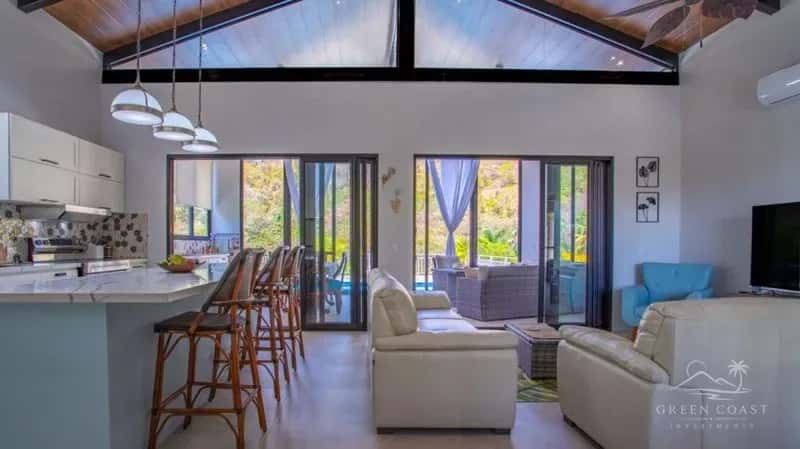
Explore this property: Luxury Estate with 3 Homes, Pool & Pickleball Court on 1.75 Acres in Gated Las Rocas Community.