
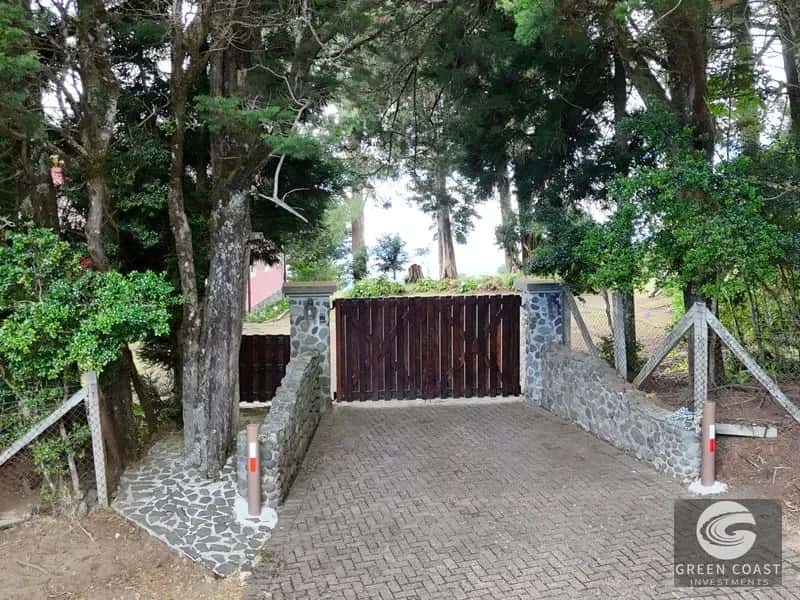
For buyers searching for premium central valley homes for sale, this private USD 1,400,000 mountain estate in Heredia offers a fully furnished, two-bedroom luxury retreat set on expansive acreage. Designed for remote executives, retirees, and privacy seekers, the property provides a temperate, air-conditioning-free microclimate and panoramic valley views just 45 minutes from San José. It represents an opportunity to secure a furnished, high-altitude sanctuary with independent water security and extensive land buffers.
In our years on this coast, we have watched this high-altitude corridor of Heredia become a primary destination for international buyers. These clients want to escape the intense heat of the coast while remaining close to the country's private schools, hospitals, and corporate centers. By choosing a mountain estate over a coastal villa, homeowners secure lower maintenance costs and a peaceful, nature-focused lifestyle.
Summary: Is This Heredia Mountain Retreat the Right Fit for Your Central Valley Search?
When evaluating Central Valley homes for sale, buyers often seek an alternative to the intense humidity and high energy costs of Costa Rica's coastal markets. The Central Valley offers a temperate mountain climate, lower monthly utility bills, and immediate proximity to premier medical, retail, and corporate infrastructure. For buyers prioritizing privacy, security, and expansive land over beachfront crowds, the highlands of Heredia represent a premier alpine residential destination in the region.
Property Overview: The USD 1,400,000 Heredia Estate
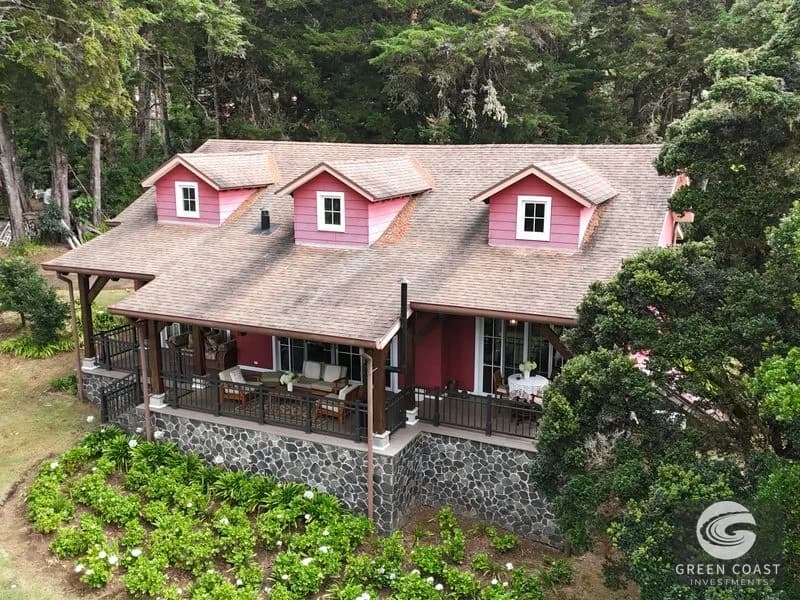
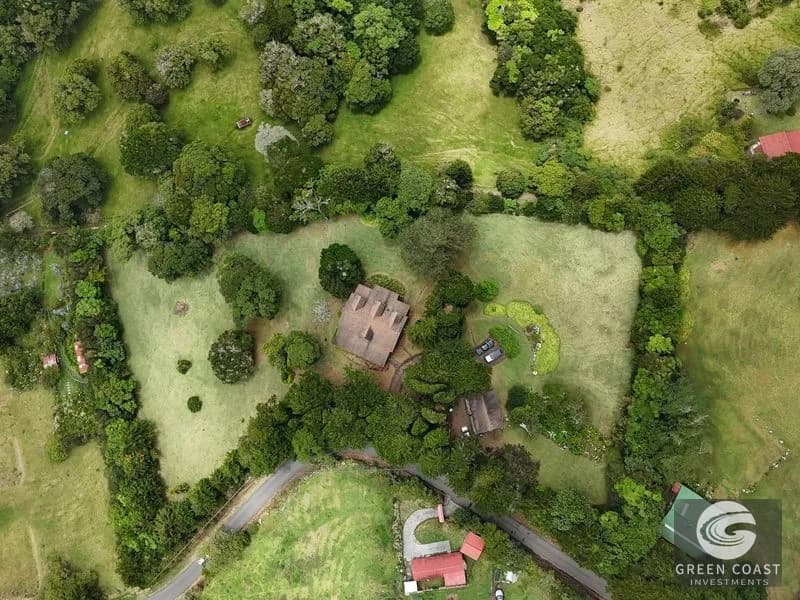
This featured USD 1,400,000 property is a fully furnished, two-bedroom luxury mountain home set on expansive acreage in the high-altitude corridor of Heredia. Positioned as a private sanctuary, the estate combines high-end interior finishes with vast outdoor acreage, offering unobstructed views of the valley below.
In the context of the current local market, this estate represents a competitive luxury offering. There are currently 343 active listings in the region, with prices ranging from USD 40,000 to USD 125,000,000, and an average market price of USD 1,558,569. Priced below the regional luxury average, this estate delivers significant acreage and completed construction in a sought-after mountain corridor. Interested buyers can view listings to see how this specific property compares to other high-end options in the area.
Ideal Buyer Profile: Pacific Northwest Retirees and Remote Executives
This estate is designed for specific buyer profiles:
Retirees from the Pacific Northwest or Northern Europe:* Individuals accustomed to green, mountainous landscapes who want to escape harsh winters without relocating to a hot tropical climate.
High-Net-Worth Remote Executives:* Professionals requiring privacy, high-speed fiber-optic connectivity, and close proximity to the San José metropolitan area and Juan Santamaría International Airport (SJO).
Privacy Seekers:* Buyers who prioritize large land buffers, secure perimeter boundaries, and panoramic valley views over dense gated-community living.
The Microclimate Advantage: Eliminating Active Cooling Costs
The defining feature of this Heredia estate is its elevation, situated between 1,200 and 1,800 meters above sea level. At this altitude, temperatures consistently range from 60°F to 78°F (15°C to 25°C) year-round.
This natural climate control eliminates the need for air conditioning, which is the single largest driver of electricity expenses in coastal regions like Guanacaste or Jacó. By relying on natural mountain breezes, owners of this estate save thousands of dollars annually in utility costs while enjoying a crisp, clean mountain atmosphere.
Why Choose Mountain Living in Heredia Over Coastal Guanacaste?
Choosing between a mountain estate in Heredia and a coastal villa in Guanacaste comes down to a choice between temperate, sustainable luxury and high-maintenance tropical heat. While Guanacaste attracts those seeking beach clubs and intense sun, Heredia appeals to buyers prioritizing privacy, lower holding costs, and a milder climate. For buyers searching for central valley homes for sale, the mountain regions of Heredia offer a tranquil alternative to the coast, characterized by lower wear-and-tear on real estate assets and a lower cost of daily living.
Climate and Lifestyle: Cool Mountain Air vs. Coastal Heat
The most immediate contrast between these two premier regions is the climate. Guanacaste experiences consistent, intense heat with average temperatures ranging from 80°F to 95°F, requiring round-the-clock air conditioning. In contrast, the Heredia mountains offer a spring-like climate year-round, with average temperatures hovering between 60°F and 75°F.
This temperature difference shapes the lifestyle and architectural design of the homes. Heredia estates emphasize indoor-outdoor living without the need for artificial cooling, utilizing fireplaces and expansive covered terraces instead of closed-in, air-conditioned spaces.
Heredia’s Microclimates: San Rafael vs. Barva and Santo Domingo
Heredia is not uniform; its microclimates vary significantly by altitude:
San Rafael de Heredia:* Situated at higher elevations, this area is cooler, greener, and experiences refreshing mountain mists and afternoon clouds. It is ideal for those seeking maximum privacy on large acreage surrounded by cypress and pine trees.
Barva and Santo Domingo:* Located at slightly lower elevations, these areas offer warmer, sunnier days while still avoiding the oppressive heat of the coast. They provide a traditional valley feel with historic architecture and coffee farm views.
The Financial Impact of Salt-Air Corrosion vs. Mountain Preservation
The hidden cost of coastal luxury is the aggressive maintenance required by salt-air corrosion. In Guanacaste, ocean breezes carry salt and humidity that rapidly degrade metal fixtures, electronics, paint, and structural elements. Homeowners face high annual expenses for repainting, replacing outdoor appliances, and servicing air conditioning units.
In the temperate mountain air of Heredia, building materials are preserved much longer. Wood, stone, and metal elements retain their integrity with minimal intervention, drastically reducing long-term maintenance budgets.
Central Valley Market Context
The market for central valley homes for sale remains competitive, offering diverse opportunities for buyers seeking value and scale. Currently, there are 343 active listings in this segment, with prices ranging from USD 40,000 to USD 125,000,000, and an average listing price of USD 1,558,569. This inventory reflects the broad spectrum of properties available, from modest valley homes to expansive, high-end mountain estates.
Numbers That Matter: Analyzing the Central Valley Real Estate Market
To understand the value proposition of a USD 1,400,000 Heredia estate, buyers must look at the broader context of central valley homes for sale. Currently, the Central Valley market features 343 active listings with an expansive price range of USD 40,000 to USD 125,000,000. The average listing price across this entire market sits at USD 1,558,569.
A USD 1.4 million price tag positions this Heredia mountain retreat right near the regional average, yet this figure requires deeper analysis to understand the actual buying power it represents.
Why the Regional Average is Skewed
The average listing price in the Central Valley is heavily skewed by two distinct property types: luxury suburban estates in areas like Escazú and Santa Ana, and massive agricultural parcels or development tracts on the valley fringes. These multi-million-dollar listings inflate the statistical average, making the entry point for standard residential homes appear higher than it actually is.
In reality, the market is highly bifurcated. Buyers will find a vast inventory of high-density condominiums and modest single-family homes at lower price points, while true acreage-backed luxury properties remain a scarce commodity.
Understanding Market Fragmentation
To navigate these numbers, investors must distinguish between standard suburban inventory and legacy mountain properties.
> "The Central Valley market is highly fragmented. While entry-level condos start under $150,000, true luxury mountain estates with secure water rights and acreage command a premium because they are generational assets that rarely change hands."
Evaluating the Value of Heredia Acreage
When evaluating central valley homes for sale, the USD 1,400,000 price point for this Heredia retreat becomes highly competitive when compared to what the same budget yields in nearby San José suburbs. In Escazú, USD 1.4 million typically buys a luxury condo or a home on a fraction of an acre with high HOA fees.
In contrast, the Heredia mountains offer expansive acreage, established privacy, and independent water security for the same capital outlay, representing a superior preservation of wealth and utility. Buyers who want to explore the area will find that Heredia provides unmatched natural beauty and space compared to the urban core.
Process: How to Secure Large Acreage and Turnkey Estates in Heredia
Securing large acreage and turnkey estates in Heredia requires a structured acquisition process that prioritizes zoning verification, water rights validation, and asset inventory. While the Central Valley homes for sale market features 343 active listings ranging from $40,000 to $125,000,000—with an average price of $1,558,569—navigating the purchase of premium mountain acreage demands specialized due diligence to protect your investment.
Step 1: Verify Agricultural Zoning and Building Restrictions (Uso de Suelo)
When purchasing expansive acreage in the Heredia mountains, your first step is requesting the Uso de Suelo (land use certificate) from the local municipality. Large tracts of land in this region are frequently zoned as agricultural or forestry conservation. This zoning dictates your maximum footprint allowance, often restricting construction to 10% or 15% of the total lot size. Working with a qualified real estate attorney ensures that your plans for additional guest houses, stables, or wellness pavilions align with municipal regulations before you lift contingencies.
Step 2: Validate Water Availability and Concessions
Securing a reliable water source is the primary hurdle for mountain properties in the Central Valley. You must verify whether the estate is serviced by the national water utility, AyA, a local ASADA (rural water board), or an independent registered well.
Municipal/ASADA Water: Require a formal carta de agua* (water availability letter) from the provider confirming an active, legal connection.
Private Wells:* If the estate relies on a private well or spring, your attorney must verify the water concession with the Ministry of Environment and Energy (MINAE).
Due Diligence Timeline:* Allocate a strict 30 to 60 days for the water concession verification process, as confirming the legal status and flow rates of mountain concessions requires physical testing and government registry searches.
Step 3: Manage Turnkey Logistics and Sourcing Taxes
Acquiring a fully furnished luxury estate simplifies your transition, but it requires careful legal and tax planning. Your purchase offer must include a detailed, notarized inventory of all high-end decor, appliances, and furniture to ensure these assets transfer with the property.
| Estate Transfer Cost Category | Associated Rate / Financial Impact |
| :--- | :--- |
| Government Transfer Tax | 1.5% of registered value |
| Import Duties (New Decor) | 30% to 50%+ CIF value |
When maintaining or expanding a turnkey home, consider the financial implications of sourcing furniture. Importing high-end international decor to Costa Rica incurs steep import duties, often exceeding 30% to 50% of the item's value plus shipping. Conversely, sourcing custom hardwood furniture from local Sarchí artisans avoids these import taxes, supports the local economy, and provides highly durable, climate-resistant pieces crafted from native laurel, guanacaste, or teak.
What Is the Proximity of Heredia Estates to Top-Tier Schools and Hospitals?
Heredia's mountain estates offer a combination of secluded highland living and rapid access to Costa Rica's medical facilities, bilingual schools, and international transit hubs. While these properties provide complete rural privacy, they remain positioned within a 30-to-45-minute drive of San José’s developed urban core. This proximity allows luxury buyers to enjoy expansive acreage without sacrificing the infrastructural conveniences expected of high-end Central Valley homes for sale.
JCI-Accredited Healthcare Access
Living in the mountains of Heredia does not mean compromising on medical care. Residents have direct access to Joint Commission International (JCI) accredited private hospitals, which are recognized for medical standards and English-speaking staff.
Hospital CIMA (Escazú):* Located approximately 18 kilometers from San Rafael de Heredia, this facility is reachable in 35 to 45 minutes depending on traffic. It is favored by expats for specialized care and emergency services.
Hospital Clínica Bíblica (San José & Santa Ana):* Another leading private medical institution offering comprehensive diagnostic, surgical, and preventative care, situated within a similar driving radius.
Elite Bilingual Private Schools
For families relocating to the Central Valley, Heredia serves as an excellent base for academic development. Several of the country's prestigious international and bilingual schools are highly accessible from the mountain zone:
Lincoln School:* Located in Santo Domingo de Heredia, this institution offers an International Baccalaureate (IB) curriculum and is regarded for its academic rigor.
The European School:* Situated directly in Heredia, this school focuses on a humanities-based, college-preparatory curriculum with multicultural integration.
Pan-American School:* Located nearby in San Antonio de Belén, offering a dual-immersion English-Spanish curriculum and international certifications.
Global Connectivity via SJO Airport
International travel is efficient from this region. Juan Santamaría International Airport (SJO) is located approximately 15 kilometers from the mountain estates of San Rafael de Heredia. This allows homeowners to transition from their private, forested acreage to an international departure gate in under 45 minutes.
This infrastructure supports an active regional real estate market. Currently, there are 343 active listings in the area, with a price range spanning from USD 40,000 to USD 125,000,000, and an average market price of USD 1,558,569. This broad inventory reflects the demand for estates that balance natural isolation with top-tier suburban convenience.
Risks & Mitigations: Navigating Landslides, Water Rights, and Tax Structures
Purchasing a mountain estate in Heredia requires targeted due diligence to mitigate risks associated with steep terrain, complex luxury tax thresholds, and boundary management on expansive acreage. While the Central Valley offers some of the most stable real estate appreciation in the country, buyers looking at the 343 active listings in the region—where prices range from $40,000 to $125,000,000 with an average price of $1,558,569—must address specific environmental and legal safeguards before closing.
Soil Stability and Landslide Risks on Mountain Slopes
The dramatic topography of Heredia’s mountainous zones provides views but presents risks regarding soil stability and landslides, particularly during the green season.
The Risk:* Heavy rainfall can compromise unreinforced slopes, threatening retaining walls, driveways, and home foundations.
The Mitigation: Make your purchase agreement contingent upon a comprehensive soil study (estudio de suelos*) conducted by a registered civil engineer. This study analyzes load-bearing capacity and slope stability, ensuring the structural integrity of the home and identifying any necessary engineering interventions before funds transfer.
Navigating the Luxury Home Tax vs. Agricultural Status
Costa Rica imposes specific tax structures on high-value residential properties that differ from agricultural land holdings.
The Risk: Falling out of compliance with the Costa Rican Luxury Home Tax (Impuesto Solidario*), which applies to residential construction values exceeding approximately $250,000 (adjusted annually), or overpaying by failing to separate agricultural land value from construction value.
The Mitigation:* Work with a real estate attorney to structure the property registration correctly. By legally separating the primary residential footprint from the surrounding agricultural acreage, you can optimize your tax liability, ensuring the luxury tax applies only to the qualified construction while the remaining acreage retains its standard agricultural classification.
Encroachment and Boundary Disputes on Large Acreage
Large, forested, or partially unfenced mountain parcels in the Central Valley are susceptible to boundary drift or physical encroachment by neighbors over time.
The Risk:* Undetected boundary discrepancies can lead to costly legal disputes, title insurance issues, or loss of land through prescriptive rights claims if third parties occupy portions of the acreage unchecked.
The Mitigation: Commission a fresh, independent boundary survey by a licensed topographer (topógrafo) as a mandatory condition of the due diligence period. The topographer must physically locate and verify all property corners against the registered survey map (plano catastrado*) in the National Registry. Additionally, establish physical boundary markers, fences, or natural hedges immediately upon taking possession, and hire a local caretaker to conduct regular perimeter patrols to secure the estate's borders.