
How Can You Buy Property in Manuel Antonio, Costa Rica as a Foreign Investor?
For buyers comparing active inventory, see Manuel Antonio 10-Unit Ocean View Income Property with Rooftop Pool.
Foreign investors, including US and Canadian buyers, can legally buy property in Manuel Antonio, Costa Rica with the exact same fee-simple ownership rights as Costa Rican citizens. The country’s constitution guarantees private property rights regardless of nationality. You do not need residency, a local partner, or citizenship to hold fee-simple title to real estate.
Aside from restricted beachfront concession land within 50 meters of the high-tide line, titled land in Manuel Antonio can be owned 100% outright by foreign individuals or through a local corporate entity. In our years on this coast, we have found that establishing a local corporation remains the most secure and efficient vehicle for managing these acquisitions.
The USD 2,300,000 Featured Multi-Unit Opportunity
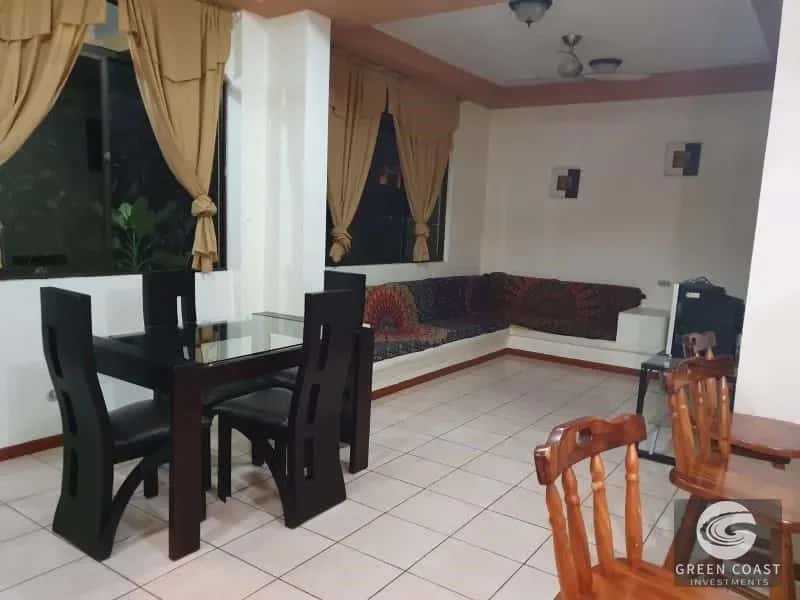
For investors looking to maximize yield in this competitive market, Green Coast Investments is highlighting a premier 10-unit ocean-view income property priced at USD 2,300,000. Located in the Manuel Antonio-Quepos corridor, this commercial asset features ten fully equipped rental units, a rooftop pool, and panoramic Pacific Ocean views.
Unlike single-family homes that rely on a single tenant stream, this multi-unit configuration allows investors to capture multiple cash-flow streams simultaneously, catering to the region's year-round tourism demand.
Manuel Antonio Market Analysis and Context
To understand the value proposition of this USD 2,300,000 commercial asset, it helps to examine current MLS data for the Quepos and Manuel Antonio region. There are currently 84 active regional listings on the market. The regional price range spans from USD 48,600 for raw land parcels up to USD 5,450,000 for estates, with an average regional price of USD 740,365.
| Market Metric | Value (USD) |
| :--- | :--- |
| Active Regional Listings | 84 |
| Minimum Price | $48,600 |
| Maximum Price | $5,450,000 |
| Average Regional Price | $740,365 |
| Featured Asset Price | $2,300,000 |
While the average regional price reflects smaller residential homes and condominiums, the featured 10-unit property sits in the upper-tier commercial bracket. At USD 2,300,000, this asset represents a highly efficient cost-per-key ratio for investors targeting high-density rental income rather than single-family residential use.
Expert Guidance with Daniel Berkley and Green Coast Investments
Acquiring commercial-grade real estate in a foreign jurisdiction requires specialized local expertise. Our advisory team at Green Coast Investments specializes in structuring cross-border transactions for institutional and private investors. From coordinating due diligence and verifying clear title to analyzing historical occupancy rates, we ensure your acquisition aligns with Costa Rican corporate and tax laws while maximizing your long-term portfolio yield.
---
Is a Multi-Unit Apartment Building More Profitable Than a Single-Family Villa in Manuel Antonio?

A multi-unit apartment building in Manuel Antonio is significantly more profitable and financially resilient than a single-family luxury villa. While a single-family villa carries a binary vacancy risk—meaning the property is either 100% occupied or generating 0% revenue—a multi-unit asset distributes vacancy risk across multiple independent income streams. For investors looking to buy property manuel antonio costa rica, multi-family commercial residential assets consistently deliver superior net operating income (NOI) margins and higher cap rates due to operational efficiencies and sustained high-season demand.
Risk Diversification and Occupancy Dynamics
Investing in a 10-unit ocean-view property mitigates the cash-flow volatility inherent in single-family luxury rentals. During the high season (December through April), multi-unit properties in Manuel Antonio maintain average occupancy rates of 82% to 88%, whereas single-family villas average 70% to 75% due to their reliance on larger, coordinated group bookings.
If a single-family villa sits empty for two weeks, the monthly revenue drops to zero. Conversely, if two units in a 10-unit building are vacant, the asset still operates at 80% occupancy, easily covering fixed overhead. This diversification stabilizes monthly cash flow, protecting your investment from seasonal dips and sudden cancellations.
Operational Efficiency and Scale
Managing ten individual units under one roof is far more cost-effective than managing ten scattered single-family homes, or even a single sprawling estate with high-maintenance grounds. Multi-unit buildings benefit from centralized infrastructure, which lowers per-unit operating costs:
Centralized Maintenance:* A single rooftop pool, one integrated water filtration system, and one structural envelope reduce preventative maintenance costs.
Consolidated Management:* A single property management contract covers the entire building, lowering management fees from the standard 25–30% for single villas down to 15–20% for multi-unit commercial assets.
Shared Utilities:* Bulk internet contracts, shared security systems, and centralized greywater systems optimize utility expenditures.
Cap Rate Projections and Market Context
In the local Quepos and Manuel Antonio market, where there are currently 84 active listings ranging from USD 48,600 to USD 5,450,000 (with a market average of USD 740,365), inventory is highly competitive. Single-family villas in this market typically yield net cap rates of 5% to 7% due to high maintenance overhead and marketing costs.
In contrast, multi-family commercial residential assets in Manuel Antonio consistently achieve net operating income (NOI) margins of 60% to 68%, translating to net cap rates between 8.5% and 11%. The combination of lower per-unit operating costs and steady, diversified rental income makes the 10-unit configuration the most profitable vehicle for commercial buyers in the region.
---
How Do Costa Rica's Titled Property Laws Apply to Ocean-View Real Estate Near the National Park?

Foreign investors can legally secure 100% fee-simple ownership of ocean-view real estate in Manuel Antonio, provided the land is fully titled and sits outside the restricted Maritime Terrestrial Zone (MTZ). While Costa Rican law grants foreigners the same property rights as citizens, coastal land within 200 meters of the high-tide line is subject to strict zoning laws that dictate whether you actually own the land or merely lease it from the government.
Demystifying the Maritime Terrestrial Zone (MTZ) Law
To safely buy property manuel antonio costa rica, investors must understand the two distinct bands of the Maritime Terrestrial Zone (Ley de Zona Marítimo Terrestre No. 6043):
The 50-Meter Public Zone:* This strip of land extends 50 meters inland from the mean high-tide mark. It is strictly public land. No private construction, commercial development, or exclusive occupancy is permitted here under any circumstances.
The 150-Meter Concession Zone:* The next 150 meters inland is the concession zone. This land cannot be owned fee-simple. Instead, the local municipality grants renewable leases (concessions), typically for terms of 5 to 20 years. Foreigners cannot own more than 49% of a corporation holding a concession unless they have established five years of legal residency.
Verifying Fee-Simple Title for the USD 2,300,000 Featured Property
The featured USD 2,300,000 10-unit ocean-view income property is located outside both the 50-meter public zone and the 150-meter concession zone. This positioning means the asset is registered as 100% fee-simple titled property.
This distinction is critical. Titled status guarantees absolute ownership rights, allowing you to hold the deed in your own name or through a Costa Rican corporation indefinitely. You face none of the lease renewal risks, municipal rent adjustments, or foreign ownership caps associated with concession land.
Due Diligence and Boundary Verification Near the National Park
Because Manuel Antonio National Park is a highly protected ecological reserve, purchasing adjacent commercial real estate requires rigorous due diligence to prevent future boundary disputes or environmental compliance issues.
First, your attorney must cross-reference the property's survey map (plano catastrado) with the National Registry (Registro Nacional) to confirm there are no overlaps with park boundaries or state-protected forest reserves. Second, you must secure a certification from the Ministry of Environment and Energy (MINAE) to verify that no protected natural springs, creeks, or wetlands exist on the property, which would trigger mandatory construction setbacks.
Securing titled assets in this micro-market is highly competitive. Currently, there are 84 active listings in the Manuel Antonio area, with prices ranging from USD 48,600 to USD 5,450,000, and an average market price of USD 740,365. Acquiring a fully titled, multi-unit commercial asset at the USD 2,300,000 mark positions investors securely within the premium tier of this high-demand market.
---
What Are the Realistic ROI and Occupancy Rates for a 10-Unit Rental Property in Manuel Antonio?
A 10-unit ocean-view rental property in Manuel Antonio, acquired at a market-value purchase price of $2,300,000, can realistically generate an annual gross yield of 11.5% to 14.8%, with net ROI stabilizing between 6.8% and 9.2% after accounting for local operational expenses.
Because Manuel Antonio is Costa Rica's most visited national park destination, occupancy rates for multi-unit properties consistently outperform the broader market. Investors can project an average annual occupancy rate of 68% to 74%, driven by a balanced mix of high-season premium rates and steady shoulder-season demand. This performance sits atop a highly active local market featuring 84 active listings ranging from $48,600 to $5,450,000, with an average transaction price of $740,365.
Seasonal Revenue Modeling and ADR Projections
To understand the revenue potential of a 10-unit building, the financial model must be segmented by Costa Rica’s distinct tourism seasons. With an average daily rate (ADR) blended across one-bedroom and two-bedroom configurations, the property projects the following seasonal performance:
High Season (December – April):* Average occupancy of 85% to 92% at an ADR of $240 per unit. This period leverages peak international travel, dry weather, and holiday premiums.
Shoulder Season (May – August, November):* Average occupancy of 60% to 70% at an ADR of $170 per unit. Demand is sustained by families and travelers taking advantage of the greening landscapes.
Green Season (September – October):* Average occupancy of 40% to 50% at an ADR of $125 per unit. Revenue during these rainier months is sustained by offering monthly packages to remote workers.
Using these parameters, a $2,300,000 acquisition generates approximately $295,000 to $340,000 in gross annual rental income.
Target Demographics: Maximizing Multi-Unit Occupancy
A 10-unit layout allows owners to diversify their guest profile rather than relying on a single demographic. In our years on this coast, we have seen that properties balancing short-term tourists with mid-term remote workers maintain the healthiest baseline numbers.
Digital Nomads:* During the green season, renting three to four units on 30-day mid-term leases to remote workers provides a stable baseline income.
Luxury Eco-Tourists:* High-spending couples occupy the ocean-view upper-level units, prioritizing proximity to the national park and high-speed fiber-optic internet.
Multi-Generational Families and Retreats:* Group bookings can reserve the entire 10-unit complex, combining private accommodations with shared communal spaces like the rooftop pool.
Operating Expenses in the Quepos Canton
Operating a commercial residential property in the Quepos canton requires accounting for localized expenses to determine true net yields. Property owners must budget for three primary operational pillars:
1. Professional Property Management: Local management agencies charge 20% to 25% of gross rental revenue. This fee covers guest relations, check-ins, cleaning, and preventative maintenance.
2. Municipal Taxes and Corporate Fees: Property taxes in Quepos are 0.25% of the declared value. However, commercial operations must also account for the municipal patent (business license) and annual corporate tax.
3. Commercial Insurance Policies: Comprehensive property insurance—covering fire, water damage, liability, and natural disasters—typically costs 0.4% to 0.6% of the asset's structural value annually.
---
How Does the Proximity to Marina Pez Vela Impact Long-Term Property Appreciation?
The proximity to Marina Pez Vela acts as a primary catalyst for long-term property appreciation in Manuel Antonio, driving a steady influx of high-net-worth sportfishing tourists and luxury travelers who require premium accommodations. For a 10-unit ocean-view income property located just 4.5 kilometers (approximately 2.8 miles) from the marina docks, this geographic advantage translates into sustained rental demand and upward pressure on asset valuation.
Investors looking to buy property manuel antonio costa rica benefit from a localized "halo effect" where infrastructure development in the flatlands of Quepos directly inflates the land value of the surrounding residential hillsides.
The Economic Engine of Quepos and High-Net-Worth Tourism
Marina Pez Vela is a world-class maritime hub featuring 195 wet slips, 40 dry rack spaces, and a full-service boatyard. This infrastructure attracts international sportfishing tournaments, superyachts, and affluent travelers who spend significantly more per capita than the average eco-tourist.
Yacht crews, tournament anglers, and luxury charter guests require upscale, multi-unit accommodations with ocean views during their stays. Because the marina basin itself lacks high-density residential zoning, these high-spending visitors look to the hills of Manuel Antonio for lodging, directly benefiting multi-unit properties that can accommodate large groups or multiple individual bookings simultaneously.
The 'Halo Effect' on Rental Demand and Land Values
The relationship between the marina and Manuel Antonio properties creates a distinct geographic synergy. While the marina serves as the commercial and recreational anchor, the hillside properties offer the elevated ocean views and privacy that luxury travelers demand.
This dynamic has altered historical appreciation trends along the Manuel Antonio-Quepos corridor. Prior to the marina's completion, real estate values in the area experienced standard market growth. Post-inception, the corridor has seen accelerated capital appreciation, outperforming neighboring coastal markets like Jacó or Uvita due to the scarcity of titled, ocean-view land near a world-class marina.
Current Market Context and Inventory Scarcity
The broader Manuel Antonio real estate market reflects this high demand and limited supply. Currently, there are only 84 active listings in the region, with prices ranging from USD 48,600 for small fractional shares or undeveloped inland plots, up to USD 5,450,000 for premier luxury estates. The average listing price sits at USD 740,365. For institutional buyers or private syndicates, securing a 10-unit commercial asset in this price-resilient corridor offers a strategic foothold in a market where prime inventory is rapidly consolidating.
---
How to Structure a Costa Rican Corporation (S.A.) for US and Canadian Buyers Purchasing Commercial Real Estate
To buy property manuel antonio costa rica as a foreign investor, structuring the purchase through a Costa Rican corporation—specifically a Sociedad Anónima (S.A.) or a Sociedad de Responsabilidad Limitada (S.R.L. or L.D.A.)—is the industry standard. This legal framework isolates personal liability, simplifies the transfer of ownership, and streamlines local tax compliance. For US and Canadian buyers acquiring a high-yield asset like a 10-unit commercial property, utilizing a corporate structure is a critical step to safeguard assets and ensure smooth operational management under Costa Rican law.
Asset Protection and Transferability Advantages
Purchasing commercial real estate through an S.A. or L.D.A. provides a shield between your personal international assets and your Costa Rican business operations. If a liability issue arises on-site at your rental property, the legal exposure is limited strictly to the assets owned by the corporation.
Furthermore, holding real estate within a corporation makes future exit strategies much simpler. Instead of transferring the physical land title at the National Registry—which incurs standard transfer taxes and notary fees—investors can transfer the shares of the corporation to a buyer. This structure is highly valued in the Manuel Antonio market, where there are currently 84 active listings ranging in price from USD $48,600 to USD $5,450,000, with an average price of USD $740,365.
Navigating Corporate Taxes and Annual Maintenance Fees
Operating an active income-generating property through a Costa Rican corporation requires adherence to annual fiscal obligations. Active real estate holding companies are subject to corporate income taxes on net profits. Under the current progressive tax brackets, corporate tax rates for active businesses range from 10% to 30%, depending on the gross income of the entity.
Additionally, investors must budget for annual corporate maintenance costs:
Corporate Tax (Impuesto a las Personas Jurídicas):* Approximately USD $120 to USD $380 annually, depending on whether the corporation is classified as active or inactive.
Resident Agent Fees:* Foreign owners who do not reside in Costa Rica must appoint a local attorney as a Resident Agent, costing roughly USD $300 to USD $500 annually.
Education and Culture Tax:* A nominal annual fee of approximately USD $15 to USD $30.
Compliance with the Registry of Beneficial Owners (RTBF)
US and Canadian buyers must comply with the Registro de Transparencia y Beneficiarios Finales (RTBF), commonly known as the Registry of Beneficial Owners. This regulatory mandate requires all Costa Rican corporations to disclose the identity of their shareholders and ultimate beneficial owners who hold 15% or more of the corporate stock.
This filing must be submitted annually every April through the Central Bank’s digital platform. Non-resident owners must grant a specific Power of Attorney (POA) to their local legal representative or obtain a Costa Rican digital signature (firma digital) to complete this filing. Failure to comply results in steep financial penalties starting at approximately USD $2,500, and prevents the corporation from obtaining property registry certificates or conducting legal transactions.
---
Rooftop Pool Construction, Structural Engineering, and Water Management in High-Humidity Coastal Zones
When you buy property manuel antonio costa rica, evaluating the structural integrity of elevated water features is critical for protecting your capital. Engineering a rooftop pool in a high-humidity, seismically active marine zone requires strict adherence to the Código Sísmico de Costa Rica (Costa Rican Seismic Code) and specialized waterproofing protocols.
In Manuel Antonio's active market—which currently features 84 active listings ranging from USD 48,600 to USD 5,450,000, with an average price of USD 740,365—premium multi-unit assets command top-tier valuations precisely because of these advanced engineering standards. For a 10-unit ocean-view income property, a rooftop pool is a primary revenue driver, but it must be engineered to withstand the rigors of the tropical Pacific coast.
Seismic Engineering and Load-Bearing Calculations
A rooftop pool introduces massive dynamic wet loads that require rigorous structural calculations. Water weighs approximately 1,000 kilograms per cubic meter (62.4 lbs/sq ft). Under the Código Sísmico de Costa Rica, the building’s reinforced concrete columns, shear walls, and foundation must be engineered to transfer both static dead loads and dynamic hydrodynamic forces (sloshing effects during a seismic event) directly to the bedrock.
Engineers design these systems using high-strength, low-permeability concrete (typically rated at 280 kg/cm² or 4,000 PSI) reinforced with epoxy-coated rebar to prevent internal oxidation. The structural frame utilizes ductile moment-resisting frames and specialized expansion joints that allow the pool shell to move independently of the main residential structure during an earthquake, preventing catastrophic structural cracking.
Waterproofing Membranes and Humidity Mitigation
In Manuel Antonio’s high-humidity coastal environment, concrete carbonation and chloride ion penetration from the ocean air are the primary threats to structural longevity. Standard concrete is naturally porous; therefore, multi-layer waterproofing is mandatory.
Crystalline Waterproofing:* Admixtures like Xypex are mixed directly into the concrete batch to plug capillary tracts and micro-cracks from within.
Elastomeric Membranes:* A secondary, flexible polyurethane or polyurea membrane is applied externally to the cured concrete shell. In Costa Rica, specialized coastal waterproofing systems cost an average of USD 45 to USD 75 per square meter for materials and certified application.
Redundant Drainage:* Gravity-fed perimeter deck drains, dual-containment piping, and emergency overflow scuppers must be integrated to divert heavy tropical rainfall—which can exceed 100 millimeters in a single afternoon—away from the building's facade and electrical shafts.
Saltwater Pool Maintenance in High-Salinity Environments
Saltwater pool systems are attractive to eco-conscious renters, but they require strict preventative maintenance in tropical climates. The combination of high ambient temperatures, intense UV exposure, and airborne ocean salt accelerates the galvanic corrosion of all exposed metals.
To mitigate this, all pool hardware, ladders, and light niches must be constructed of marine-grade 316 stainless steel or titanium, and titanium heat exchangers must be used for temperature regulation. Maintenance protocols require weekly inspections of the sacrificial zinc anodes—which divert corrosive electrical currents away from expensive pool components—and daily monitoring of the pH levels (ideally kept between 7.2 and 7.6) to prevent calcium scaling on the salt cells, ensuring the long-term viability of your commercial investment.
---
Frequently Asked Questions About Buying Commercial Real Estate in Manuel Antonio
To buy property manuel antonio costa rica as a foreign investor, you must understand the local tax structures, residency incentives, and financial transaction protocols. Purchasing a commercial asset in this high-demand market requires navigating specific legal frameworks, but Costa Rica offers a favorable environment for international buyers. Currently, the active inventory in the region consists of 84 listings ranging in price from USD 48,600 to USD 5,450,000, with an average market price of USD 740,365, making a USD 2,300,000 multi-unit asset a premium, high-yielding acquisition.
Does Purchasing a USD 2,300,000 Income Property Qualify Me for Costa Rican Residency?
Yes, purchasing this USD 2,300,000 income property qualifies you for residency. Under Costa Rican law, the investor visa (Inversionista) category requires a minimum investment threshold of USD 150,000 in real estate or business ventures. Because the purchase price of this 10-unit ocean-view building far exceeds this minimum requirement, you, your spouse, and your dependents under 25 can immediately apply for temporary residency. This status can be renewed every two years and can eventually lead to permanent residency after three years of holding temporary status.
Are Property Taxes High in the Manuel Antonio and Quepos Municipality?
Property taxes in the canton of Quepos, which governs Manuel Antonio, are low compared to North American standards. The standard municipal property tax rate is just 0.25% of the registered value of the property. For a property registered at USD 2,300,000, the annual property tax is USD 5,750. Additionally, because this is a commercial rental property and not a luxury single-family home, it is generally exempt from the Costa Rican "Luxury Tax" (Impuesto Solidario), which applies only to residential dwellings above a certain value threshold.
How Do I Securely Transfer Funds from a US or Canadian Bank to Close the Transaction?
To secure your capital during the transaction, you must use a registered, government-approved escrow service. You cannot wire funds directly to a seller's personal or corporate account before closing. Reputable escrow providers such as Secure Title Costa Rica or STG (Secure Trust Group) act as neutral third parties.
These entities are registered with SUGEF (the superintendent of financial institutions in Costa Rica) and maintain bank accounts in the US or Canada. You will wire your deposit and closing funds to these northern accounts. The escrow agent will perform rigorous Know Your Customer (KYC) and Anti-Money Laundering (AML) checks to verify the source of funds before releasing the money to the seller at the moment the transfer deed is signed before a notary public.