

Modern 2-BR Tropical Villa with Private Pool in Exclusive Papagayo Gulf Gated Community — Buyer's Guide for Costa Rica Real Estate
For investors seeking premium real estate in Costa Rica, securing professional property management in Flamingo, Costa Rica, or the Central Valley is the key to generating consistent yields. This guide details how to acquire and manage high-performing assets, including the Modern 2-BR Tropical Villa with Private Pool in the exclusive Papagayo Gulf gated community. Priced at USD 993,996, this luxury property bridges the gap between coastal vacation appeal and the infrastructure-rich Central Valley.
Understanding regional market dynamics, legal acquisition frameworks, and localized maintenance challenges is essential. Aligning your investment with local experts ensures your asset is protected and optimized.
In our years on this coast, we have seen that understanding how to manage these assets effectively is what separates high-yielding investments from costly liabilities. The Costa Rican market offers opportunities for every portfolio size, with a diverse inventory of 334 active listings ranging from USD 40,000 to USD 125,000,000, and an average market price of USD 1,562,650.
---
Summary: Securing Premium Property Management for Your Costa Rica Investment
Securing reliable property management in Flamingo, Costa Rica, or the Central Valley requires partnering with licensed agencies that handle tenant vetting, preventative maintenance, and local tax compliance, such as the 13% Value Added Tax (VAT) on short-term rentals. While coastal markets like Flamingo demand high-turnover vacation rental oversight, Central Valley properties require specialized management focused on long-term expat leases, microclimate-specific upkeep, and gated community HOA coordination. Ensuring your management team has a physical presence in your target market is essential for protecting your asset and maximizing rental yields.
The Shift from Coastal Papagayo to Central Valley Enclaves
Cross-regional buyers looking at Papagayo-style villas often pivot to the Central Valley to secure superior infrastructure and year-round stability. While the gold coast offers vacation appeal, the Central Valley provides consistent rental demand from multinational executives, diplomats, and retirees who require proximity to international schools and state-of-the-art medical facilities. This demographic shift minimizes the seasonal occupancy fluctuations common in coastal towns like Flamingo or Jacó, offering investors a more predictable cash flow. If you are ready to analyze current opportunities in these highland enclaves, you can explore the area to find properties that align with this stable rental model.
Featured Property: The Modern 2-BR Tropical Villa
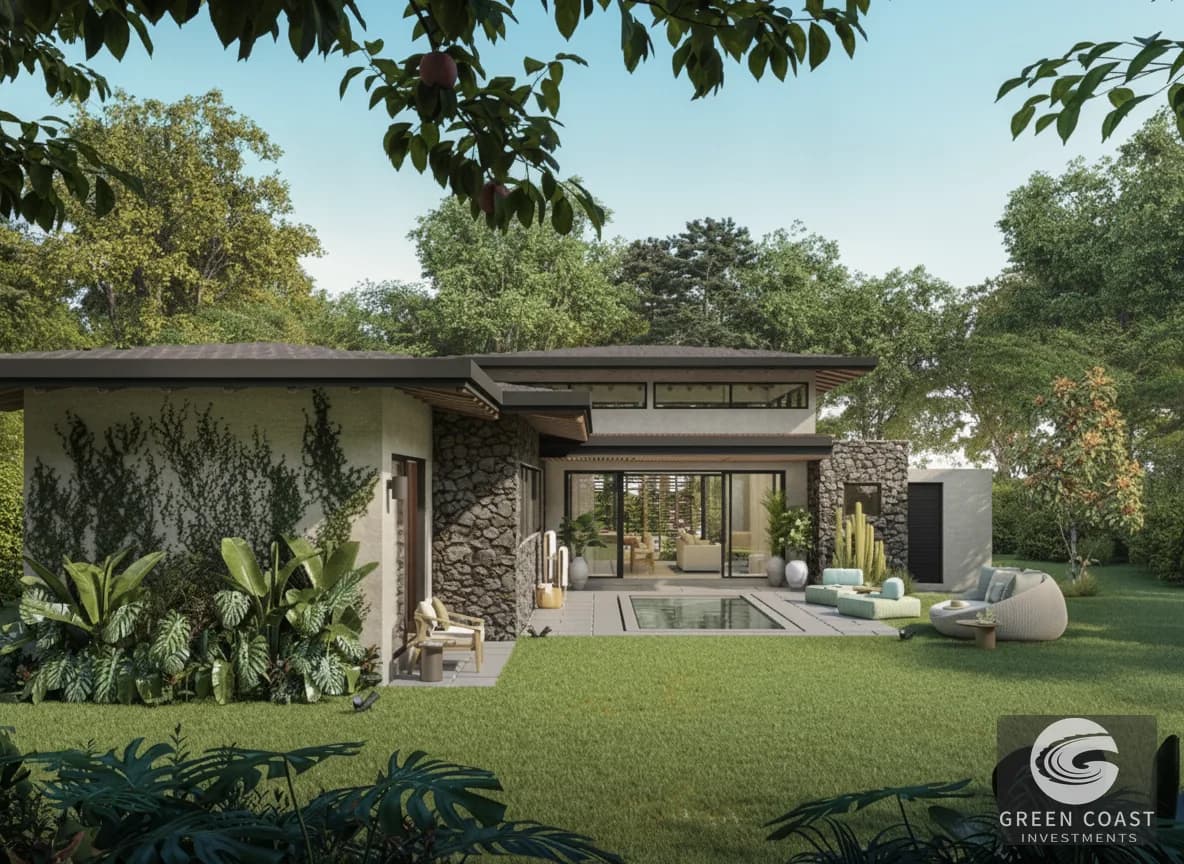
The Modern 2-BR Tropical Villa with Private Pool in Exclusive Papagayo Gulf Gated Community showcases how luxury coastal design translates to the Central Valley's exclusive gated enclaves. This property bridges the gap between tropical aesthetics and urban convenience, offering a private oasis with the structural integrity required for the Central Valley's distinct climate.
At USD 993,996, this modern villa represents a highly competitive entry point into the luxury segment, positioned well below the market average while offering premium finishes and high rental liquidity potential. Currently, the broader market features 334 active listings, with a price range spanning from USD 40,000 to USD 125,000,000, and an average price of USD 1,562,650.
---
Numbers That Matter: Central Valley Market Dynamics vs. Coastal Trends
Costa Rica’s real estate market displays a sharp contrast between the urban, high-altitude Central Valley and premium coastal enclaves like the Papagayo Gulf and Flamingo. While the Central Valley offers high volume and a massive spread of price points, coastal properties command premium pricing and distinct rental yields. Understanding these regional differences in inventory, average transaction prices, and operational costs is essential for calculating your net return on investment (ROI).
| Market Metric | Central Valley / National Inventory | Featured Coastal Villa (Papagayo Gulf) |
| :--- | :--- | :--- |
| Active Listings | 334 | 1 (Featured Listing) |
| Price Range (USD) | $40,000 – $125,000,000 | $993,996 |
| Average Price (USD) | $1,562,650 | $993,996 (Fixed Price) |
| Primary Rental Type | Long-term (12+ month leases) | Short-term (Vacation rentals) |
| Average Management Fee | 10% – 15% of monthly rent | 20% – 30% of gross revenue |
Central Valley Inventory and Price Points
The Central Valley real estate market is characterized by its sheer diversity, catering to local professionals, retirees, and commercial investors. Currently, there are 334 active listings in the Central Valley, spanning an incredibly wide price range from USD 40,000 for entry-level condos up to USD 125,000,000 for massive commercial parcels and ultra-luxury estates.
The average listing price in the Central Valley stands at USD 1,562,650. This average is heavily skewed upward by large-scale development tracts and multi-million-dollar estates in Escazú and Santa Ana. In contrast, a premium coastal asset like the Modern 2-BR Tropical Villa in the Papagayo Gulf, priced at USD 993,996, represents a highly targeted, luxury-tier investment designed specifically for the high-end vacation rental market. Buyers who wish to view listings in this price tier will find that coastal luxury remains highly competitive when compared to highland estates.
How Property Management Fees Impact Net ROI
Operational expenses dictate your final yield, and these costs vary significantly depending on your rental strategy and geographic location. Securing professional property management in Flamingo, Costa Rica, or the wider Papagayo region is critical for maintaining coastal assets and keeping occupancy rates high.
Long-term rentals in the Central Valley typically see property management fees ranging from 10% to 15% of the monthly rent. While these lower fees preserve gross margins, long-term rental rates in the Central Valley are generally lower, resulting in stable but modest yields.
Coastal villas leverage the lucrative tourism market, where property management fees range from 20% to 30%. This higher fee structure covers intensive services, including guest relations, emergency maintenance, check-ins, and localized marketing. Despite the higher management fees associated with coastal properties, the premium nightly rates and high seasonal occupancy in the Papagayo Gulf often generate a significantly higher net ROI than the stable, low-yield long-term rentals found in the Central Valley.
How Do Central Valley Microclimates Affect Daily Living and Property Maintenance?
Central Valley microclimates directly dictate both daily comfort and long-term maintenance costs, with average humidity variances of up to 20% between windy mountain ridges and sheltered valley floors. While Atenas is celebrated for having warm, dry days and low humidity, nearby high-altitude zones like Heredia and Escazú experience cooler temperatures, heavy mountain mists, and significantly higher moisture levels. For buyers analyzing the broader Costa Rican market, where active listings total 334 properties ranging from USD 40,000 to USD 125,000,000 with an average price of USD 1,562,650, understanding these localized climate shifts is essential for protecting your capital investment.
Humidity Control and Structural Upkeep in High-Moisture Zones
In high-humidity mountain sectors like Heredia and parts of Escazú, property management requires aggressive, preventative maintenance protocols. Without consistent intervention, the moisture-rich air leads to mold and mildew cultivation on drywall, upholstery, and teak finishes.
To preserve your asset, property managers must implement active dehumidification, which involves installing commercial-grade, continuous-drain dehumidification systems in closets and media rooms. They must also apply specialized coatings, using anti-fungal, moisture-resistant paints and scheduling exterior paint touch-ups every 12 to 18 months. Finally, mechanical ventilation is required, with programmed HVAC run-times during the green season to maintain air circulation when the villa is unoccupied.
Managing Pools and Landscaping on Exposed Hillsides
Hillside developments in the Central Valley offer sweeping views but expose properties to strong winds and seasonal rains. These factors heavily impact outdoor amenities, particularly private pools and tropical landscaping. High winds carry organic debris and dust, which can clog standard filtration systems and alter the chemical balance of the water overnight.
Effective estate management in these microclimates requires oversized pool filtration systems, automated chlorinators, and daily skimmer maintenance. Additionally, retaining walls and hillside gardens must be engineered with advanced drainage channels to divert heavy seasonal rainfall, preventing soil erosion and protecting the structural integrity of the villa's foundation. Whether you are managing a valley estate or securing a coastal partner for property management Flamingo Costa Rica, aligning your maintenance strategy with local weather patterns is key to minimizing depreciation.
---
Process: Step-by-Step Legal Acquisition for Foreign Buyers
Foreigners can legally purchase real estate in Costa Rica with the same constitutional protections as local citizens, enjoying fee-simple ownership rights outside of the restricted Maritime Zone (ZMT). The acquisition process requires a structured legal framework to safely transfer funds, establish liability protection, and verify the property's legal status before closing. Across the current market of 334 active listings—ranging from USD 40,000 to USD 125,000,000 with an average price of USD 1,562,650—buyers must follow a standardized legal process to secure their investment.
```
[Select Property] ➔ [Draft & Sign Purchase & Sale Agreement (PSA)]
⬇
[Deposit 10% Funds into SUGEF-Regulated Escrow Account]
⬇
[Conduct Due Diligence: Title Search, Water Letters, HOA Audits]
⬇
[Establish Corporate Structure: Sociedad Anónima (S.A.) or S.R.L.]
⬇
[Execute Transfer Deed & Disburse Funds at Closing]
```
Step 1: Establishing Escrow and Corporate Structures
The purchasing process begins by securing a SUGEF-regulated escrow account. SUGEF is Costa Rica’s financial regulatory authority, and utilizing a registered escrow agent ensures that funds transferred from US and Canadian banks are fully compliant with international anti-money laundering (AML) protocols.
While individuals can own property in their personal names, most buyers establish a local corporation to hold the asset. You will work with a notary public to form either a Sociedad Anónima (S.A.) or a Sociedad de Responsabilidad Limitada (S.R.L.). Holding the villa within an S.R.L. or S.A. limits personal liability, simplifies the transfer of future utility accounts, and streamlines local tax filings.
Step 2: Conducting Rigorous Title and Water Due Diligence
Before releasing any funds from escrow, your legal representative must conduct comprehensive due diligence through the Registro Nacional (National Registry). This step confirms that the property has a clean title, is free of liens or annotations, and has clearly defined boundary lines.
Your attorney must also verify active easements to ensure legal road access and utility pathways are registered on the property plat (plano catastrado). They must also verify water availability by securing a formal water letter. This document must come from either the national water authority (AyA) or the local rural water board (ASADA) to guarantee the property has a legal, sustainable water connection.
Step 3: Closing Costs and Fee Distribution
Standard closing costs in Costa Rica average approximately 3.5% to 4% of the purchase price. These expenses include the property transfer tax, National Registry registration fees, documentary stamps, and notary fees. By local custom, these transaction costs are split equally (50/50) between the buyer and the seller, though the exact distribution can be negotiated within the initial purchase and sale agreement.
How Close Are Top International Schools and Private Hospitals to Central Valley Gated Communities?
Premium gated communities in Costa Rica's Central Valley sit within a 5- to 15-minute drive of the country’s finest Joint Commission International (JCI)-accredited medical facilities and elite international schools. For instance, residents of upscale neighborhoods in Escazú enjoy an average drive time of under 10 minutes to Hospital CIMA, while Clínica Bíblica in San José is reachable within 15 to 20 minutes. This immediate access to world-class infrastructure provides a critical safety net for retirees and families, making the Central Valley a highly secure environment for long-term living.
Elite Healthcare: JCI-Accredited Medical Infrastructure
The proximity to top-tier healthcare is a primary driver for high-net-worth buyers and retirees. Hospital CIMA in Escazú and Clínica Bíblica in Santa Ana/San José offer state-of-the-art emergency services, bilingual medical staff, and specialized care that matches North American standards. Having these facilities under 10 minutes away mitigates the medical logistics risks often associated with remote beach destinations, anchoring the Central Valley as a preferred destination for permanent relocation.
Top-Tier Education: Attracting High-Value Expat Families
For expatriate families, the Central Valley hosts the country's most prestigious international schools. Institutions such as Country Day School in San Rafael de Alajuela and Blue Valley School in Escazú offer Advanced Placement (AP) and International Baccalaureate (IB) programs. This concentration of elite education makes the region highly attractive to multinational executives and long-term expat renters who prioritize academic continuity for their children.
Infrastructure Proximity vs. Coastal Rental Yields
This dense concentration of schools and hospitals directly impacts investment performance. While coastal markets like Flamingo offer high seasonal vacation rental yields, they are subject to dramatic tourism fluctuations. In contrast, Central Valley properties benefit from stable, year-round occupancy driven by corporate relocations and long-term expat tenants.
This stability is reflected in the broader market data, where the Central Valley showcases a mature inventory of 334 active listings. These properties span a price range of USD 40,000 to USD 125,000,000, with an average price of USD 1,562,650. The presence of top-tier schools and hospitals stabilizes these valuations, ensuring consistent rental demand and reliable long-term yields that contrast with the seasonal vacancy risks of coastal markets.
---
Risks & Mitigations: HOA Fees, Water Rights, and Security Standards
Mitigating transactional risks in Costa Rica requires rigorous due diligence focused on water concessions, Homeowners Association (HOA) financial health, and community security. While the country offers a highly secure legal framework for foreign buyers, failing to audit local infrastructure and administrative records before closing can jeopardize your investment. By securing formal water availability letters, auditing HOA assembly minutes, and verifying physical security protocols, buyers can safely acquire premium real estate.
Navigating Water Scarcity and ASADA Certifications
Water scarcity and uncertified water sources pose significant risks in hillside and coastal developments. Many properties rely on illegal wells or unapproved community systems that cannot legally support new construction or property transfers.
To mitigate this risk, you must demand a formal letter of water availability (carta de disponibilidad de agua) from the local ASADA (rural water board) or the national AyA (Instituto Costarricense de Acueductos y Alampanados) during your due diligence period. Without this official document, you cannot secure building permits, and your property's legal status remains compromised.
> Expert Insight from Daniel Berkley: "Many buyers fall in love with the mountain views but forget to audit the water infrastructure. In the Central Valley, securing a property with verified ASADA water rights is the single most important step to protecting your long-term resale value."
Auditing HOA Fees and Financial Transparency
Premium gated communities offer exceptional security and shared amenities, but they also come with ongoing financial obligations. Average monthly HOA fees in premium Central Valley gated communities range from USD 200 to USD 600. High HOA fees without transparent management can lead to unexpected special assessments, deteriorating common areas, and legal disputes.
To mitigate this risk, instruct your legal representative to review the past two years of HOA assembly minutes and the current reserve fund balances before closing. This audit ensures the community is financially solvent, has no pending structural lawsuits, and is not planning major, unbudgeted capital expenditures that will be passed down to you as the new owner.
Analyzing the Broader Market Context
Understanding these risks is essential when evaluating the current market, where inventory ranges from raw land to ultra-luxury estates. Currently, there are 334 active listings in the region, with a vast price range of USD 40,000 to USD 125,000,000, and an average price of USD 1,562,650. With such significant capital at stake, verifying water rights and HOA stability is the ultimate safeguard for your portfolio.
---
FAQ: Common Questions on Costa Rica Property Ownership and Management
Can foreigners legally own fee-simple property in Costa Rica?
Yes. Foreigners have the same constitutional rights as citizens when purchasing real estate in Costa Rica. You can legally own fee-simple property under your personal name or a local corporation without holding residency. The only major exception is inside the Maritime Zone (ZMT), which consists of the first 200 meters of land measured from the high-tide line, where ownership is restricted and managed via municipal concessions.
What are the typical property taxes for luxury villas in Costa Rica?
The standard municipal property tax is assessed annually by the local municipality. For luxury residential properties valued above a certain threshold (which is adjusted annually), an additional sliding-scale luxury tax (impuesto solidario) may apply.
Why is a SUGEF-regulated escrow account necessary?
SUGEF is Costa Rica's government financial regulatory authority. Using a SUGEF-registered escrow agent ensures that all incoming investment funds are legally declared, verified, and compliant with international anti-money laundering (AML) regulations. This prevents transaction delays and protects your capital during the due diligence period.
What is the difference between an ASADA and AyA water connection?
AyA is the national water and sewer utility that services major urban centers and cities. ASADAs are local, community-run water boards that manage water distribution in rural, mountainous, and coastal areas. Both can issue the legally required water availability letter (carta de disponibilidad de agua), but ASADA systems require closer due diligence to ensure the local infrastructure has the capacity to support new connections.
How do short-term rental tax obligations work for foreign owners?
If you operate your property as a short-term vacation rental (leases under 30 days), you are legally required to register with the Ministry of Finance (Ministerio de Hacienda). Your property management company must collect and remit a 13% Value Added Tax (VAT) on all rental bookings, as well as file annual income tax returns on net rental earnings.
Is it better to buy property in a personal name or through a corporation?
Most real estate attorneys recommend purchasing property through a newly formed local corporation, such as an S.R.L. or S.A. This structure provides personal liability protection, simplifies estate planning, allows for easier management of local utility accounts, and streamlines the process of hiring property management teams or local staff.