
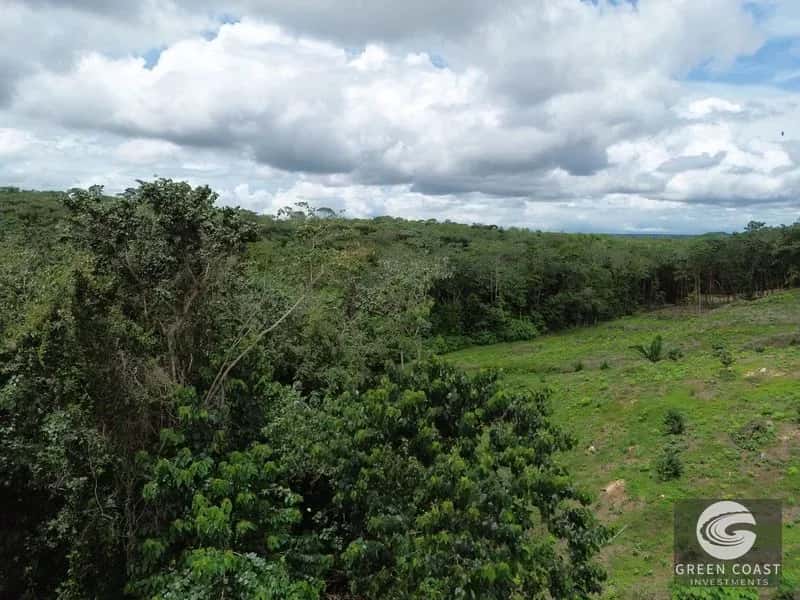
Prime 45-Hectare Development Land with Luxury Views Near Future Southern Costa Rica Airport — Buyer's Guide for Costa Rica Real Estate
International developers are increasingly diversifying their portfolios by transitioning high-yield capital from premium coastal vacation rentals into large-scale land banking. This buyer's guide details how to leverage the steady cash flows generated through high-end property management in Flamingo, Costa Rica, to secure a prime 45-hectare development parcel near the future Southern Costa Rica Airport, priced at USD 995,000.
In our years on this coast, we have watched smart capital move between regions to hedge against market saturation. By balancing immediate, reliable rental income from mature coastal markets with strategic land acquisitions in high-growth corridors, investors mitigate risk while capturing early-stage equity. This analysis explores the market dynamics, infrastructure readiness, and legal pathways required to successfully execute large-scale developments in Costa Rica.
---
The Strategic Synergy Between Flamingo Coastal Yields and Central Valley Land Development
Smart developers balance immediate, reliable cash flow from premium vacation rentals with long-term capital appreciation in strategic expansion zones. By leveraging the steady rental yields generated through high-end property management in Flamingo, Costa Rica, investors secure the liquid capital necessary to fund large-scale, high-yield land developments in the Central Valley. This dual-region strategy pairs the established, high-tariff coastal tourism market of Guanacaste with the lower entry costs of the country's central logistical and residential hub.
Analyzing the Central Valley Real Estate Landscape
The Central Valley real estate market is experiencing a significant surge, driven by expanding infrastructure and multinational corporate relocations. To understand the scale of this market, consider the current live market data:
| Market Metric | Value (USD) |
| :--- | :--- |
| Active Listings | 335 |
| Price Range | $40,000 to $125,000,000 |
| Average Listing Price | $1,560,925 |
These metrics reveal a highly diverse market with substantial luxury and commercial activity. The average listing price of USD 1,560,925 underscores the premium demand for tract land and estate properties in this region, making strategic acquisitions highly lucrative for developers who enter the market at the right valuation. To see how these metrics translate to available inventory, you can view listings currently active in this high-growth corridor.
The USD 995,000 Entry Point: A Rare High-Value Opportunity
Against this market backdrop, the 45-hectare development parcel represents an extraordinary anomaly. Priced at just USD 995,000, this expansive tract sits well below the regional average listing price, despite offering massive scale and premium development potential.
For developers accustomed to the premium square-meter pricing of coastal zones like Flamingo, this Central Valley parcel offers an unmatched cost basis. It allows investors to diversify their portfolios, transitioning profits from coastal property management into a massive land bank poised for appreciation as nearby infrastructure projects materialize.
---
Key Facts: Inside the 45-Hectare Central Valley Development Parcel
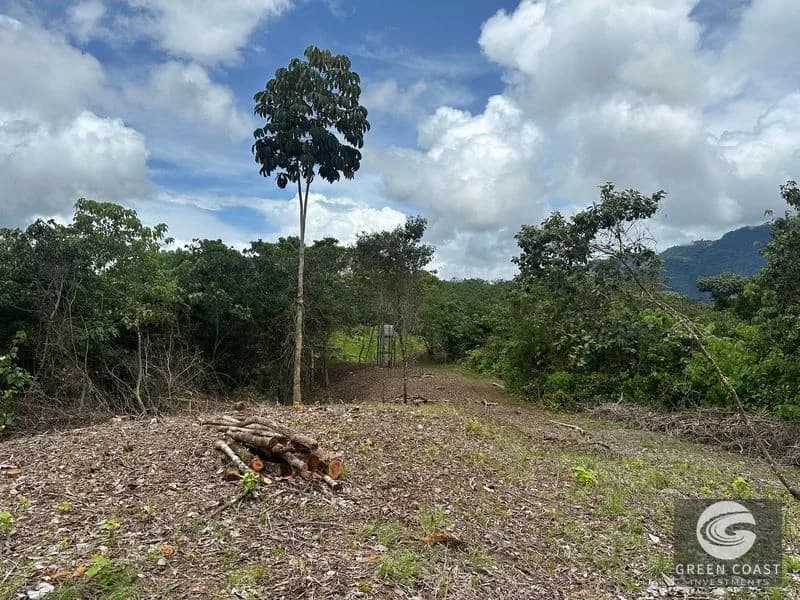
The featured 45-hectare (approximately 111-acre) development parcel is priced at USD 995,000, offering a highly strategic land-banking and subdivision opportunity. Located in a high-growth corridor of the Central Valley, this expansive tract of land combines rolling topography, luxury mountain and valley views, and flexible development zoning.
To put this pricing into perspective, the current Costa Rica real estate market features 335 active listings in this category, with a vast price range spanning USD 40,000 to USD 125,000,000, and an overall average listing price of USD 1,560,925. Acquiring over 110 acres of prime, view-rich land well below the national average for large tracts represents a highly competitive entry point for international developers. Investors can review the complete specifications of this Prime 45-Hectare Development Land with Luxury Views Near Future Southern Costa Rica Airport to evaluate its master-planning potential.
```
[45-HECTARE DEVELOPMENT PARCEL]
│
┌───────────────────────┼───────────────────────┐
▼ ▼ ▼
[Residential Estates] [Eco-Hospitality] [Agricultural/Mixed]
Subdivided view lots Low-impact lodges Equestrian & organic
```
Flexible Zoning and Master-Planning Potential
The property’s municipal zoning guidelines allow for diverse, high-yield development models. Developers can leverage the natural terrain to execute several high-value concepts:
Master-Planned Residential Communities:* Subdivide the acreage into premium estate lots that capitalize on the natural elevation changes and luxury views.
Eco-Lodges and Wellness Retreats:* Utilize the forested areas and natural water features to build a low-impact, high-end hospitality project.
Mixed-Use Agricultural Estates:* Combine sustainable luxury living with organic farming, equestrian facilities, or reforestation initiatives.
Market Valuation and Strategic Positioning
The price-to-acreage ratio of this parcel is particularly notable when compared to highly commercialized coastal areas. While investors seeking property management in Flamingo, Costa Rica, often face premium prices for small beachfront or ocean-view lots, this Central Valley parcel offers massive scale for less than USD 10,000 per hectare.
> "At under USD 1,000,000, this 45-hectare parcel represents a generational land-banking opportunity, strategically positioned between the Central Valley's infrastructure and the southern zone's rapid appreciation." — Daniel Berkley
By securing a land asset of this scale, developers can capture the spillover demand from both the expanding San José metropolitan area and the incoming tourism traffic generated by the future Southern Costa Rica Airport.
---
Infrastructure Impact: The Future Southern Costa Rica Airport
The planned Southern Costa Rica International Airport in the Osa/Sierpe region will act as a major economic catalyst, driving substantial capital appreciation for southern-facing Central Valley ridges by creating a high-velocity transit corridor. As international transit infrastructure shifts southward, strategic development parcels positioned between San José and the new southern hub will experience a projected 50% travel time reduction to the southern zone. This logistical shift redirects tourism and investment flows, positioning this 45-hectare parcel directly in the path of rapid equity growth.
```
[San José Metro] ──────────► [45-Hectare Parcel] ──────────► [Future Southern Airport]
(High-Growth Hub) (Osa/Sierpe Region)
```
Historical Precedent: The Guanacaste LIR Airport Effect
To understand the financial trajectory of this development land, investors can look to the historical data from the Daniel Oduber Quirós International Airport (LIR) expansion in Liberia. According to data from the Costa Rica Ministry of National Planning and Economic Policy (MIDEPLAN), land values in the surrounding Guanacaste regions experienced a 150% to 300% increase post-expansion.
As access improved, speculative land buyers and luxury developers who secured acreage prior to the runway completion captured the highest yields. The southern airport project is poised to trigger a similar valuation spike, making early acquisition of large-scale acreage a highly profitable play before ground is broken.
Current Market Context and Inventory Dynamics
The broader Costa Rican real estate market reflects strong demand for high-caliber development tracts. Currently, there are 335 active listings matching this investment profile, with a wide price range spanning USD 40,000 to USD 125,000,000, and an average market price of USD 1,560,925.
Securing a 45-hectare parcel with established luxury views at this stage of the infrastructure timeline allows developers to bypass the inventory scarcity seen in mature markets. By capitalizing on the future transit corridor today, developers can establish a high-yield project that captures both the immediate demand for Central Valley estate homes and the incoming wave of southern-bound luxury travelers.
---
Legal Requirements for US and Canadian Developers in Costa Rica
US and Canadian developers can legally acquire and develop land in Costa Rica with the same fee simple ownership rights as local citizens. To successfully execute a large-scale project on a 45-hectare parcel, international buyers must navigate three core legal pillars during the transactional due diligence phase: securing environmental clearances through SETENA, verifying water concessions with AyA, and structuring the acquisition through a secure escrow process.
```
[Due Diligence Phase]
│
├─► SETENA Clearance (Environmental evaluation: 3–6 months)
├─► AyA Water Verification (Minimum flow rate: 0.5 L/s per household)
└─► SUGEF Escrow Setup (Regulated capital protection)
```
Navigating the SETENA Environmental Permitting Process
Before any earthmoving, road construction, or structural framing can begin on a major development tract, developers must secure environmental clearance from the Secretaría Técnica Nacional Ambiental (SETENA). This process begins during the due diligence period by filing a preliminary environmental evaluation (Formulario D-1 or D-2, depending on the project's scale).
Average Timeline:* The average timeline for SETENA to complete a preliminary environmental evaluation is 3 to 6 months.
Soil and Geological Studies:* Developers must submit certified soil stability tests and hydrological studies to prove the terrain can support the proposed density without risking erosion or disrupting local runoff.
Verifying Water Concessions and AyA Infrastructure
Securing a guaranteed, legal water source is the most critical hurdle in Costa Rican real estate development. Buyers must verify water availability before releasing funds from escrow. For a master-planned residential development, the Costa Rican water authority, Instituto Costarricense de Acueductos y Alcantarillados (AyA), enforces strict volume requirements.
Flow Rate Requirement:* The required water flow rate for master-planned residential zoning is a minimum of 0.5 liters per second per household (Source: AyA Costa Rica).
Concession Verification:* Your legal team must verify whether the property connects to an existing municipal AyA network, a local ASADA (rural water board), or if it relies on a registered onsite well. If relying on a well, the concession rights must be fully registered and active in the National Water Registry (Dirección de Aguas).
Escrow Structure and Market Context
To protect international capital, transactions are structured using SUGEF-regulated escrow agents. This ensures that deposit funds are only released to the seller once all contingency clauses—such as receiving clean title, verifying the 0.5 L/s per household water flow rate, and confirming zoning usage—are fully satisfied.
This rigorous legal structure supports a highly active regional market. Currently, there are 335 active listings in the area, with a price range of USD 40,000 to USD 125,000,000, and an average price of USD 1,560,925. Securing professional legal representation ensures your 45-hectare project aligns perfectly with these market dynamics.
---
Infrastructure Readiness of the 45-Hectare Lot
The 45-hectare development parcel features robust, development-ready infrastructure at its boundary, capable of supporting a high-end residential or mixed-use project. Unlike remote tracts that require massive capital expenditure to bring basic utilities to the site, this property is positioned directly within a highly connected corridor. It offers immediate access to modern telecommunications, heavy-duty electrical grids, and primary transit routes, allowing developers to transition quickly from the planning phase to active construction.
Grid Connectivity and High-Speed Telecommunications
Modern buyers expect urban-grade utility reliability, even when purchasing in a scenic development. This parcel meets those demands with premium utility connections available at the property line:
High-Speed Fiber-Optic Internet:* Symmetrical fiber-optic speeds of up to 1 Gbps are available in the immediate corridor, ensuring reliable connectivity for remote executives and luxury residents.
Three-Phase Electrical Power:* The presence of three-phase power at the boundary provides the necessary voltage stability to support heavy machinery during construction and the long-term energy demands of a large-scale community.
National Road Access and Regional Logistics
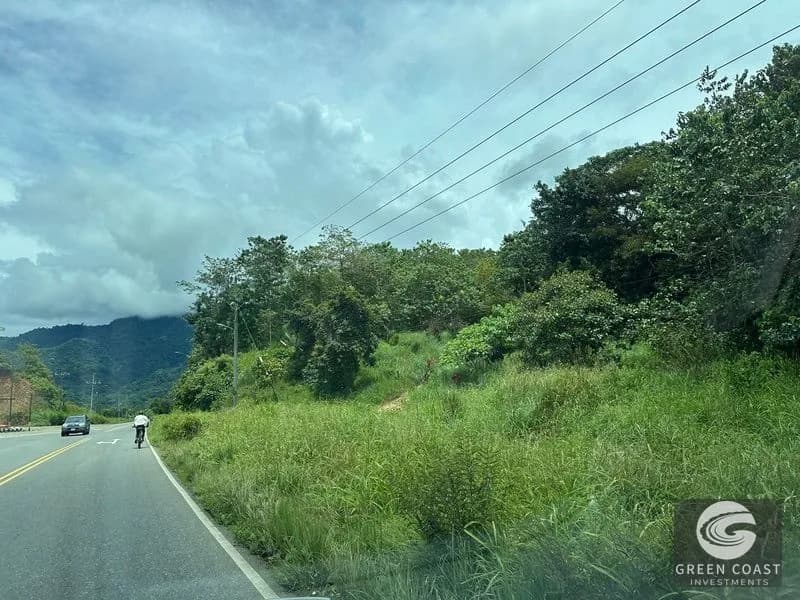
Logistics and accessibility are critical when managing a project of this scale. The property is located less than 2 kilometers from the nearest paved national highway. This short distance ensures that heavy transport vehicles, construction crews, and future residents can easily reach the site. This highway connection provides a direct route linking the Central Valley to the Pacific coast, allowing future residents to travel to coastal hubs like Jacó or transition to northern coastal markets where property management in Flamingo, Costa Rica, remains highly active.
Internal Road Design and Tropical Water Management
Developing in Costa Rica requires specialized engineering to handle the seasonal rainfall of the green season. To secure long-term asset value, the internal road network of this 45-hectare tract must be designed with durability in mind.
Engineered Drainage Systems:* Development plans must incorporate deep-cut concrete gutters, oversized culverts, and retention basins to manage heavy runoff.
Internal Road Sub-Base:* Roads require a compacted sub-base with asphalt or concrete paving to prevent erosion and ensure year-round access for standard passenger vehicles.
This infrastructure readiness positions the parcel favorably within the broader market. Currently, there are 335 active listings in the regional development category, with a price range of USD 40,000 to USD 125,000,000, and an average price of USD 1,560,925. Securing a parcel of this scale with existing boundary utilities significantly reduces upfront development risks compared to unserviced rural land.
---
Regional Comparison: Microclimates and Valuations
This emerging southern-facing Central Valley ridge offers a superior alternative to the saturated markets of Escazú and Atenas by combining unobstructed mountain-to-ocean views, a highly desirable microclimate, and unprecedented land value. While Escazú suffers from dense urban sprawl and Atenas experiences increasingly hot daytime temperatures, this 45-hectare parcel provides a cooler, low-humidity environment with expansive vistas that stretch all the way to the Pacific coastline near Jacó. To fully appreciate these geographic advantages, developers can explore the area and its unique microclimates.
Microclimate and Temperature Profile
The microclimate of this specific ridge rivals the famous "best climate in the world" reputation of Atenas, but with a distinct elevation advantage that keeps humidity low and brings refreshing evening breezes.
Average year-round temperature range:* 65°F to 82°F (18°C to 28°C).
Airflow:* Continuous mountain-to-valley drafts that eliminate the need for constant air conditioning, a major selling point for eco-conscious luxury buyers.
Unlike Escazú, where heavy afternoon valley smog can sometimes obscure the skyline, the air quality on this southern-facing ridge remains pristine year-round, offering clear sightlines to the Gulf of Nicoya.
Valuation and Market Comparison
The financial contrast between established Central Valley suburbs and this development tract is stark. Escazú and Santa Ana have reached near-total build-out, driving land prices to premium heights that compress developer margins.
| Location | Average Land Price per Square Meter (USD) |
| :--- | :--- |
| Escazú Commercial/Residential Land | $150 to $300 |
| Featured 45-Hectare Central Valley Parcel | $2.21 |
This massive price disparity allows developers to acquire a vast land bank for a fraction of the cost of a single commercial lot in the western suburbs. Across the region, there are currently 335 active listings with a price range of USD 40,000 to USD 125,000,000, and an average price of USD 1,560,925. Acquiring 45 hectares at $2.21 per square meter positions a developer to capture massive equity growth as infrastructure expands outward from the San José metropolitan area.
Marketability of Panoramic Mountain-to-Ocean Views
In luxury real estate, views dictate the final sales price of completed estates. The topography of this parcel ensures that future residential lots can be terraced to guarantee permanent, unobstructed views. Future residents will look over rolling green ridges descending toward the coastal plains, with the Pacific horizon visible on clear days. This visual connection to the coast enhances the marketability of the tract, allowing developers to market these properties as high-end mountain retreats that are still within driving distance of both the capital and the central Pacific beaches.
---
Transitioning from Flamingo Property Management to Central Valley Development
Transitioning your real estate strategy from passive rental income via property management in Flamingo, Costa Rica, to high-yield land development in the Central Valley requires a structured capital redeployment plan. By leveraging the equity and consistent cash flow generated by your coastal assets, you can comfortably fund the acquisition and early-stage infrastructure of this premier 45-hectare development parcel. Green Coast Investments facilitates this transition by aligning your coastal portfolio yields with structured development milestones in this emerging southern-facing corridor.
```
[Flamingo Rental Income] ──► [SUGEF Escrow Account] ──► [Phase 1 Infrastructure]
(Steady Cash Flow) (Capital Protection) (Roads, Water, Power)
```
Step 1: Portfolio Equity Assessment and Liquidity Structuring
The first phase of transitioning from coastal property management to large-scale development involves analyzing the equity in your Guanacaste assets. High-end villas in Flamingo often command premium rental rates, generating consistent USD-denominated cash flows.
Our team works with developers to structure cash-out refinances or leverage the borrowing power of these income-producing assets to secure the USD 995,000 purchase price of the 45-hectare Central Valley parcel. This approach preserves your primary capital reserves while allowing you to acquire a high-potential land bank without liquidating your cash-flowing coastal holdings.
Step 2: Due Diligence and Contingency Management
Once the capital structure is in place, your legal team must initiate the formal due diligence process on the Central Valley parcel. This phase must be completed within a standard 30-to-60-day window, during which the purchase funds remain protected in a SUGEF-regulated escrow account. The primary contingencies that must be satisfied before the release of funds include:
1. Title Search: Verifying that the 45-hectare tract is free of liens, annotations, and boundary disputes in the National Registry (Registro Nacional).
2. Water Flow Certification: Securing formal documentation from AyA or the local ASADA confirming a minimum flow rate of 0.5 liters per second per planned household.
3. Zoning Verification: Obtaining a municipal zoning certificate (Uso de Suelo) confirming that the land is approved for your specific residential or hospitality density targets.
Step 3: Phased Infrastructure Development and Master-Planning
With the acquisition finalized, developers can begin a phased master-planning process designed to maximize return on investment while minimizing upfront capital expenditure. Instead of developing the entire 111 acres simultaneously, successful developers typically divide the project into logical phases:
Phase 1 (Months 1–12):* Secure SETENA environmental clearance, establish the primary internal road sub-base, and connect the boundary three-phase electrical power to the initial phase-one home sites.
Phase 2 (Months 13–24):* Subdivide and market the first tier of premium view lots. The sales revenue from these initial estate lots can then be used to fund the construction of phase-two infrastructure, including community amenities, paved internal roads, and engineered drainage systems.
Phase 3 (Months 25+):* Develop the remaining acreage, which may include dedicated green zones, eco-lodges, or agricultural estates, further enhancing the overall value of the master-planned community.
By utilizing this structured approach, international investors can successfully transition from passive property management in Flamingo, Costa Rica, to active, high-yield development in the Central Valley. This strategy capitalizes on the country's expanding infrastructure, capturing significant equity growth as the market continues to mature.