
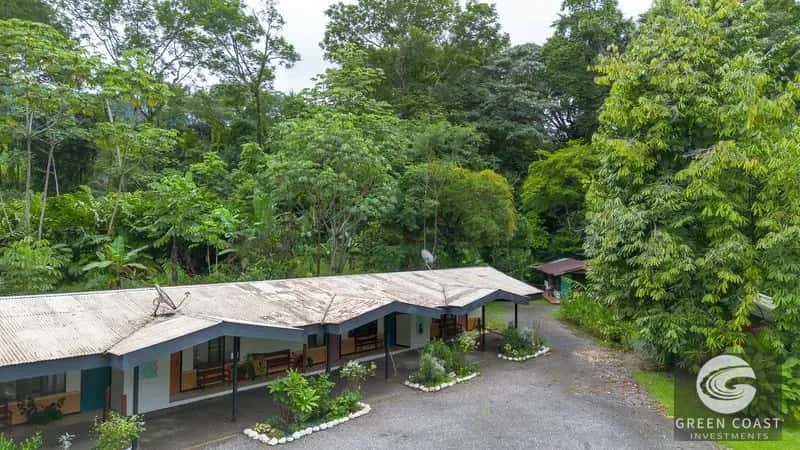
Prime 6.6-Acre Investment Property in Uvita – Ideal for New Projects and Opportunities
In Costa Rica, "CEQA real estate" does not refer to California's environmental regulations. For Green Coast Investments, it signifies a strategic investment in high-potential development land that aligns with future market demands for sustainable luxury. This 6.6-acre Uvita property embodies this concept, offering a significant land parcel in a rapidly appreciating area. It is suitable for projects that prioritize both profitability and ecological responsibility. This represents an opportunity to acquire land where thoughtful development can yield substantial returns while respecting the region's natural beauty.
This 6.6-acre property in Uvita is a prime example due to its combination of size, location, and development potential. With 6.6 acres, it offers ample space for various projects, from a boutique eco-resort to luxury villas, all designed with sustainability in mind. Its location in Uvita, a sought-after destination within the Southern Pacific region, places it within easy reach of amenities, the Marino Ballena National Park, and beaches. The size and strategic location inherently reduce initial development hurdles compared to smaller, more constrained parcels.
The property's attributes appeal to US and Canadian luxury buyers and developers seeking investments that offer financial upside and a connection to nature. Market data for the region supports this appeal: with 192 active listings ranging from USD 90,000 to USD 13,000,000 and an average price of USD 881,480, there is demand for diverse property types. A 6.6-acre parcel allows for the creation of exclusive, low-density developments that cater to this clientele, offering privacy, expansive views, and direct access to the natural environment—all key drivers for luxury real estate purchases in Costa Rica. This property provides the canvas for a project that can capture a significant share of this high-value market.
Why the Dominical-Uvita Region is a Hotspot for Luxury Real Estate Investment

The Dominical-Uvita region is a compelling hotspot for luxury real estate investment due to its blend of natural beauty, thriving eco-tourism, improving infrastructure, and an established, yet growing, expat community. This combination creates demand for premium properties, offering both lifestyle benefits and appreciation potential.
This Southern Pacific corridor has been evolving into a premier luxury destination. While maintaining its authentic Costa Rican character, the area has seen a rise in high-end amenities, boutique hotels, gourmet dining, and sophisticated residential developments catering to discerning buyers. The focus on sustainable development and preserving the natural environment further enhances its appeal for those seeking an exclusive, eco-conscious lifestyle. This trajectory positions Dominical-Uvita as a sophisticated alternative to more developed coastal areas.
Current market trends in Dominical-Uvita indicate robust growth and sustained interest in luxury properties. Market data reflects this dynamism: active listings currently stand at 192, with a price range from USD 90,000 to USD 13,000,000, and an average listing price of USD 881,480. These figures demonstrate a diverse market capable of accommodating various investment scales, with significant room at the higher end for luxury developments. Future growth projections remain strong, driven by continued infrastructure improvements, increasing international recognition, and the region's commitment to sustainable tourism.
When comparing Dominical-Uvita to other Costa Rican investment regions, its distinct advantages are clear. Unlike the more densely developed Guanacaste region (e.g., Tamarindo, Papagayo) or the surf town of Jacó, Dominical-Uvita offers a more serene, nature-centric experience without sacrificing accessibility or quality services. It provides a balance between wilderness and modern comforts, attracting investors who prioritize privacy, environmental integrity, and a slower pace of life, all while benefiting from a growing luxury market. This unique positioning makes it particularly attractive for those seeking a premium investment with long-term value.
Property Spotlight: The Potential of This Prime 6.6-Acre Uvita Investment

This 6.6-acre parcel in Uvita, priced at USD 2,650,000, presents a significant investment opportunity for developers seeking a prime location in Costa Rica’s Southern Pacific. Its expansive size, favorable topography, and strategic positioning make it adaptable for a range of new projects. The property offers panoramic ocean views, including the "Whale's Tail" formation, and is accessible via well-maintained roads, with essential utilities available at the property line. This is development land, offering a canvas for investors to shape according to their vision and market demands.
Detailed Property Description and Development Vision
The 6.6 acres (approximately 2.67 hectares) feature a gently sloping topography, suitable for tiered construction that maximizes views from multiple structures. The elevation ensures consistent ocean vistas while maintaining convenient access to the main coastal highway (Route 34). Power and water connections are available, streamlining the initial phases of any construction project. The property's natural contours allow for architectural designs that integrate with the surrounding tropical environment.
Development possibilities include:
* Luxury Villas: Multiple high-end residences, each with private pools and ocean views, catering to the affluent vacation rental market or private ownership.
* Eco-Lodge: A sustainable, boutique accommodation offering immersive nature experiences, appealing to eco-conscious travelers.
* Boutique Hotel: A small, exclusive hotel providing personalized service and amenities, capitalizing on Uvita’s growing tourism.
* Mixed-Use Development: A combination of residential units and commercial spaces, such as a small café or wellness center, serving both residents and guests.
Strategic Location and Market Context
This property's location within Uvita is a major asset. It is minutes away from the Marino Ballena National Park, known for its whale watching and unique sandbar formation. The area is known for its beaches, including Playa Uvita and Playa Hermosa, and offers access to a growing array of amenities, including international restaurants, supermarkets, and essential services. This proximity to natural attractions and established infrastructure enhances its appeal for both residents and tourists, ensuring demand for new developments.
The current real estate market in the region shows significant interest, with 192 active listings ranging from USD 90,000 to USD 13,000,000, and an average price of USD 881,480. This 6.6-acre parcel, at USD 2,650,000, is priced at a premium, reflecting its size, views, and development potential, positioning it as an investment in a competitive market. Its classification as "development land" provides investors with the flexibility to design and execute a project from the ground up, maximizing value creation.
Key Considerations for Developing Raw Land in Uvita for Foreign Investors
Developing raw land in Uvita, Costa Rica, as a foreign investor requires understanding the legal framework, a structured development process, and local guidance. Foreigners enjoy the same property ownership rights as Costa Rican citizens, making the country an attractive destination for real estate investment. However, navigating the specific regulations for construction, especially in environmentally sensitive areas, is crucial for a successful project. With 192 active listings in the region ranging from USD 90,000 to USD 13,000,000, and an average price of USD 881,480, understanding these considerations is vital for optimizing your investment.
Legal Framework for Foreign Land Ownership in Costa Rica
Costa Rica has an open policy towards foreign land ownership. Non-citizens can own property outright, either in their individual name or through a Costa Rican corporation. Owning property through a corporation is often recommended for liability protection, estate planning, and ease of transfer. It is essential to conduct thorough due diligence, including a title search at the National Registry, to ensure the property has a clear title and no encumbrances.
Step-by-Step Guide to the Development Process: From Acquisition to Construction
The development process typically begins with property acquisition, followed by feasibility studies and architectural design. Once designs are finalized, permits must be secured from various government entities, including the local municipality (Municipalidad), the Ministry of Environment and Energy (MINAE) for environmental impact assessments, and the College of Architects and Engineers (CFIA) for construction permits. Construction then proceeds under the supervision of a licensed architect or engineer, culminating in final inspections and occupancy permits.
Importance of Local Legal Counsel and Experienced Project Managers
Engaging experienced local legal counsel is necessary. They will guide you through property acquisition, corporate structuring, permit applications, and contract negotiations. Similarly, a skilled project manager with a strong understanding of local construction practices and regulations can oversee the development, ensuring adherence to timelines, budgets, and quality standards. Their local connections and knowledge can streamline the process.
Understanding Land Use Regulations and Zoning in the Dominical-Uvita Area
The Dominical-Uvita region has specific land use regulations and zoning ordinances designed to protect its natural beauty and promote sustainable development. These regulations dictate what can be built, where, and to what specifications (e.g., building height, setback requirements, density). For properties near protected areas like the Marino Ballena National Park, environmental impact assessments are particularly stringent. Consulting with the local municipality and environmental agencies early in the planning stages is essential to ensure your project aligns with these regulations.
Permits and Regulations for a New Construction Project in Costa Rica's Southern Pacific
Navigating the permitting process for new construction in Costa Rica's Southern Pacific, particularly in areas like Uvita, requires understanding several key regulations and engaging with various government entities. Essential permits include the Delineation of the Maritime Zone (if applicable), building permits (permiso de construcción) from the local municipality, and environmental impact assessments (DIA/EIA) to ensure compliance with environmental protection laws. For properties near the coast, the Maritime Terrestrial Zone (ZMT) law dictates strict development rules within the first 200 meters from the high tide line, often requiring a concession for use rather than outright ownership.
Required Permits and Assessments
For any significant construction project, a permiso de construcción is mandatory. This is issued by the local municipality (Municipalidad de Osa for Uvita) after a review of architectural plans, structural engineering, electrical designs, and plumbing schematics, all prepared and stamped by licensed Costa Rican professionals. Before a building permit can be considered, an Environmental Impact Assessment (EIA) or a simpler Environmental Viability Document (DIA) may be required by the National Environmental Technical Secretariat (SETENA). The level of assessment depends on the project's scale and potential environmental impact. This is crucial in regions adjacent to protected areas like Marino Ballena National Park, where the emphasis on sustainable development is high.
Local Municipal Requirements and Processes
Each municipality has specific bylaws and zoning regulations that dictate what can be built, where, and to what specifications. In Uvita, you will work with the Municipalidad de Osa. Their requirements typically include proof of property ownership, a survey plan (plano catastro), a water availability letter (carta de disponibilidad de agua) from the local ASADA (Administración de Acueductos y Alcantarillados), and the aforementioned stamped plans. The process can be iterative, involving multiple reviews and revisions before final approval. Understanding the local planning department's nuances is vital for efficient project progression.
Navigating Environmental Regulations Near Protected Areas
Developing land near sensitive ecological zones, such as Marino Ballena National Park, demands adherence to environmental regulations. SETENA plays a critical role in reviewing project proposals to mitigate potential ecological harm. This often involves specific requirements for wastewater treatment, stormwater management, preservation of natural vegetation, and limitations on building footprints or heights. Sustainable building practices, such as using local materials, integrating renewable energy, and minimizing land disturbance, are encouraged and often mandated.
Local Labor Laws and Hiring Practices
Costa Rican labor laws are comprehensive and designed to protect workers. For construction projects, this means adhering to regulations regarding worker safety, social security contributions (CCSS), minimum wages, and severance pay. It is common practice to work with established local contractors who are familiar with these laws and can manage the workforce compliantly. Hiring local labor supports the regional economy and provides access to skilled workers knowledgeable about local building techniques and materials. The real estate market in the Southern Pacific, with active listings at 192 and an average price of USD 881,480, indicates a robust environment for both investment and development, underscoring the importance of navigating these regulatory frameworks effectively.
Maximizing Return on Investment with a Development Property in Dominical-Uvita
Maximizing your return on investment (ROI) in the Dominical-Uvita region depends on strategic project selection, understanding market demand, and incorporating value-driven development practices. The area's consistent growth in tourism and expatriate interest provides a strong foundation for various project types, from luxury rental villas to boutique hospitality ventures.
ROI Across Project Types
The Dominical-Uvita corridor offers ROI potential across several development models:
* Luxury Rentals: High-end vacation rentals, particularly those with ocean views, private pools, and modern amenities, command premium nightly rates. Projected rental income for well-managed luxury properties can be substantial, with occupancy rates often exceeding 60-70% during peak seasons (December-April and July-August). The average property price in the region, currently at USD 881,480 across 192 active listings, indicates a strong market for higher-value assets.
* Resale of Developed Lots: For developers seeking quicker returns, subdividing a larger parcel into premium building lots with infrastructure (roads, utilities) can be profitable. Buyers are often willing to pay a premium for ready-to-build sites in desirable locations.
* Boutique Hospitality: Small-scale hotels, eco-lodges, or glamping resorts catering to discerning travelers can achieve excellent returns. These projects benefit from the region's appeal to nature tourism and wellness retreats, often commanding higher average daily rates than standard accommodations.
Strategies for Value Creation
To stand out in a competitive market and enhance ROI, consider these value-creation strategies:
* Sustainable Design: Incorporating eco-friendly materials, energy-efficient systems, and rainwater harvesting appeals to environmentally conscious buyers and renters. This also aligns with Costa Rica's national commitment to sustainability.
* Unique Amenities: Offering features like private chef services, yoga decks, infinity pools, integrated smart home technology, or direct access to nature trails can increase perceived value and rental appeal.
* Strong Branding: Developing a distinct brand identity for your project, emphasizing its unique selling points and connection to the local environment, helps attract the target demographic and justifies premium pricing.
Infrastructure Development and Future Growth
The Dominical-Uvita area continues to benefit from ongoing infrastructure improvements and strategic growth initiatives. Road improvements, particularly along the Costanera Sur (Route 34), enhance accessibility, reducing travel times from international airports. Expansion of utility services, including reliable internet and water, supports larger-scale developments. Furthermore, government and private sector tourism initiatives aim to diversify offerings and extend the tourism season, ensuring sustained demand for high-quality accommodations and properties. These developments contribute to long-term property appreciation and a stable investment environment.
Environmental Considerations for Developing Land Near Marino Ballena National Park
Developing land near Marino Ballena National Park in Uvita requires adherence to environmental regulations designed to protect the area's biodiversity and ecological integrity. These guidelines often include limitations on construction density, building heights, and setbacks from natural water sources and protected areas. Incorporating sustainable building practices is encouraged and often incentivized, leading to long-term benefits for both the environment and your investment.
Regulations and Guidelines Near Protected Areas
Development within proximity to national parks and protected zones like Marino Ballena is subject to specific zoning laws and environmental impact assessments (EIAs). These assessments evaluate potential effects on flora, fauna, water resources, and scenic views. Projects must demonstrate minimal environmental disturbance and often require permits from the Ministry of Environment and Energy (MINAE) and local municipalities. Adherence to these regulations is crucial for project approval and avoiding delays or penalties.
Incentives for Sustainable Building Practices
Costa Rica promotes sustainable development, offering incentives for projects that incorporate green building standards. While a direct "CEQA real estate" equivalent does not exist, the spirit of environmental review is strong. Certifications like LEED (Leadership in Energy and Environmental Design) or local green building standards, though not always mandatory, can provide advantages. These include faster permitting processes, potential tax breaks, and enhanced marketability to environmentally conscious buyers. Sustainable practices encompass efficient water use, renewable energy integration (solar panels), use of local and recycled materials, and responsible waste management.
Examples of Eco-Friendly Developments
The Southern Pacific region showcases several eco-friendly developments that blend luxury with environmental stewardship. These projects often feature designs that minimize their footprint, integrate with the natural landscape, and prioritize native landscaping. Examples include developments utilizing passive cooling techniques, rainwater harvesting systems, and on-site wastewater treatment. These projects demonstrate that high-value real estate can coexist harmoniously with a delicate ecosystem, often commanding premium prices due to their sustainable credentials.
Navigating Local Culture and Community Engagement
Successful development in Costa Rica also depends on effective community engagement. Understanding and respecting local culture, traditions, and community needs is paramount. This involves transparent communication with local residents, supporting local businesses, and potentially incorporating local labor and materials. Building positive relationships with the community can facilitate smoother project approvals, foster goodwill, and contribute to the long-term success and acceptance of your development. The Dominical-Uvita region, with active listings averaging USD 881,480, is a market where community integration can significantly influence project viability and reputation.
Frequently Asked Questions for US/Canadian Developers in Costa Rica
Foreigners can own land outright in Costa Rica, enjoying the same property rights as citizens. This is an advantage for US and Canadian developers looking to invest, as there are no restrictions on foreign ownership of real estate. This straightforward ownership framework, coupled with a robust legal system, makes Costa Rica an attractive destination for property investment and development.
Can foreigners own land outright in Costa Rica?
Foreign individuals and entities have the same rights as Costa Rican citizens to own real estate. This means you can purchase land, hold title in your name or through a corporation, and develop it without needing a local partner or special permits related to foreign ownership. It is advisable to establish a Costa Rican corporation (Sociedad Anónima or S.A.) to hold the property, as this offers liability protection and can simplify estate planning and future sales.
What are the typical timelines for obtaining development permits?
Permit timelines can vary depending on the project's complexity, the municipality, and the environmental impact assessment required. For a new construction project on raw land in Uvita, expect the initial stages (zoning verification, preliminary environmental studies) to take several months. Full construction permits, including municipal approvals and environmental viability (Viabilidad Ambiental) from SETENA (Secretaría Técnica Nacional Ambiental), can range from 6 months to over a year, sometimes longer for larger or more complex developments. Engaging experienced local attorneys and permit expeditors is crucial to streamline this process.
Are there tax incentives for real estate development?
Costa Rica offers some tax incentives, primarily through free trade zones (Zonas Francas) for certain types of businesses, but direct tax incentives specifically for general real estate development are less common. However, the country has a relatively stable tax structure. Property taxes (impuesto territorial) are low, typically 0.25% of the registered property value. New construction will increase this value. Income generated from rentals or sales of developed properties is subject to standard corporate or individual income tax rates. Consulting with a Costa Rican tax attorney is essential to understand your specific tax obligations and potential benefits.
How do I find reliable local contractors and architects?
Finding reliable local contractors and architects is critical for a successful project. Begin by seeking recommendations from trusted sources, such as your real estate agent (like Green Coast Investments), local attorneys, or other foreign developers who have completed projects in the Dominical-Uvita area. Always request portfolios, references, and proof of licensing and insurance. Conduct interviews, clearly define project scopes, timelines, and budgets in written contracts, and consider a phased payment structure tied to project milestones. Visiting previous projects and speaking with their past clients can provide insights into their work quality and reliability.
What are the risks associated with developing in a foreign country, and how can they be mitigated?
Developing in a foreign country like Costa Rica carries risks, including navigating unfamiliar legal and regulatory systems, potential language barriers, cultural differences in business practices, and unforeseen construction challenges.
Mitigation Strategies:*
Legal & Regulatory:* Engage experienced Costa Rican attorneys specializing in real estate and development from the outset. They can guide you through due diligence, contracts, and the permitting process.
Language & Culture:* Hire bilingual project managers or consultants. Understand local customs and business etiquette.
Construction:* Work with reputable, licensed contractors and architects. Implement robust project management, including regular site visits and detailed progress reports. Ensure clear, legally binding contracts are in place.
Financial:* Establish a realistic budget that includes contingencies for unexpected costs. Understand currency exchange rate fluctuations.
Environmental:* Proactively address environmental regulations and sustainability practices to avoid delays and fines.
The Dominical-Uvita region currently has 192 active listings, with prices ranging from USD 90,000 to USD 13,000,000, and an average price of USD 881,480, indicating a dynamic market with diverse opportunities.