
Why Are Costa Rica Expat Properties in the Central Valley and Lake Arenal Regions Surging in Demand?
For buyers comparing active inventory, see Prime Main Street Commercial Building with Seller Financing in Nuevo Arenal.
In our years on this coast, we have watched North American buyers shift capital from volatile coastal tourism markets to stable, year-round commercial hubs in the Central Valley and Lake Arenal regions. This transition is driven by a desire to secure predictable cash flow and escape seasonal tourism dependency. While coastal areas like Jacó experience dramatic fluctuations between the high and low seasons, interior commercial hubs benefit from a steady, permanent population of locals and retirees. Consequently, high-yielding costa rica expat properties are surging in demand because they offer a strategic blend of lifestyle security, lower entry barriers, and active income generation that passive residential investments rarely match.
Escaping Coastal Volatility for Year-Round Stability
The appeal of the beach can fade when commercial landlords face empty storefronts during the rainy season. In contrast, the interior regions maintain a consistent economic baseline twelve months a year. Expats are realizing that owning commercial real estate in these regions provides a hedge against inflation and tourism downturns. Instead of relying on weekly vacation rentals, investors are targeting properties that house essential services, retail spaces, and local eateries.
Market Dynamics: Central Valley and Interior Commercial Real Estate
The market for commercial opportunities in these interior regions is diverse, catering to both entry-level entrepreneurs and institutional investors. Currently, there are 90 active listings in this sector, with prices ranging from USD 40,000 to USD 3,800,000, yielding an average market price of USD 557,249. This wide pricing spectrum allows buyers to find highly accessible entry points well below the steep premiums commanded by coastal developments.
| Market Metric | Value (USD) |
| :--- | :--- |
| Active Listings | 90 |
| Minimum Price | $40,000 |
| Maximum Price | $3,800,000 |
| Average Price | $557,249 |
This data highlights the accessibility of the interior market. While institutional buyers can acquire larger commercial plazas at the upper end of the spectrum, individual expat investors can secure high-utility, low-overhead properties well below the regional average.
The Nuevo Arenal Investment Shift
A prime example of this market shift is the featured USD 149,000 commercial building in Nuevo Arenal. This commercial/business property sits far below the regional average price of USD 557,249, offering an affordable gateway for buyers looking to establish a physical business footprint. Located on a highly trafficked main street, this specific asset represents the exact type of high-utility, low-overhead property that smart investors are targeting to secure an immediate operational footprint and long-term capital appreciation.
---
Property Spotlight: The $149,000 Main Street Commercial Building in Nuevo Arenal
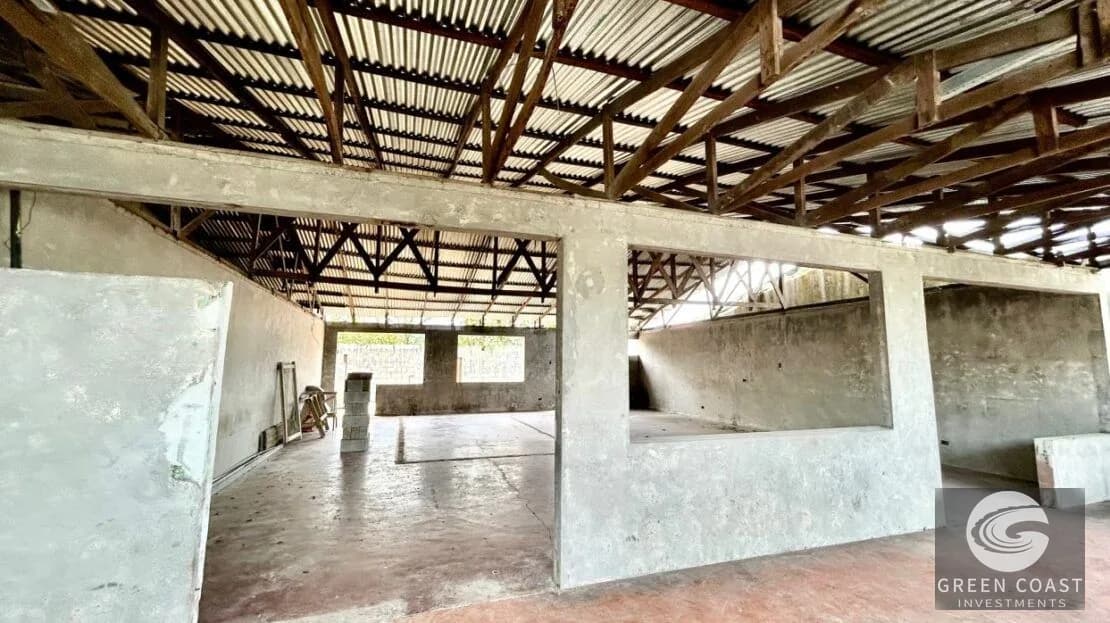
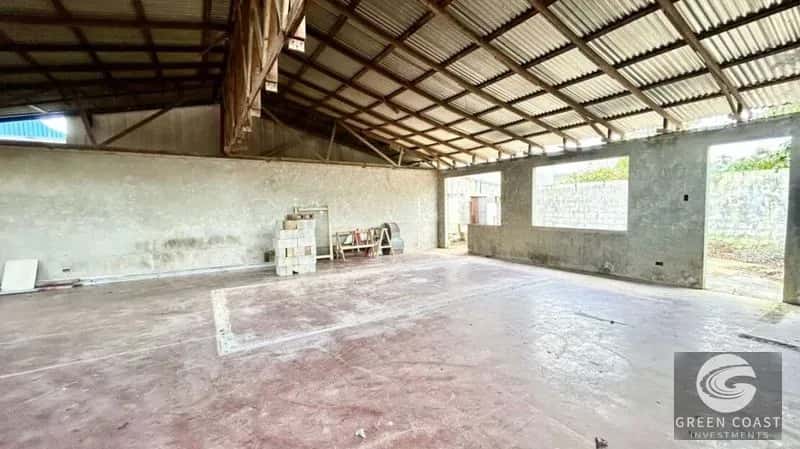
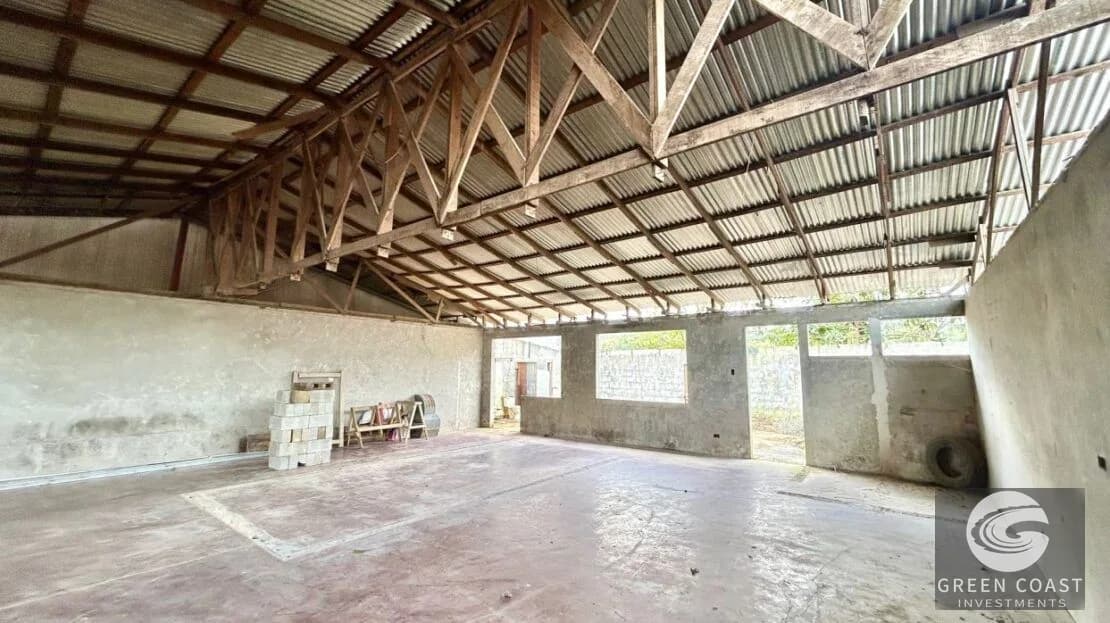
For buyers searching for high-yield Costa Rica expat properties, this USD 149,000 commercial building in Nuevo Arenal represents an entry-level investment with immediate cash-flow potential. Situated directly on the main thoroughfare of Nuevo Arenal, this high-visibility asset sits in a market where active listings currently total 90 properties, ranging in price from USD 40,000 to USD 3,800,000, with an average market price of USD 557,249. This specific listing allows foreign investors to acquire a prime commercial footprint at a fraction of the regional average.
Physical Asset Breakdown and High-Visibility Footprint
The building features a prominent street-front facade designed to capture maximum foot traffic and vehicular visibility from locals and tourists traveling between La Fortuna and the Guanacaste beaches.
Foundation and Structure:* Constructed with reinforced concrete and steel, the structure is built to commercial standards, minimizing immediate capital expenditure requirements.
Ground Floor Layout:* Features large display windows, secure access points, and an open-layout retail or office space that can be easily customized for various business models, from a boutique café to a professional services firm.
Access Points:* Separate entrances for the commercial space and the upper level ensure privacy and operational independence.
Dual-Purpose Utility: Live-Work or Passive Income
One of the most compelling aspects of this property is its flexible, dual-purpose design.
Ground-Floor Commercial Space:* Ideal for operating a customer-facing business, retail shop, or rental office.
Second-Story Apartment:* A private living space featuring independent access, allowing owners to live upstairs while running their business below.
Income-Splitting Potential:* Alternatively, expats can lease the ground floor to a local operator while placing the upper unit on the long-term or short-term rental market to secure two independent streams of passive income.
The Highland Micro-Climate Maintenance Advantage
Unlike coastal properties in humid beach towns like Jacó, this highland property benefits from the temperate micro-climate of the Arenal and Central Valley region. The lower humidity levels and cooler mountain breezes dramatically reduce the wear-and-tear maintenance costs commonly associated with tropical real estate.
Reduced Corrosion:* Owners will experience significantly less salt-air corrosion on metal fixtures, structural steel, and appliances.
Lower Mitigation Costs:* Reduced mold and mildew mitigation expenses save thousands of dollars in annual maintenance.
Utility Savings:* Lower monthly utility bills, as air conditioning is rarely required at this altitude.
This climate advantage preserves the structural integrity of the building over the long term, protecting your capital investment.
---
Is Seller Financing Safe for Foreigners Buying Property in the Central Valley?
Yes, seller financing is highly secure for foreigners purchasing Costa Rica expat properties, provided the transaction is structured through a legally binding mortgage (hipoteca) registered with the National Registry (Registro Nacional). For US and Canadian buyers, this process bypasses the restrictive and bureaucratic hurdles of traditional Costa Rican banks, which rarely lend to non-residents.
By utilizing a secure, registered mortgage alongside a licensed, third-party escrow account (such as SUGEF-regulated escrow providers), your capital is legally protected. If the seller defaults on their contractual obligations, or if you fulfill the payment terms, the registered title reflects these conditions transparently, protecting your growing equity from day one.
The Legal Framework: Escrow and the Hipoteca
To secure your investment in Costa Rica expat properties, the transaction relies on a two-fold legal shield:
1. Third-Party Escrow: All funds, including the initial down payment, are held by an objective, government-regulated escrow agent. Funds are only disbursed to the seller once all contractual contingencies are met.
2. *The Registered Mortgage (Hipoteca):* Your real estate attorney will draft a mortgage agreement that is officially recorded against the property’s title in the National Registry. This public filing prevents the seller from selling or placing other liens on the property while you are making payments.
Flexible Financing Terms for the $149,000 Nuevo Arenal Building
Securing a traditional bank loan in Costa Rica as a non-resident is notoriously difficult, often requiring years of local residency, endless paperwork, and interest rates hovering between 8% and 12% for US dollar loans.
In contrast, the $149,000 commercial building in Nuevo Arenal offers highly flexible, owner-financed terms that lower the barrier to entry for expat entrepreneurs. Buyers can secure this prime Main Street property with a customized down payment and a negotiated interest rate that is often highly competitive with local institutional lending. This structure allows you to preserve your liquid capital for business renovations or operational costs.
Market Context: Central Valley and Highlands Inventory
The demand for accessible financing is growing as buyers look beyond high-priced coastal hubs like Jacó. Currently, the regional market for commercial and residential expat properties features 90 active listings. These properties span a price range of USD 40,000 to USD 3,800,000, with an average market price of USD 557,249. At a purchase price of just $149,000, this seller-financed Nuevo Arenal commercial building sits well below the regional average, representing a highly accessible entry point into the local market.
---
What Legal Steps Are Required to Transfer a Commercial Title in Nuevo Arenal?
Transferring a commercial title in Nuevo Arenal requires a structured legal process managed by a bilingual Costa Rican notary public to ensure your investment is secure. This process involves executing comprehensive due diligence, drafting the transfer deed, and registering the transaction with the National Registry (Registro Nacional). For buyers exploring costa rica expat properties, securing a clean title on this $149,000 commercial building involves a clear sequence of legal safeguards.
```
[Step 1: Due Diligence] ---> [Step 2: Transfer Deed (Escritura)] ---> [Step 3: Registration & Corporate Setup]
```
Step 1: Rigorous Due Diligence and Title Search
Your attorney must first conduct a thorough search of the property's title in the Registro Nacional. This step verifies that the seller is the rightful owner and that the property is free of mortgages, judicial liens, boundary disputes, or easements.
Additionally, your legal representative must obtain a municipal clearance certificate (uso de suelo) from the local municipality to confirm there are no outstanding municipal property tax liens and that the building is zoned for your intended commercial use.
Step 2: Drafting the Transfer Deed (Escritura)
In Costa Rica, only a licensed notary public—who is also a qualified attorney—can draft and execute the transfer deed (escritura pública). The notary acts as an objective officer of the law, verifying the identities of both parties and ensuring all transaction terms are legal.
For a $149,000 transaction, you must budget for the following government transfer taxes, registration fees, and legal costs:
Property Transfer Tax:* 1.5% of the registered value ($2,235)
National Registry Documentary Stamps:* Approximately 0.5% ($745)
Notary Fees:* Typically calculated on a sliding scale, averaging 1% to 1.25% of the purchase price (approximately $1,490 to $1,862)
Step 3: Structuring the Purchase via an S.A. or S.R.L.
To protect personal assets and streamline local business operations, foreign buyers typically purchase commercial real estate through a Costa Rican corporation rather than in their personal names. You can choose between two main corporate structures:
Sociedad Anónima (S.A.):* Functions similarly to a U.S. corporation, requiring a board of directors (president, secretary, and treasurer) and a resident agent.
Sociedad de Responsabilidad Limitada (S.R.L.):* Similar to a U.S. Limited Liability Company (LLC), offering a simpler management structure with fewer administrative requirements.
Holding the Nuevo Arenal commercial building under an S.R.L. limits your personal liability, simplifies local tax reporting, and makes any future transfer of the property much easier. This legal structure is highly favored among investors tracking the regional market, where there are currently 90 active listings ranging from $40,000 to $3,800,000, with an average market price of $557,249.
---
How Do Central Valley Property Values Compare to Coastal Real Estate?
Central Valley property values offer significantly higher stability, lower entry costs, and more consistent year-round yields compared to Costa Rica’s highly seasonal and inflated coastal real estate markets. While beach destinations like Guanacaste, Manuel Antonio, or Jacó command premium prices driven by speculative tourism, they suffer from dramatic low-season vacancy rates and high operational overhead. In contrast, the Central Valley and its surrounding highlands—including the Lake Arenal corridor—benefit from a steady, permanent population of locals and retirees, insulating commercial landlords from the boom-and-bust cycles of the coast.
Comparing Market Data: Coastal Premium vs. Inland Value
The financial contrast between these regions becomes clear when analyzing current market data. In the Central Valley, buyers find a highly diverse inventory that accommodates both entry-level investors and institutional buyers.
Active listings:* 90
Price range:* USD 40,000 to USD 3,800,000
Average price:* USD 557,249
With an average price of USD 557,249, the Central Valley market provides established infrastructure at a fraction of the cost per square foot found in prime beach zones. In coastal hotspots, comparable commercial footprints regularly start above USD 1,000,000, often requiring extensive renovation or carrying exorbitant homeowners association (HOA) fees that erode net operating income.
Yield Potential and Risk Mitigation in Nuevo Arenal
Acquiring a commercial asset in Nuevo Arenal for USD 149,000 represents a strategic alternative to overvalued beach properties. At this price point, an investor bypasses the bidding wars and premium pricing associated with coastal tourism hubs.
Because Nuevo Arenal serves as a primary transit and service hub for both the expat community and local residents, a Main Street commercial building enjoys consistent daily foot traffic. This year-round economic activity supports stable tenant retention. Conversely, a retail space in a beach town like Jacó relies almost entirely on high-season tourism spend, leaving landlords vulnerable during the rainy months when consumer traffic plummets. By securing a high-visibility asset at a lower purchase price, investors achieve a more favorable capitalization rate and reduce their overall capital exposure in the Costa Rican market.
---
What Are the Tax Implications of Owning a Commercial Property in Costa Rica?
Owning commercial real estate in Costa Rica carries a highly favorable tax structure, especially when compared to the high-carrying-cost jurisdictions of the United States and Canada. For buyers exploring costa rica expat properties, the primary ongoing fiscal obligation is the municipal property tax (impuesto territorial), which is set at a flat annual rate of just 0.25% of the property’s registered value. For a commercial asset like the $149,000 building in Nuevo Arenal, this translates to an annual property tax bill of only $372.50, allowing investors to keep overhead minimal while scaling their local business operations.
Municipal Property Taxes vs. Luxury Home Taxes
One of the distinct advantages of purchasing a commercial building over a high-end residential estate is the exemption from the Solidarity Tax, commonly known as the luxury home tax. While residential properties valued above a certain threshold (approximately $270,000) are subject to a progressive luxury tax of 0.25% to 0.55% on top of the standard municipal tax, commercial properties are entirely exempt from this fiscal burden. This exemption makes commercial buildings in regions like Nuevo Arenal or the Central Valley highly efficient vehicles for wealth preservation and cash-flow generation.
Corporate Income Tax and Rental Revenue
If you choose to lease the commercial space or run an active business, the income generated within Costa Rica is subject to local taxation.
Rental Income Tax:* Gross rental income is subject to a simplified tax regime or standard corporate income tax. If registered under the traditional regime, net income is taxed on a progressive scale ranging from 10% to 30%, depending on the gross income bracket of the holding corporation.
Corporate Tax (Impuesto a las Personas Jurídicas): Most expat buyers hold real estate through a Costa Rican corporation (Sociedad Anónima or Sociedad de Responsabilidad Limitada*). Active corporations pay an annual flat tax ranging from $120 to $300, depending on income levels.
Value Added Tax (VAT): Commercial leases are subject to a 13% VAT (IVA*), which is typically paid by the tenant and reported monthly by the property owner.
Commercial Market Context
Understanding these tax advantages helps explain the current demand for commercial assets. Across the regional market, there are currently 90 active listings for commercial and mixed-use properties. These investment opportunities span a broad price range of USD 40,000 to USD 3,800,000, with a market average of USD 557,249. Acquiring a main street asset at the $149,000 price point positions buyers well below the market average while securing an asset class that avoids the heavy tax penalties associated with luxury residential holdings.
---
Can I Run a Local Business in the Central Valley on a Residency Visa?
Yes, you can legally own a business and collect its profits as a foreign investor, but you cannot perform the physical, day-to-day labor of the business yourself unless you hold permanent residency. Under Costa Rican law, expats are permitted to act as shareholders, directors, and administrators who oversee operations, sign contracts, and manage finances. However, to protect the domestic workforce, any job that a Costa Rican citizen can perform—such as bartending, waiting tables, or working a cash register—must be hired out to local employees.
Managing Local Staff and CCSS (Caja) Compliance
To operate your commercial property legally, you must hire local staff and register them with the Caja Costarricense de Seguro Social (CCSS), commonly known as the Caja.
Social Security Contributions:* As an employer, you are responsible for paying monthly social security contributions, which cover healthcare and pensions for your workers.
Workers' Compensation: You will also need to secure mandatory workers' compensation insurance (Riesgo de Trabajo*) through the National Insurance Institute (INS).
Labor Law Compliance: Working with a local accountant ensures your payroll, holiday pay (Aguinaldo*), and severance reserves comply with Costa Rica’s strict labor laws, allowing you to manage your business safely from an administrative standpoint.
Leveraging the Inversionista (Investor) Residency Category
For buyers looking at costa rica expat properties, purchasing a commercial building is an excellent path toward legal residency. The Inversionista (Investor) residency category requires a minimum investment threshold of USD 150,000 in real estate, businesses, or active projects.
Acquiring a commercial property like the $149,000 building in Nuevo Arenal positions you just USD 1,000 shy of this residency threshold. By investing a small additional amount into property renovations, inventory, or business equipment, you easily meet the USD 150,000 requirement.
Market Context for Commercial Investments
Securing a commercial asset in this price bracket is highly competitive. In the current market, there are 90 active listings for commercial properties, with prices ranging from USD 40,000 to USD 3,800,000, and an average price of USD 557,249. Acquiring a main street commercial building well below the market average allows you to establish a business footprint, secure your residency, and generate immediate cash flow.
---
How Do Commercial Zoning Laws and Municipal Permits Work in Nuevo Arenal?
Commercial zoning laws in Nuevo Arenal require business owners to secure a Uso de Suelo (land use permit) from the Municipality of Tilarán before operating. This document is the most critical element of your due diligence when analyzing Costa Rica expat properties, as it legally certifies that your specific business activity—whether a retail shop, restaurant, or office—is permitted on that exact parcel of land. Without a compatible Uso de Suelo, the local government will not issue the necessary operational licenses, rendering a commercial building unusable for your intended business.
Securing the Uso de Suelo and Health Permits
The path to opening a business in Nuevo Arenal involves two primary regulatory hurdles after verifying the land use:
1. Ministerio de Salud (Ministry of Health) Permit: If your business involves food service, public gathering, or specific retail operations, you must obtain a permiso sanitario (health permit). This requires an inspection to ensure the physical building meets safety, waste disposal, and accessibility standards.
2. The Patente (Commercial Business License): Once you have the approved Uso de Suelo and your health permit, you apply for the patente at the Tilarán municipal office. This license is what legally allows you to open your doors to the public and process transactions.
Timeline and Local Municipal Strategy
Navigating the local bureaucracy in the Tilarán canton requires patience and local expertise. The typical timeline for municipal patente approvals in the Tilarán/Arenal region ranges from 15 to 45 business days, provided all documentation is complete.
To ensure a smooth operational transition, hire a local gestor (expediter) or a real estate attorney who has an established relationship with the Tilarán municipal office. They can verify that the seller’s existing permits are in good standing and can be transferred, which prevents costly delays.
Understanding local zoning is essential when navigating the broader market. Currently, there are 90 active listings in the region with a price range of USD 40,000 to USD 3,800,000, and an average price of USD 557,249. Securing a property like the USD 149,000 Main Street commercial building with a clean zoning record represents a highly accessible entry point into this market.