
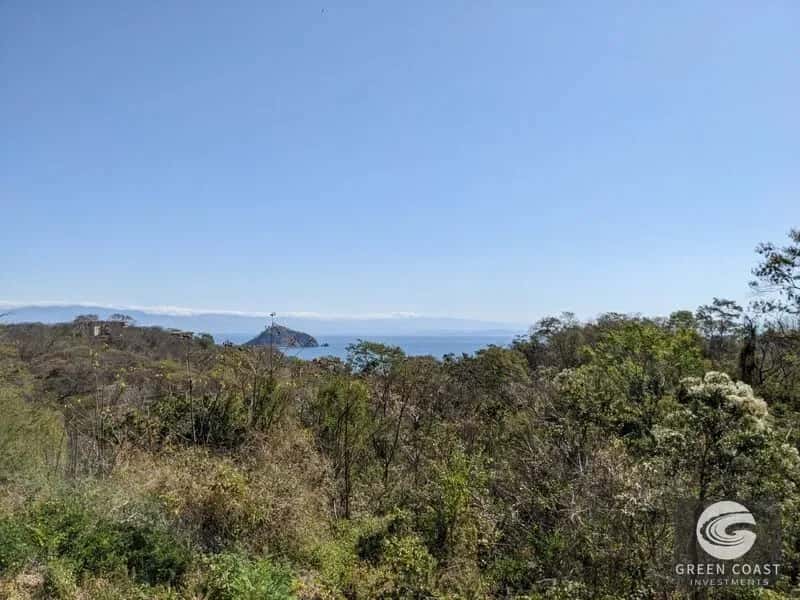
Finding premier real estate near Costa Rica's capital requires choosing between suburban estates and expansive, titled coastal-valley acreage. For buyers evaluating central valley homes for sale, active listings average $1,562,557 across a broad spectrum ranging from $40,000 up to $125,000,000 across 353 properties. Unique opportunities like the Prime Playa Blanca Ocean View Land: Titled Coastal Acreage Walkable to White Sand Beach, listed at $1,800,000, provide a fee-simple titled parcel within walking distance of white sand beaches.
In our years on this coast, we have seen how these transitional parcels along key highway corridors give North American buyers direct access to urban conveniences while offering expansive land footprints for custom luxury estates. Understanding local title structures, water verification procedures, and construction costs ensures a direct transition into Costa Rica's premier property market.
How Does Titled Coastal-Valley Acreage Compare to Central Valley Homes For Sale?
Central valley homes for sale range from gated suburbia in Escazú to expansive hillside view lots that descend toward the Pacific transition zone. Evaluating options across the region requires looking at local inventory benchmarks: active listings sit at 353 properties across a price spectrum of USD 40,000 to USD 125,000,000, with an average listing price of USD 1,562,557. Buyers deciding between existing Central Valley inventory and raw coastal-valley parcels must weigh immediate occupancy against architectural customization, long-term equity growth, and total lot size. You can review our curated property listings to examine specific acreage dimensions and layout options firsthand.
Custom Builds vs. Existing Residential Inventory
Acquiring completed residential real estate in established hubs like Santa Ana or Rohrmoser delivers immediate move-in convenience, established neighborhood infrastructure, and predictable footprint constraints. Conversely, acquiring titled coastal-valley acreage—such as the Prime Playa Blanca spotlight listing priced at USD 1,800,000—trades immediate occupancy for total design control, privacy, and equity growth through ground-up development.
While existing central valley homes for sale often sit on modest quarter-acre suburban lots, coastal-valley parcels offer multi-acre signatures. This additional acreage allows buyers to design custom estates, introduce private guest casitas, or create independent agricultural zones while maintaining Pacific view corridors.
Accessibility and Transit Corridors
Location decisions between urban valley properties and coastal-valley acreage frequently come down to transit times and international access. Properties in the Central Valley urban core (Escazú, Santa Ana, or Belén) provide 15- to 30-minute drives to Juan Santamaría International Airport (SJO), private hospitals, and international schools.
On the other hand, coastal-valley transition zones positioned along the Route 27 corridor toward Playa Blanca put SJO within a 60- to 90-minute drive. On-the-ground experience shows this route allows owners to reach international flights and the amenities of Jacó while maintaining a secluded, acreage-scale footprint.
Is Land Near Playa Blanca Fully Titled or Subject to Maritime Zone Laws?
Land near Playa Blanca is fee-simple titled property if registered directly in the Registro Nacional, whereas properties falling within 200 meters of the high-tide line are governed by the Maritime Terrestrial Zone Law (Ley de Zona Terrestre Marítima No. 6043). Most coastal parcels require a municipal concession lease, but the featured $1,800,000 Playa Blanca acreage stands out as a fee-simple title holding that sits within walking distance to the sand.
Understanding Ley 6043 vs. Fee-Simple Title
Under Ley No. 6043, coastal real estate in Costa Rica is divided into two distinct strips:
The Public Zone (Zona Pública):* The first 50 meters from the ordinary high-tide mark. This area is strictly public domain, and no private construction or ownership is permitted.
The Restricted/Concession Zone (Zona Restringida):* The next 150 meters. This land cannot be owned outright; instead, buyers lease it through a municipal concession. Foreigners cannot hold majority ownership (more than 49%) in a concession property unless they have resided in Costa Rica for at least five years.
Properties that hold fee-simple titles within walking distance to the water are rare because their ownership rights originated before the enactment of Ley No. 6043 or fall entirely outside the restricted 200-meter line.
Expert Field Observation on Coastal Property Rights
Evaluating land title registry records versus concession rights requires systematic due diligence, especially for cross-border transactions.
> "Securing fully titled acreage walkable to the coast within the Central Valley transition zone is a primary target for North American buyers. While 95% of Costa Rica's beachfront falls under municipal concession restrictions, fee-simple title gives US and Canadian investors 100% ownership rights with no need for local majority partners."
> — Daniel Berkley, Green Coast Investments
Market Context and Title Verification
In the broader regional market, active listings total 353 properties ranging from USD 40,000 to USD 125,000,000, with an average price of USD 1,562,557. While buyers looking for central valley homes for sale often encounter fee-simple titles in urban centers, coastal-valley transition zones require a precise check of the Folio Real number in the National Registry to confirm the parcel is free of municipal lease conditions.
What Are the Essential Steps to Verify Water, Utilities, and Soil for Sloping Acreage?
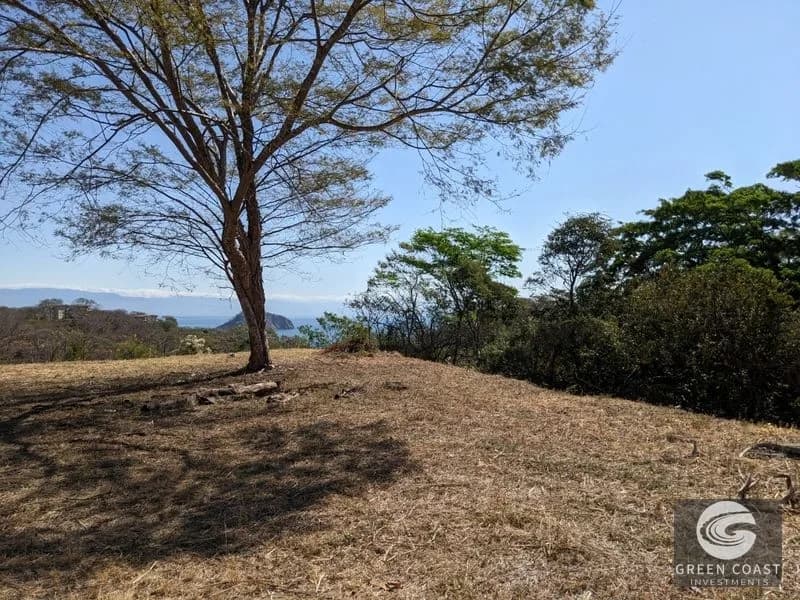
Verifying utilities and ground stability on sloping coastal-valley acreage requires four clear steps: securing an official water availability letter, confirming high-capacity grid connectivity, performing comprehensive geotechnical soil studies, and confirming municipal road access with local zoning authorities. Completing this due diligence protects your capital before transferring funds, ensuring your parcel can legally support a luxury residential footprint.
Buyers evaluating raw land alongside central valley homes for sale—where active listings total 353 properties ranging from $40,000 to $125,000,000 with an average price of $1,562,557—must strictly validate infrastructure to prevent compounding construction delays. If you want to dive deeper into regional market trends, explore our Central Valley regional guide to map out utility grids and access roads early in your review phase.
1. Secure an Official Water Availability Letter (Carta de Agua)
Do not sign a purchase transfer or release escrow deposits without a current Carta de Agua. This document must be issued directly by the local ASADA (rural water board) or AyA (Instituto Costarricense de Acueductos y Alcantarillados). For properties reliant on private wells or streams, you must verify the registered water concession through MINAE (Ministerio de Ambiente y Energía) protocols. MINAE verification confirms that the water source is legally assigned to the specific property survey map (plano catastrado) and possesses adequate flow capacity during the dry season.
2. Obtain High-Capacity Electrical Approvals from ICE
Luxury ocean-view homes require substantial power loads to run zoned air conditioning, infinity pool filtration, and smart home automation. You must submit your preliminary architectural requirements to ICE (Instituto Costarricense de Electricidad) or the regional electrical cooperative. Obtaining written connection approvals upfront confirms that transformer capacity exists near the boundary line, eliminating the need to pay out-of-pocket for private line extensions or transformer upgrades.
3. Conduct Geotechnical Soil and Percolation Testing
Hillside build envelopes offer ocean views but carry structural risks if earth movement occurs. Engage a licensed civil engineer to perform core drilling, percolation tests, and slope stability analyses. Budget an average allowance of $2,500 to $5,000 USD for standard geotechnical soil studies.
These tests determine foundational load capacity, absorption rates for septic drain fields, and precise engineering specs for retaining walls. Identifying soil conditions early prevents cost overruns during site preparation.
4. Verify Municipal Road Access and Building Setbacks
Confirm that the property touches an official public road or legally recorded agricultural easement (servidumbre) at the local Municipality. Review the municipal zoning plan (Plan Regulador) to establish exact building setbacks from public rights-of-way, natural waterways, and neighboring parcel lines. Proper setback verification guarantees your site plan complies with local construction permitting laws before you break ground.
How Much Does It Cost Per Square Meter to Build a Luxury Ocean-View Home in Costa Rica?
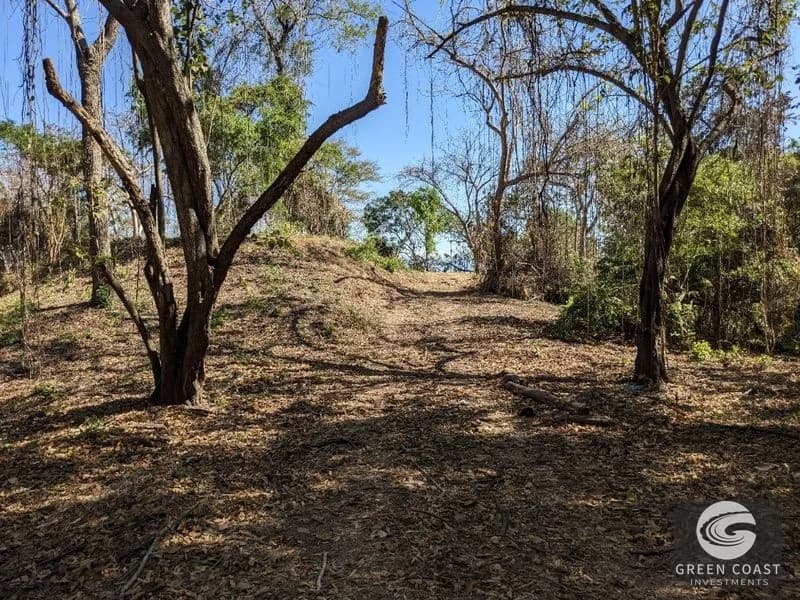
Building a custom luxury ocean-view home on sloping acreage near coastal-valley microclimates costs between $1,500 and $2,800+ USD per square meter ($140 to $260+ USD per square foot). This range reflects high-end finishings, specialized engineered foundations, import duties on specialty materials, and outdoor living spaces.
Investors comparing raw land to central valley homes for sale must evaluate these construction variables to calculate an accurate total cost basis, especially across active listings where property values average $1,562,557 within a market ranging from $40,000 to $125,000,000 across 353 active inventory units.
Site Preparation and Earthworks Costs
Sloping coastal-valley parcels require structural engineering before vertical construction begins. Cut-and-fill grading runs $15 to $35 USD per cubic meter of excavated dirt. Structural concrete or reinforced gabion basket retaining walls cost between $250 and $450 USD per square meter of wall face to stabilize building pads. For deep curtain drains, headwalls, and subterranean rainwater run-off systems across acre-plus tracts, expect to spend an average of $10,000 to $30,000 USD.
CFIA Professional Fees and Municipal Permitting
Costa Rica regulates building practices through national engineering boards and local cantonal governments. Soft costs are calculated as fixed percentages of the project's baseline valuation:
CFIA Fee Structure: The Colegio Federado de Ingenieros y de Arquitectos (CFIA) mandates a fee scale totaling 9.3% to 10.5%* of the estimated construction value. This covers preliminary design concepts, working drawings, structural calculation reviews, and mandatory site supervision by a licensed architect or engineer.
Architectural Design Fees: Master planning, interior design, and project management packages typically range from 10% to 12%* of the total build value.
Municipal Permit Fees: Local city halls require a municipal construction permit fee equal to 1.5%* of the projected build value per the Costa Rican Municipal Code, paid prior to breaking ground.
Material and Finish Tier Breakdown
| Finishes Level | Estimated Cost (USD/m²) | Typical Features |
| :--- | :--- | :--- |
| High-End Standard | $1,500 – $1,850 | Local hardwood accents, imported porcelain tile, aluminum window frames, quartz countertops. |
| Ultra-Luxury | $1,850 – $2,400 | Custom infinity pools, automated floor-to-ceiling glass sliders, high-efficiency solar arrays, imported cabinetry. |
| Bespoke Estate | $2,400 – $2,800+ | High-end appliance packages, smart-home automation, specialized anti-corrosive coastal alloys, structural steel cantilever design. |
How Do US and Canadian Buyers Finance Land and Structure Cross-Border Ownership?
US and Canadian buyers secure Costa Rica property by pairing cross-border liquidity strategies—such as Home Equity Lines of Credit (HELOCs), seller financing, or Self-Directed IRAs—with localized legal structures like a Costa Rican corporation or private trust to maximize tax efficiency and liability protection. Because Costa Rican banks rarely issue traditional mortgages to non-resident foreign nationals, cash-equivalent purchasing power remains the standard across active listings, where inventory spans 353 active listings priced from USD 40,000 to USD 125,000,000, with an average price of USD 1,562,557.
Structuring Ownership: Costa Rican Corporations vs. Personal Title
While non-residents hold direct real estate rights, holding land through a local entity is standard practice for coastal and central region assets.
Costa Rican Corporation (Sociedad Anónima or S.R.L.): Holding title through an S.R.L. (Sociedad de Responsabilidad Limitada) insulates personal assets from local liabilities, streamlines estate planning, and allows multi-member equity splits. Corporations must comply with annual corporate tax (Impuesto a las Personas Jurídicas*) baseline compliance rates, which scale based on gross income, alongside filing the mandatory Transparency and Final Beneficiaries Registry (RTBF).
Direct Personal Name Title:* Purchasing directly in your personal name avoids corporate annual taxes and administrative filings. However, it exposes the asset to personal liability suits and requires a localized probate process upon the owner's death.
Tax-Deferred Capital: US Self-Directed IRAs and Canadian Trusts
North American investors frequently leverage retirement funds to acquire prime titled parcels. US buyers can use tax-advantaged retirement funds via a Checkbook Control LLC. Under IRS rules, the SDIRA purchases 100% of a single-member LLC, which then buys the Costa Rican property. All income, expenses, and capital gains must flow directly through the IRA custodian account without personal commingling or immediate personal use.
Canadian investors often utilize formal offshore trust arrangements or private Canadian corporations to hold Costa Rican real estate. This strategy optimizes foreign property reporting under CRA rules while mitigating probate costs.
Cross-Border Financing: HELOCs vs. Local Seller Financing
Institutional mortgages from Costa Rican banks present high interest rates (often 9%–12% in USD) and restrictive underwriting for non-residents. Consequently, buyers utilize two primary capital paths:
Cross-Border HELOCs:* US and Canadian buyers leverage equity in their primary domestic residences via a HELOC or cash-out refinance. This secures lower fixed or variable interest rates in their home country, converting the cross-border acquisition into a cash purchase in Costa Rica.
Local Seller Financing: Developers and private landholders frequently offer short- to mid-term seller financing. Common terms include a 30% to 50% down payment, amortization periods over 3 to 5 years, and interest rates ranging between 6% and 9%, secured via a registered mortgage (hipoteca) or a guarantee trust (fideicomiso de garantía*).
What Are the Most Common Pitfalls When Buying Central Valley Land for Sale?
The most common pitfalls when evaluating land for sale involve mismanaging water rights, miscalculating drainage logistics, ignoring zoning limits, and failing to verify property lines against physical fence structures. Buyers who skip rigorous due diligence often face construction delays or unbuildable parcels. While the broader market for central valley homes for sale includes 353 active listings ranging from $40,000 to $125,000,000 with an average price of $1,562,557, raw acreage requires scrutiny before closing.
Pitfall 1: Relying on Unmapped Private Wells Without an ASADA Letter
Securing a legal building permit (permiso de construction) requires an official water availability letter (carta de agua). A primary mistake international buyers make is purchasing land based on verbal promises of water access or unmonitored private wells.
In Costa Rica, local water boards (ASADAs) or the national water utility (AyA) must formally certify that an existing distribution system can supply your property. If a property relies on a private well, that well must have an approved concession from MINAE (Ministerio de Ambiente y Energía). Without a valid MINAE concession number or an ASADA-issued letter, the municipality will not approve building permits, leaving the land unbuildable for residential purposes.
Pitfall 2: Overlooking Topographical Soil Limitations and Drainage Corridors
Sloping parcels in coastal-valley transition zones receive heavy seasonal rainfall. Buying land without reviewing natural runoff channels or conducting core soil samples leads to major financial setbacks. Heavy precipitation on unengineered slopes causes severe erosion and foundation shifting.
Furthermore, Costa Rican law (Ley Forestal No. 7575) establishes mandatory 10- to 50-meter building setbacks from rivers, streams, and seasonal water channels (quebradas). Uninformed buyers often discover that their intended build site falls entirely within a protected stream buffer zone, drastically reducing usable acreage.
Pitfall 3: Assuming Survey Maps (Planos Catastrados) Match Physical Boundary Lines
A common error in raw acreage transactions is assuming existing physical fences match the legally registered survey map (plano catastrado). Older parcels may contain boundary discrepancies between registered dimensions and actual terrain usage.
To prevent boundary disputes with neighboring landowners, buyers must hire an independent topographer (topógrafo) to re-survey the parcel before closing. The topographer verifies GPS coordinates, pins boundary corners, and confirms that the plano catastrado matches current National Registry records.
Pitfall 4: Neglecting Environmental Permits (SETENA) for Large Parcels
Developing land that involves significant earthmoving, road cutting, or commercial buildouts requires environmental clearing through SETENA (Secretaría Técnica Nacional Ambiental). In our years managing acquisitions, we have seen projects shut down simply because developers skipped an early SETENA assessment. Working with experienced civil engineers and legal counsel ensures that preliminary environmental impact evaluations comply with municipal laws prior to land acquisition.