
Is Dominical Uvita a Good Real Estate Investment? 2026 Market Data & ROI Analysis
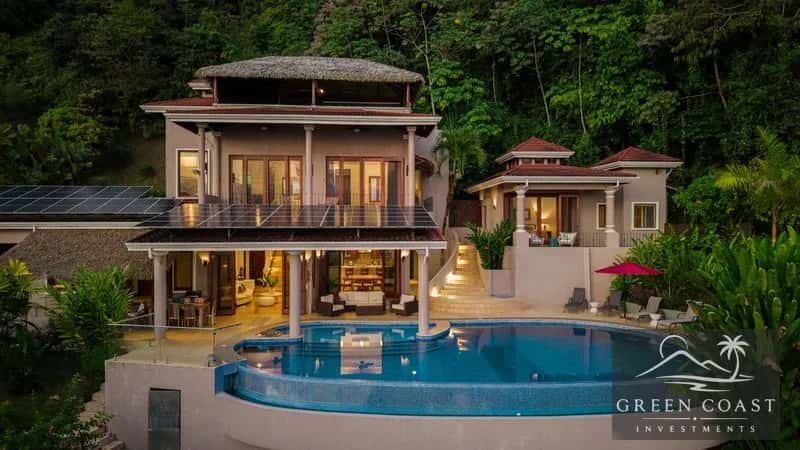
For buyers comparing active inventory, see Spectacular 5BR Ocean View Estate in Dominical | Pool, Luxury Finishes & 1.5 Acr.
Dominical-Uvita real estate in 2026 shows just 2 active premium listings priced between USD 850,000 and USD 2,500,000, averaging USD 1,675,000. This tight inventory reflects sustained demand in Costa Rica's Southern Pacific Zone, where completed infrastructure improvements and consistent tourism growth create conditions for appreciation. Foreign buyers receive full ownership rights, straightforward purchasing processes, and entry points below saturated markets like Tamarindo or Manuel Antonio.
The region attracts three primary investor profiles: international portfolio diversifiers seeking vacation rental income, remote workers wanting dual-purpose properties, and long-term value investors with 5-10 year horizons. With the coastal highway now fully paved and accessibility dramatically improved, the Dominical-Uvita corridor sits at an inflection point—developed enough to support rental operations and daily living, yet early enough in the appreciation curve to offer meaningful upside potential.
This analysis examines current market conditions, legal frameworks for foreign ownership, comparative pricing against regional alternatives, and the practical considerations that determine whether this market aligns with your investment strategy.
Market Overview and Investment Thesis
Dominical-Uvita represents a strong real estate investment opportunity in 2026 for buyers seeking appreciation potential in Costa Rica's Southern Pacific Zone. This market combines lower entry points than established beach towns with robust tourism growth, improved infrastructure, and increasing demand from remote workers and retirees. Current data shows just 2 active listings in the premium segment, with prices ranging from USD 850,000 to USD 2,500,000 and an average of USD 1,675,000—indicating limited inventory and potential upward price pressure as buyer interest continues.
Target Investor Profiles
International Portfolio Diversifiers seek income-generating vacation rental properties in markets that haven't reached peak pricing. The Dominical-Uvita corridor offers better value per square foot compared to more developed coastal areas while maintaining strong rental demand throughout the year. These investors typically allocate 10-20% of their real estate portfolio to international markets, using Costa Rica's political stability and established tourism infrastructure to balance risk.
Semi-Retired Professionals and Digital Nomads purchase properties serving dual purposes: personal residence for part of the year and rental income generator during absence. The region's reliable internet infrastructure (fiber optic available in most developed areas) and proximity to both beach and mountain environments support remote work scenarios. These buyers typically spend 3-6 months annually in Costa Rica, generating rental income during high season (December-April) while using the property during shoulder months.
Long-Term Value Investors operate with 5-10 year horizons, recognizing the development trajectory of Costa Rica's Southern Zone. With coastal highway improvements completed and the Quepos-Dominical route now fully paved, accessibility has improved dramatically. In our years on this coast, we've watched investors compare current Dominical-Uvita pricing to what Tamarindo and Nosara commanded 10-15 years ago, before infrastructure improvements drove appreciation of 150-300% in those markets.
Current Market Conditions

The Dominical-Uvita real estate market in 2026 shows limited active inventory with premium pricing. Currently, only 2 active listings are available, with prices ranging from USD 850,000 to USD 2,500,000 and an average of USD 1,675,000. This tight inventory signals strong demand and owner retention, though buyers should expect fewer immediate options and potentially longer search timelines compared to more saturated markets.
Inventory Analysis
The available properties at these price points typically include ocean-view homes, development land with infrastructure access, or income-generating vacation rental properties. The USD 850,000 entry point generally represents smaller lots with partial views or homes requiring updates, while properties approaching USD 2,500,000 often feature direct ocean frontage, multiple structures, or rental businesses with established booking histories. A spectacular 5BR ocean view estate in Dominical with pool and luxury finishes on 1.5 acres represents the upper tier of this market segment.
Limited selection means buyers often need to act decisively. Competitive offers are common in this price bracket, with properties receiving multiple inquiries within the first 30 days of listing. Average days on market for properties priced correctly hover around 90-120 days, though premium properties with unique features can sell faster.
Supply Constraints and Market Dynamics
Several factors contribute to the current inventory shortage. Many property owners purchased 5-10 years ago and continue holding for additional appreciation, particularly those generating positive cash flow from vacation rentals. The Maritime Zone restrictions limit developable beachfront land, creating natural scarcity for ocean-view properties. Costa Rica's environmental regulations and setback requirements reduce the total number of buildable lots in desirable locations.
The low inventory environment favors sellers but creates challenges for buyers with specific requirements. Investors seeking rental properties with established income histories face the most competition, as these assets provide immediate cash flow and reduced operational risk. Development land with approved permits and infrastructure access also moves quickly, particularly parcels offering ocean views within 10-15 minutes of the coast.
Seasonal Market Patterns
The Dominical-Uvita real estate market experiences distinct seasonal patterns. Listing activity peaks during January-March when North American and European buyers visit during high season. Properties listed during this window receive maximum exposure, though competition among buyers intensifies. April-November sees reduced listing activity but also fewer competing buyers, creating opportunities for patient investors willing to negotiate during slower periods.
Rental income data supports the investment thesis for vacation rental properties. High season (December-April) generates 60-70% of annual rental revenue, with weekly rates for quality properties ranging from USD 2,000-5,000 depending on size, location, and amenities. Shoulder season (May-June, November) produces moderate occupancy at 30-40% lower rates, while green season (July-October) sees the lowest occupancy but attracts budget-conscious travelers and surfers seeking consistent swells.
Regional Comparison and Competitive Analysis

Investors evaluating Dominical-Uvita real estate typically compare it against several Southern Zone alternatives and northern coastal markets. Understanding these comparisons helps contextualize the USD 850,000-2,500,000 price range and average USD 1,675,000 pricing in the current market.
Southern Zone Alternatives
Ojochal, located between Dominical and Uvita, attracts buyers seeking a quieter, more residential atmosphere with a strong international community and restaurant scene. Prices in Ojochal run 15-20% lower for comparable properties without direct beach access. The area offers more affordable entry points for retirees and semi-retired professionals prioritizing community over beach proximity. However, rental income potential typically lags Dominical-Uvita due to lower name recognition among tourists.
Osa Peninsula offers more remote, conservation-focused opportunities at varying price points, appealing to eco-tourism developers and off-grid enthusiasts. Properties here range from USD 200,000 for inland parcels to USD 3,000,000+ for established eco-lodges. The tradeoff involves reduced accessibility (often requiring 4WD vehicles and tolerance for rough roads), limited infrastructure, and longer timelines for development approvals due to environmental protections. Investors here typically operate with 10+ year horizons and accept lower liquidity in exchange for pristine natural settings.
Pavones, in the far southern zone near the Panama border, attracts surf-focused investors with some of the world's longest left-hand waves. Property prices remain 40-50% below Dominical-Uvita for comparable ocean-view land, but the remote location (5+ hours from San José) limits rental demand to dedicated surf travelers. This market suits niche investors comfortable with isolation and limited resale liquidity.
Northern Coastal Comparisons
Jacó presents a different investment profile entirely—more urban density, established tourism infrastructure, and generally higher rental occupancy rates but less natural preservation. Properties in Jacó's beachfront condo market start around USD 300,000-400,000 for 2BR units, with single-family homes ranging USD 500,000-1,500,000. Rental occupancy rates run 10-15% higher than Dominical-Uvita due to proximity to San José (90 minutes) and year-round tourism. However, appreciation potential appears more limited given the market's maturity and reduced land availability.
Manuel Antonio commands premium pricing due to national park proximity, often 30-40% above Dominical-Uvita for similar property types. Ocean-view homes here start around USD 1,200,000 and extend beyond USD 5,000,000 for prime locations. The market offers strong rental demand and high occupancy rates but limited appreciation upside given already-elevated pricing. Investors here prioritize stable cash flow over aggressive appreciation.
Tamarindo and Nosara in Guanacaste province provide useful historical comparisons. Both markets experienced 150-300% appreciation over the past 15 years following infrastructure improvements similar to what Dominical-Uvita recently completed. Current pricing in these markets (USD 2,000,000-8,000,000 for comparable ocean-view properties) suggests the potential upside if Dominical-Uvita follows a similar trajectory.
Competitive Positioning
The Dominical-Uvita corridor positions itself as middle ground: more developed than Osa, more nature-focused than Jacó, and more accessible than some Manuel Antonio locations while maintaining strong appreciation potential tied to ongoing infrastructure improvements along the Costanera Sur highway. The USD 1,675,000 average price point reflects this positioning—premium enough to indicate market maturity and quality infrastructure, yet below the USD 2,500,000+ averages in fully established markets.
For investors, this positioning creates opportunity. The market has sufficient infrastructure to support vacation rental operations (property management companies, reliable utilities, airport access), yet pricing hasn't reached levels that limit appreciation potential. The key risk involves timing—investors must assess whether current infrastructure improvements will drive the anticipated demand growth, or whether the market has already priced in these improvements.
Foreign Ownership and Legal Framework
Foreign buyers can legally own property in Costa Rica with the same rights as nationals, except within the restricted Maritime Zone where long-term concessions apply instead of direct ownership. The buying process typically takes 60-90 days from offer acceptance to closing, with total transaction costs ranging from 4-6% of the purchase price for buyers.
Ownership Structures and Restrictions
Costa Rica welcomes international real estate investment without citizenship or residency requirements. Foreigners receive full ownership rights through fee simple title, allowing you to buy, sell, rent, and transfer property freely. The main restriction applies to properties within 200 meters of the high tide line (Maritime Zone), where direct ownership isn't permitted—instead, buyers obtain 5-20 year renewable concessions from the local municipality.
Most Dominical-Uvita properties in the USD 850,000-2,500,000 range fall outside this zone, offering standard titled ownership. However, some premium beachfront properties may include concession land, requiring additional due diligence. Concessions provide secure long-term use rights and typically renew automatically if the holder maintains compliance with development requirements and fee payments, but they cannot be mortgaged through traditional financing and may complicate resale.
You'll need to establish a Costa Rican corporation (sociedad anónima) for the purchase, which costs USD 800-1,500 and provides asset protection plus simplified future transfers. The corporation holds title to the property, and ownership transfers occur by changing corporate shares rather than re-registering the property itself. This structure reduces future transfer taxes and simplifies estate planning for international investors.
Due Diligence Requirements
Your attorney will verify the property title through the National Registry (Registro Nacional), confirm no liens or encumbrances exist, and ensure all property taxes are current before closing. This process typically requires 2-4 weeks and includes:
Title Search: Examining the property's registration history for the past 20-30 years to identify any claims, easements, or restrictions. The National Registry maintains digital records, but older properties may require reviewing physical archives.
Survey Verification: Confirming that physical boundaries match registered dimensions. Discrepancies between actual property lines and registered planos (surveys) create common disputes in Costa Rica. Your attorney should hire a licensed topographer to verify boundaries if the existing survey is more than 5 years old or if any boundary markers have moved.
Tax Status Review: Verifying that all property taxes, municipal fees, and association dues are current. Buyers inherit any outstanding tax obligations, so confirming clean status protects against unexpected liabilities.
Permit Verification: For properties with structures, confirming that all buildings have proper construction permits and use permits. Unpermitted construction can result in fines, demolition orders, or complications when seeking future permits for additions or renovations.
Environmental Compliance: Checking that the property complies with setback requirements (typically 50 meters from rivers, 5-15 meters from property lines) and hasn't encroached on protected areas. Environmental violations can result in significant fines and forced remediation.
Closing Process and Timeline
The standard closing timeline begins with a purchase agreement and earnest money deposit (typically 10% of purchase price held in escrow). Your attorney conducts due diligence over 2-4 weeks, examining title history, surveying property boundaries, and verifying permits. The remaining 30-60 days involve finalizing financing if applicable, completing inspections, and preparing closing documents.
Buyer closing costs include:
Transfer tax: 1.5% of registered property value (often lower than purchase price)
Legal fees: 1-1.5% of purchase price
Notary fees: 0.5-1% of purchase price
Registration fees: 0.5% of purchase price
Title insurance (optional): 0.5-1% one-time premium
Plan for 4-6% total buyer costs, paid at closing. Properties transfer through notarized deed, registered at the National Registry within 10 business days. Your attorney should provide title insurance options to protect against undiscovered claims, though this remains optional in Costa Rica. Given the USD 850,000-2,500,000 price range in the current Dominical-Uvita market, title insurance premiums of USD 5,000-15,000 provide meaningful protection against title defects that could jeopardize your investment.
Sellers typically pay real estate commissions (5-7% of purchase price) and capital gains taxes (15% on profits), though these costs are sometimes negotiated between parties. The purchase agreement should clearly specify which party bears each cost to avoid disputes at closing.
Financial Considerations and ROI Analysis
Investors considering Dominical-Uvita real estate must evaluate both the acquisition costs and ongoing operational expenses to determine realistic ROI expectations. With only 2 active listings currently available in the USD 850,000-2,500,000 range (averaging USD 1,675,000), understanding financing options and carrying costs becomes essential before competing for limited inventory.
Financing Options for Foreign Buyers
Costa Rican banks rarely extend mortgages to non-residents, and when they do, expect down payments of 40-50% with interest rates between 8-12%. Loan terms typically max out at 15-20 years, and banks require extensive documentation including proof of income, bank statements, and references. The approval process takes 60-90 days, and many banks cap loans at USD 500,000 regardless of property value.
Most international investors purchase properties outright or secure financing through their home country institutions before transferring funds. U.S. buyers sometimes use home equity lines of credit (HELOCs) or cash-out refinances on domestic properties to fund Costa Rica purchases, accessing lower interest rates (4-7%) and more favorable terms. This approach requires sufficient equity in existing properties and comfort with cross-border financial management.
Developer financing occasionally becomes available for new construction projects or subdivisions, typically requiring 30-40% down with 5-7 year terms at 8-10% interest. These arrangements provide more flexibility than bank financing but remain uncommon in the resale market where the current USD 850,000-2,500,000 listings fall.
Tax Structure and Ongoing Costs
Property taxes remain low at 0.25% of registered value annually, though the municipality assesses this value, which often differs from market price. For a property purchased at USD 1,675,000 (the current market average), annual property taxes might run USD 2,000-4,000 depending on the registered value. Municipalities reassess properties periodically, and values tend to lag market prices by 20-40%, providing tax advantages for owners.
Capital gains taxes apply at 15% on profits when selling, calculated on the difference between purchase and sale price. Alternatively, sellers can elect to pay 2.25% of the gross sale price without deductions, which benefits those with minimal documentation of improvements or those who held properties long enough that appreciation exceeds 15% of the sale price.
Annual corporation fees run USD 300-500 if you hold property through a Costa Rican entity (sociedad anónima), which most investors choose for asset protection and simplified transfers. Corporations must file annual reports and maintain a registered agent, adding to administrative overhead but providing significant benefits for estate planning and future sales.
Additional carrying costs for vacation rental properties include:
Property Management: 20-30% of gross rental income for full-service management including marketing, guest communication, cleaning coordination, and maintenance. Self-managing from abroad proves difficult given time zone differences and the need for on-site problem resolution.
Utilities: USD 150-400 monthly depending on property size and amenities. Electricity costs run higher than U.S. rates, particularly for properties with air conditioning or pools. Water costs remain modest, but properties relying on wells need to budget for pump maintenance and occasional water delivery during dry season.
Pool Maintenance: USD 100-200 monthly for chemical treatment and cleaning. Pools significantly increase rental appeal and rates but add operational complexity.
Landscaping: USD 200-500 monthly for properties on 0.5-2 acres. Costa Rica's tropical climate requires frequent maintenance to prevent vegetation from overtaking properties.
Internet and Cable: USD 80-150 monthly for reliable high-speed internet (essential for remote work tenants) and cable television.
Insurance: USD 1,500-3,000 annually for comprehensive coverage including structure, contents, and liability. Rates vary based on construction type, location, and coverage limits.
HOA Fees: USD 100-500 monthly for properties in gated communities or developments with shared amenities. These fees cover road maintenance, security, and common area upkeep.
Rental Income Potential
Quality vacation rental properties in the USD 850,000-2,500,000 range typically generate USD 40,000-100,000 in gross annual rental income, depending on property size, location, amenities, and management effectiveness. A well-located 3-4 bedroom ocean-view home might achieve:
High season (December-April): 70-80% occupancy at USD 2,500-4,000 per week
Shoulder season (May-June, November): 40-50% occupancy at USD 1,800-2,800 per week
Green season (July-October): 25-35% occupancy at USD 1,500-2,200 per week
This translates to approximately USD 60,000-80,000 in gross annual revenue for a property in the middle of the current price range. After deducting property management fees (20-30%), utilities, maintenance, insurance, and other operating expenses (typically 15-25% of gross revenue), net operating income runs USD 30,000-45,000 annually.
On a USD 1,675,000 purchase price, this represents a 1.8-2.7% cash-on-cash return before accounting for property taxes and corporation fees. These modest yields reflect the reality that appreciation potential, not immediate cash flow, drives investment returns in this market. Investors seeking higher immediate yields should consider less expensive markets or properties with established rental histories commanding premium rates.
Properties at the USD 850,000 entry point may generate proportionally higher yields (3-4% net) if they offer strong rental appeal despite lower purchase prices. Conversely, USD 2,500,000 properties often generate lower percentage returns unless they include unique features (direct beach access, multiple rental units, commercial components) that command premium rates.
Appreciation Scenarios
Historical data from comparable Costa Rican markets suggests several appreciation scenarios for Dominical-Uvita real estate over a 5-10 year holding period:
Conservative Scenario (3-5% annually): Assumes modest tourism growth, stable political and economic conditions, and gradual infrastructure improvements. A USD 1,675,000 property appreciates to USD 2,175,000-2,730,000 over 10 years, generating USD 500,000-1,055,000 in gains before capital gains taxes.
Moderate Scenario (6-8% annually): Assumes continued tourism growth, additional infrastructure improvements (potential international airport in the southern zone), and increasing remote work migration. The same property appreciates to USD 3,000,000-3,600,000 over 10 years, generating USD 1,325,000-1,925,000 in gains.
Optimistic Scenario (10-12% annually): Assumes rapid development similar to what Tamarindo and Nosara experienced, driven by major infrastructure projects and surging international demand. The property appreciates to USD 4,350,000-5,200,000 over 10 years, generating USD 2,675,000-3,525,000 in gains.
These scenarios exclude rental income and carrying costs, which roughly offset each other in most cases. The key variable involves infrastructure development—if the southern zone receives an international airport or significant highway improvements beyond what's already completed, appreciation could accelerate toward the optimistic scenario. Without these catalysts, the conservative scenario becomes more likely.
Practical Considerations and Lifestyle Factors
The Dominical-Uvita corridor attracts investors seeking active outdoor lifestyles rather than resort-style amenities. This region suits those comfortable with rural infrastructure, occasional power outages during storms, and limited high-end dining options compared to more developed areas. Understanding these practical realities helps determine whether the investment aligns with your expectations.
Infrastructure and Accessibility
The nearest international airport (Quepos) sits 45 minutes north, offering limited domestic flights and occasional international charters. Most international travelers fly into San José (Juan Santamaría International Airport), requiring 3-4 hours of driving via the coastal highway. Road conditions have improved dramatically with the completion of the Costanera Sur paving project, but the distance still presents challenges for short-term visitors and requires reliable transportation.
Local infrastructure includes grocery stores, medical clinics, banks, and basic services in Uvita and Dominical, but specialized needs often require trips to San Isidro de El General (30-45 minutes inland) or Quepos. Internet reliability has improved significantly with fiber optic availability in most developed areas, supporting remote work and vacation rental operations. However, backup power solutions (generators or battery systems) remain advisable for properties dependent on consistent connectivity.
Residency Pathways
Property ownership doesn't automatically grant residency, but several paths exist for those wanting to spend extended time in Costa Rica. The pensionado program requires USD 1,000 monthly guaranteed income from a pension or Social Security, providing permanent residency after maintaining this income stream. The rentista program needs USD 2,500 monthly guaranteed income for two years (typically from investments or annuities), after which applicants can apply for permanent residency.
Real estate investment alone doesn't qualify for residency unless combined with a business generating local employment. Some investors establish property management companies or tourism operations to meet this requirement, though this adds complexity and operational responsibilities beyond simple property ownership.
Tourist visas allow 90-day stays, renewable by leaving the country briefly (typically to Nicaragua or Panama) and returning. Many part-time residents use this approach rather than pursuing formal residency, though immigration authorities have increased scrutiny of perpetual tourists in recent years.
Healthcare Access
Healthcare access centers on the CCSS public system (Caja Costarricense de Seguro Social) in Uvita or private clinics in San Isidro. The public system provides affordable care but involves longer wait times for non-emergency services. Legal residents can enroll in CCSS for approximately USD 50-100 monthly based on income, accessing the full public healthcare system.
Private healthcare options have expanded, with several clinics in Uvita offering English-speaking doctors and immediate appointments. Serious medical emergencies may require transport to San José (3-4 hours) where private hospitals provide care comparable to U.S. standards at 40-60% lower costs. Many expatriates maintain international health insurance or medical evacuation coverage for major health events while using local providers for routine care.
Language and Cultural Integration
English-speaking services have expanded significantly in the Dominical-Uvita corridor, particularly in real estate, tourism, and expatriate-focused businesses. However, Spanish proficiency enhances daily interactions with contractors, property managers, local government offices, and service providers. Investors planning active involvement in property management or development should budget for Spanish lessons or hire bilingual staff to bridge communication gaps.
The local culture blends Costa Rican traditions with international influences from the substantial expatriate community. This creates a more cosmopolitan atmosphere than purely Costa Rican towns but less integration than some investors expect. Building relationships with local contractors, attorneys, and property managers requires time and cultural sensitivity, particularly for those accustomed to U.S. or European business practices.
Investment Decision Framework
The Dominical-Uvita market's limited inventory (2 active listings priced USD 850,000-2,500,000, averaging USD 1,675,000) and premium pricing reflect a mature investment zone with strong fundamentals. Buyers should prepare for competitive conditions, act decisively when suitable properties emerge, and work with experienced local counsel to handle the straightforward but detail-oriented purchasing process.
This market suits investors who accept 1.8-2.7% net cash-on-cash returns in exchange for appreciation potential over 5-10 year holding periods. The combination of completed infrastructure improvements, growing tourism demand, and pricing below saturated northern markets creates conditions for meaningful appreciation—but only if you're comfortable with modest immediate yields and willing to hold through market cycles.
In our years working with buyers in this