
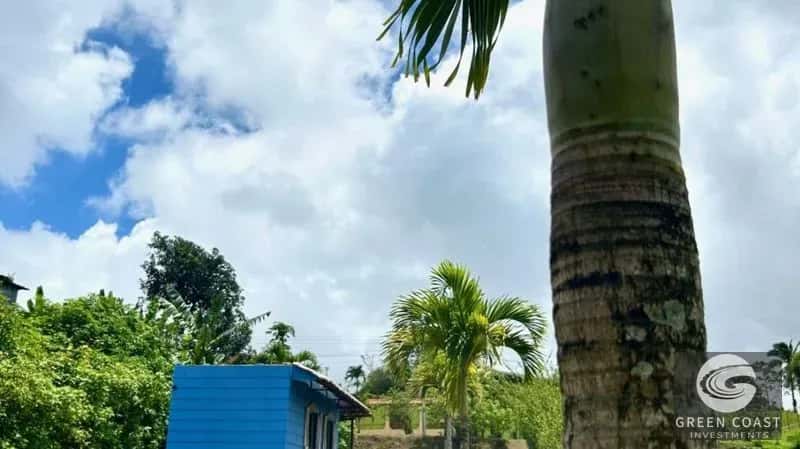
Why Are Costa Rica Expat properties Like This Turnkey Tiny Home Duo Surging in Demand?
In our years on this coast, we have watched the demand for costa rica expat properties climb at a steady, resilient pace. It is a trend driven by very practical motivations: personal safety, unmatched biodiversity, and the desire for resilient rental yields. For North Americans looking to hedge against inflation or secure a physical foothold in a tropical climate, these properties serve as both a financial anchor and a lifestyle transition.
This featured $79,000 dual-cabin setup, positioned on the scenic Lake Arenal periphery of the Central Valley, represents an accessible entry-level investment that captures this demand without requiring a massive capital outlay.
The Appeal of the Central Valley Periphery
The Central Valley real estate landscape remains the economic engine of Costa Rica. Expats gravitate here because it balances natural beauty with immediate proximity to critical infrastructure, including San José’s international airports, top-tier private hospitals, and familiar shopping.
By investing on the Lake Arenal periphery, buyers secure the cooler mountain microclimates and sweeping water views that tourists seek, while remaining close enough to the metropolitan core to ensure reliable property management and high occupancy rates.
Market Context and Entry-Level Value
To understand the value proposition of this $79,000 tiny home duo, it helps to look at the broader regional market data. Currently, there are 85 active listings in this specific market segment. Prices across these properties range from $40,000 on the basic end to $3,800,000 for luxury estates, establishing a local average price of $560,564.
At just $79,000, this dual-home setup sits far below the regional average, yet it provides immediate cash-flow potential through a dual-rental strategy. You can live in one unit while renting out the other, or list both on short-term rental platforms to maximize your return on investment from day one.
Decades of Local Real Estate Expertise
Acquiring real estate in a foreign country requires boots-on-the-ground expertise to protect your capital. Having guided hundreds of US and Canadian buyers through the nuances of local land titles, concession laws, and construction permits since 2004, my focus is ensuring your investment in the Central Valley periphery is secure, transparent, and legally sound.
---
How Does a $79,000 Tiny Home Duo Fit Into the Central Valley Real Estate Market?

A $79,000 tiny home duo offers a rare, low-barrier entry point into the Costa Rican real estate market, standing in stark contrast to the high-priced inventory dominating the region. While the Central Valley and its surrounding mountain ridges have historically attracted buyers seeking temperate climates, typical entry costs for properties with sweeping views are often prohibitive for budget-conscious buyers. This dual-cabin configuration allows buyers to secure a functional, income-generating footprint at a fraction of the cost of a traditional single-family home.
Analyzing Central Valley Market Data
To understand the value proposition of this $79,000 property, one must look at current market realities. According to active MLS data for the region, there are currently 85 active listings in the Central Valley sector. The price range for these properties spans from $40,000 on the extreme low end for raw, undeveloped land parcels, up to $3,800,000 for luxury estates.
| Market Metric | Value (USD) |
| :--- | :--- |
| Minimum Listing Price | $40,000 |
| Maximum Listing Price | $3,800,000 |
| Average Listing Price | $560,564 |
| Featured Property Price | $79,000 |
| Active Listings in Segment | 85 |
The average price of a property in this market stands at $560,564. At just $79,000, this tiny home duo is priced at roughly 14% of the regional average. This price disparity highlights the utility of the property; buyers are acquiring two independent, functional living spaces for less than the cost of a standard down payment on an average Central Valley home.
A Low-Risk Entry Point for Expats
For buyers searching for viable costa rica expat properties, this price point minimizes the financial exposure typically associated with international relocation. Purchasing real estate in a foreign country often involves substantial capital deployment, which can be intimidating for first-time buyers or retirees on fixed incomes.
By choosing a $79,000 tiny home setup, expats can avoid the high maintenance costs, steep property taxes, and large capital outlays associated with luxury mountain estates. Instead of tying up half a million dollars in a single asset, buyers retain liquidity while still securing the mountain vistas, cool microclimates, and natural surroundings that draw people to the highlands of Costa Rica. This cost-effective strategy allows buyers to test the waters of Costa Rican residency without compromising their financial security.
---
Is Buying a Tiny Home Duo in the Central Valley Periphery a Viable Rental Income Strategy?

Buying a tiny home duo on the periphery of the Central Valley is a viable rental income strategy that allows buyers to leverage a "live-in-one, rent-the-other" model. By residing in one unit while renting out the adjacent structure, owners can generate immediate cash flow to offset local living expenses. This dual-income potential on a single parcel capitalizes on the growing demand for flexible, affordable lodging in transition zones between San José and major ecological attractions like Lake Arenal. Within the broader market for costa rica expat properties, there are currently 85 active listings in this niche category, with prices ranging from $40,000 to $3,800,000, and an average price point of $560,564. A $79,000 entry point for two functional structures represents an opportunity well below the market average.
Target Demographics: Who Rents Tiny Homes in Costa Rica?
The target market for tiny home rentals consists of three distinct traveler profiles:
Digital Nomads and Remote Workers:* These professionals seek affordable, mid-term stays (1 to 3 months) equipped with reliable internet, quiet working spaces, and proximity to nature.
Eco-Tourists:* Environmentally conscious travelers prioritize low-impact accommodations that blend into the local landscape, preferring independent cabins over large-scale resorts.
Slow-Travel Expats:* Individuals scouting different regions of Costa Rica before committing to a permanent purchase use these properties as soft-landing pads to test the climate and lifestyle.
Projected Occupancy and Seasonal Rental Fluctuations
In the transition zones between the Central Valley and Lake Arenal, occupancy rates are influenced by Costa Rica's green and dry seasons. However, because these regions appeal to long-term remote workers rather than short-term beach tourists visiting areas like Jacó, they experience more stable, year-round occupancy.
During the dry season (December through April), owners can expect peak occupancy rates of 75% to 85%, driven by international tourists and winter-avoiding retirees. In the green season (May through November), occupancy typically stabilizes between 50% and 60%. Because the "live-in-one, rent-the-other" model reduces operational overhead, maintaining even a 50% occupancy rate on the secondary unit is often sufficient to cover the property's entire monthly maintenance, utility, and tax expenses.
---
How Do Lake Arenal Views and Microclimates Compare to the Central Valley Core?
Lake Arenal and the Central Valley core represent two distinct geographic and lifestyle regions in Costa Rica, separated by approximately 85 to 110 miles of mountainous terrain. Driving from Juan Santamaría International Airport (SJO) in the San José metropolitan area to the Lake Arenal highlands typically takes 3 to 3.5 hours. While the Central Valley relies on highly developed, multi-lane highways like Route 1 and Route 27, the journey to Arenal transitions into winding, scenic two-lane mountain roads that require slower speeds but offer superior natural vistas. For buyers browsing costa rica expat properties, understanding these regional differences in climate and scenery is critical to making an informed investment.
Microclimate Dynamics: Wind-Swept Highlands vs. Eternal Spring
The weather profiles of these two regions dictate daily comfort and utility costs. The Central Valley core is famous for its "eternal spring" climate, where temperatures hover consistently between 65°F and 80°F year-round, requiring virtually no air conditioning or heating.
In contrast, the Lake Arenal highlands feature a cooler, high-precipitation microclimate heavily influenced by Caribbean trade winds. Temperatures here range from 62°F to 78°F. The constant lake breezes provide natural ventilation that eliminates the need for air conditioning, though the higher humidity and wind speeds mean homes require construction materials that resist moisture, such as treated concrete and high-grade rust-resistant steel.
View Dynamics and Market Valuation
The visual appeal of each region attracts different demographics, directly impacting resale value and rental yields. Central Valley properties overlook sprawling city lights, coffee plantations, and distant volcanic peaks, appealing to expats who prioritize urban conveniences and medical facilities. Lake Arenal properties offer dramatic, unobstructed vistas of the freshwater lake and the Arenal Volcano, commanding a premium among eco-tourists, retirees, and remote workers seeking tranquility and water sports.
Currently, the Lake Arenal real estate market features 85 active listings. Prices in this specific micro-market range from $40,000 for raw lots to $3,800,000 for luxury estates, with an average listing price of $560,564. This wide price range, combined with the scarce supply of direct lake-view parcels, ensures that properties featuring unobstructed water views maintain strong long-term capital appreciation compared to the more saturated suburban markets of the Central Valley.
---
What Are the Legal Requirements for Expanding or Adding Structures to My Costa Rican Property?
Expanding a sub-acre parcel in Costa Rica requires navigating specific municipal zoning laws, environmental regulations, and structural permitting processes. For buyers looking at versatile costa rica expat properties with room to grow—such as adding a third tiny home, an outdoor yoga deck, or a detached office—the development potential hinges on local municipal guidelines (Plan Regulador) and national building codes. While these properties offer excellent entry points into the market, buyers must secure proper approvals before breaking ground to ensure compliance and protect their investment.
Currently, the regional market features 85 active listings ranging in price from $40,000 to $3,800,000, with an average price of $560,564, reflecting a diverse inventory where vacant land and expandable estates command highly variable valuations based on infrastructure readiness.
Understanding Municipal Zoning and Footprint Limits (Cobertura)
Every canton in Costa Rica regulates land use through its Plan Regulador (local zoning plan). For sub-acre residential or agricultural parcels, the most critical metric is the cobertura (maximum footprint coverage limit).
Residential Zoning:* Typically allows for 50% to 70% footprint coverage of the total lot size.
Agricultural Zoning (Agrícola):* Often restricts footprint coverage to 10% or 25% of the total land area, reserving the rest for conservation or cultivation.
Before planning an expansion, a surveyor must pull the Uso de Suelo (land use certificate) from the local municipality. This document explicitly states the maximum allowable square footage, setback requirements from property lines (usually 3 to 5 meters), and public road frontage restrictions.
The CFIA Permitting Process for New Structures
You cannot legally build a third tiny home or a permanent deck without formal plans approved by the Colegio Federado de Ingenieros y de Arquitectos (CFIA). The permitting pipeline follows a strict sequence:
1. Architectural Drafting: A licensed Costa Rican architect or civil engineer must design the blueprints.
2. CFIA Submission: The professional submits the plans to the CFIA digital platform (APC) to calculate mandatory construction taxes (typically 1% of the estimated project cost).
3. Municipal Approval: Once the CFIA approves the structural integrity, the plans go to the local municipality for the final building permit (Licencia de Construcción).
Soil Stability and Water Concession Requirements
Mountain-view properties, particularly those near Lake Arenal or sloping terrains, face strict environmental scrutiny.
Soil Studies (Estudio de Suelos):* Municipalities require a certified soil stability test before approving foundations on sloped land to mitigate landslide risks during the green season.
Water Availability (Carta de Agua):* You must secure an official letter from the local ASADA (water board) or AyA confirming hookup capacity for any new residential structure. If the property relies on a spring or well, a formal water concession from the Ministry of Environment and Energy (MINAE) is required to legally register the water source for multiple dwellings.
---
Can Remote Workers Rely on the Utility Infrastructure Outside the San José Metro Core?
Yes, remote workers can reliably work from the Lake Arenal and Central Valley border regions, as modern telecommunications and utility infrastructure now support remote employment. While historically limited to the San José metropolitan core, high-speed connectivity and modernized utility grids have expanded rapidly into high-demand rural pockets. This infrastructure development directly supports the growing market of costa rica expat properties, which currently features 85 active listings ranging from $40,000 to $3,800,000, with an average price of $560,564.
High-Speed Fiber-Optic Internet Availability
The days of relying on unstable copper connections or weak satellite signals in rural Costa Rica are gone. Major telecommunications providers like ICE/Kölbi, Liberty, and Claro have laid fiber-optic cables along the transit corridors connecting the Central Valley to the Lake Arenal region. Remote workers can secure symmetrical fiber-optic speeds of up to 200+ Mbps in expat-heavy pockets. This bandwidth handles high-definition video conferencing, massive cloud uploads, and continuous VPN connections to North American corporate servers.
Understanding Water Security: AyA, ASADAs, and Wells
Water reliability is a critical factor when evaluating rural properties. In Costa Rica, water is managed through three primary systems:
AyA (Instituto Costarricense de Acueductos y Alcantarillados):* This is the national municipal water utility, common in urbanized areas.
ASADAs:* These are localized, community-run water administration committees. In the Lake Arenal and Central Valley periphery, ASADAs manage the majority of residential water systems. They are highly regulated and tap into pristine local aquifers, often providing more reliable service and fewer seasonal interruptions than the national AyA grid.
Private Registered Wells:* For properties looking for complete self-sufficiency, a private well is ideal. However, the well must be legally registered and permitted with the Ministry of Environment and Energy (MINAE), a process that requires professional hydrological studies.
Solar Power Integration in the Arenal Microclimate
Integrating solar power is highly viable for buyers looking to establish an off-grid or hybrid backup system. The Lake Arenal and Central Valley border regions experience a unique microclimate characterized by passing cloud cover and seasonal wind patterns. Because of this, a hybrid solar system—where you remain connected to the local ICE electrical grid but utilize a battery backup bank (such as lithium-ion wall batteries)—is far more practical than a purely off-grid setup. The consistent winds in the Arenal highlands also make micro-wind turbines a viable secondary power-generation option to complement solar panels during the green season.
---
What Is the Step-by-Step Escrow and Legal Process for US and Canadian Buyers?
For US and Canadian buyers looking at Costa Rica expat properties, the purchasing process is straightforward because foreigners enjoy the same constitutional property rights as Costa Rican citizens. Non-residents can legally own fee-simple property in their own name or through a local corporation (Sociedad Anónima), with no requirement for local partnership. Navigating this transaction requires a structured legal process, typically taking 30 to 60 days from the initial signed offer to the final closing.
The Role of the Notary and Escrow Agent
In Costa Rica, a real estate transaction requires a registered notary public (Notario Público), who must also be a licensed attorney. Unlike in North America, the notary represents the transaction itself and acts as an officer of the state to draft the transfer deed (Escritura Pública) and register it with the National Registry (Registro Nacional).
To secure your funds during the transaction, buyers use registered, government-regulated escrow companies, such as Secure Title Latin America or SUGEF-approved escrow providers. These entities hold earnest money deposits—typically 10% of the purchase price—and final funds until all closing conditions are met.
The Due Diligence Checklist
Before funds are released from escrow, your attorney must complete a rigorous due diligence process. For sub-acre properties featuring existing structures, this checklist includes:
Title Search: Verifying the property has a clean title, is free of liens, mortgages, or annotations, and matches the official survey map (Plano Catastrado*).
Tax Status: Confirming that municipal property taxes (Impuesto Territorial*) and the corporate tax (if buying via a corporation) are paid current.
Utility Concession Verification:* Ensuring that water connections are legally backed by a concession from AyA or a local ASADA, and that electrical connections are fully permitted.
Transaction Timeline and Market Context
The standard closing timeline of 30 to 60 days allows ample time for these legal checks. This structured process protects your capital in a highly active market. Currently, there are 85 active listings in the region matching this property class, with a price range of $40,000 to $3,800,000, and an average price of $560,564. Securing a property within this inventory requires a prompt, legally backed offer to initiate the escrow sequence.
---
Can North Americans Secure Financing, and What Are the Ongoing Maintenance Costs?
North American buyers cannot easily secure traditional mortgage financing through Costa Rican banks, as local financial institutions rarely lend to non-residents. To purchase Costa Rica expat properties like this $79,000 tiny home duo, buyers typically rely on alternative financing methods. These include securing a Home Equity Line of Credit (HELOC) or cash-out refinance on assets in the US or Canada, utilizing self-directed IRAs, or negotiating developer or seller financing. Fortunately, because this specific property is priced at an accessible $79,000—well below the average market price of $560,564 for the 85 active listings in the region (which range from $40,000 to $3,800,000)—cash acquisitions are highly common and simplify the transaction.
Understanding the Low Cost of Ownership and Property Taxes
Once the purchase is complete, the ongoing holding costs for this dual-occupancy property are remarkably low compared to North American standards. Costa Rica features highly favorable property tax rates, making long-term ownership incredibly sustainable for expats and remote investors.
National Property Tax:* The national property tax rate in Costa Rica is fixed at a mere 0.25% of the declared municipal value. For this $79,000 property, the annual property tax is approximately $197.50.
Luxury Tax Exemption: Costa Rica imposes a progressive luxury tax (impuesto solidario*) on residential properties valued above a certain threshold (approximately $270,000). Because this tiny home duo is priced at $79,000, it is entirely exempt from this tax.
Municipal Utilities and Services:* Trash collection, road maintenance, and municipal water services generally cost between $20 and $40 per month.
Estimating Monthly Maintenance and Caretaker Fees
Operating a multi-unit property requires budgeting for regular upkeep, especially when managing the rentals remotely. Without the high monthly fees associated with master-planned communities in tourist hubs like Jacó, your overhead remains low.
Caretaker and Landscaping:* Budget approximately $100 to $150 per month for a local part-time caretaker to handle lawn care, garden maintenance, and general property checks.
Property Insurance:* Basic fire and natural disaster insurance policies for structures of this size run between $300 and $500 annually.
Property Management:* If you choose to rent the units on Airbnb or via long-term leases, local property managers typically charge 15% to 20% of the monthly rental income, which can be paid directly out of your rental revenue.
If you are ready to look at detailed expense projections or want to schedule a private virtual tour of this Lake Arenal view property, reach out to us directly at Green Coast Investments to start the conversation.