
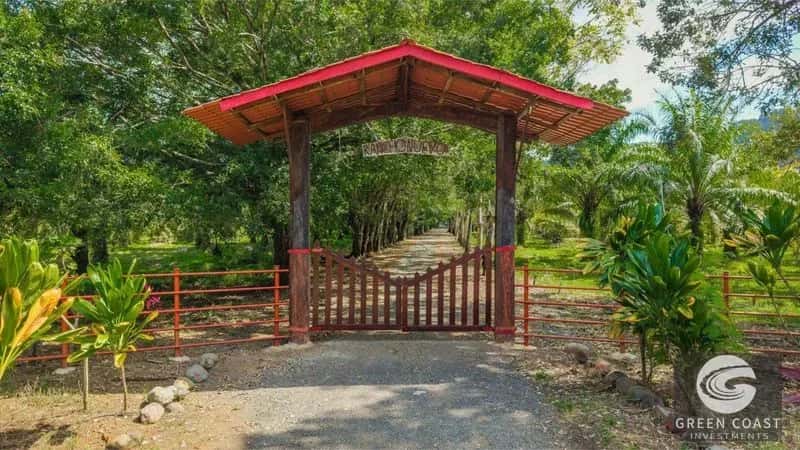
Why Buy Property in Jaco, Costa Rica in the Luxury Market?
For buyers comparing active inventory, see Ultimate 4,850-Acre Oceanfront Legacy Estate in Esterillos.
In our years on this coast, we have watched the Jacó–Los Sueños–Esterillos corridor evolve from a rustic surfing destination into a premier hub for high-net-worth North American buyers seeking security, accessibility, and unmatched scale. Driven by robust infrastructure, a world-class marina, and close proximity to San José’s international airport, this Central Pacific gold coast attracts capital looking for both immediate lifestyle utility and long-term wealth preservation.
While the broader regional market offers diverse entry points, the true allure for institutional buyers and ultra-high-net-worth individuals lies in the rare acquisition of expansive, generational land tracts that cannot be replicated.
Market Dynamics: Standard Residential vs. Generational Scale
The regional real estate landscape reflects a highly active market with diverse inventory. Currently, there are 242 active listings in the Jacó, Los Sueños, and Playa Hermosa region. Across these listings, the regional price range spans from USD 50,000 to USD 989,000,000, yielding a mathematically skewed average regional property price of USD 5,152,527.
```
Central Pacific Market at a Glance:
| Metric | Value (USD) |
| :--- | :--- |
| Active Regional Listings | 242 |
| Regional Price Range | $50,000 – $989,000,000 |
| Average Regional Price | $5,152,527 |
| Featured Esterillos Estate | $29,950,000 |
```
While the standard residential market consists primarily of high-density condominiums and hillside vacation villas, these properties do not offer the sovereign control required by legacy investors. Standard residential assets remain subject to neighborhood homeowner association rules, density constraints, and fluctuating tourism cycles.
The Pinnacle of the Central Pacific: The $29,950,000 Esterillos Estate
In stark contrast to typical residential offerings, the featured USD 29,950,000 legacy estate in Esterillos represents the absolute pinnacle of the Central Pacific market. Spanning 4,850 acres of oceanfront and rolling ridgelines, this asset transcends conventional real estate categories.
Acquiring an estate of this magnitude allows a single buyer to control a massive ecological corridor, establish a private family compound, or execute a master-planned eco-development. At this level of the market, transaction values are driven not by local comparable sales, but by the sheer scarcity of contiguous, titled oceanfront acreage within a two-hour drive of a major international airport.
---
Is It Legally Possible to Own 100% Titled Oceanfront Property Near Jacó and Esterillos?
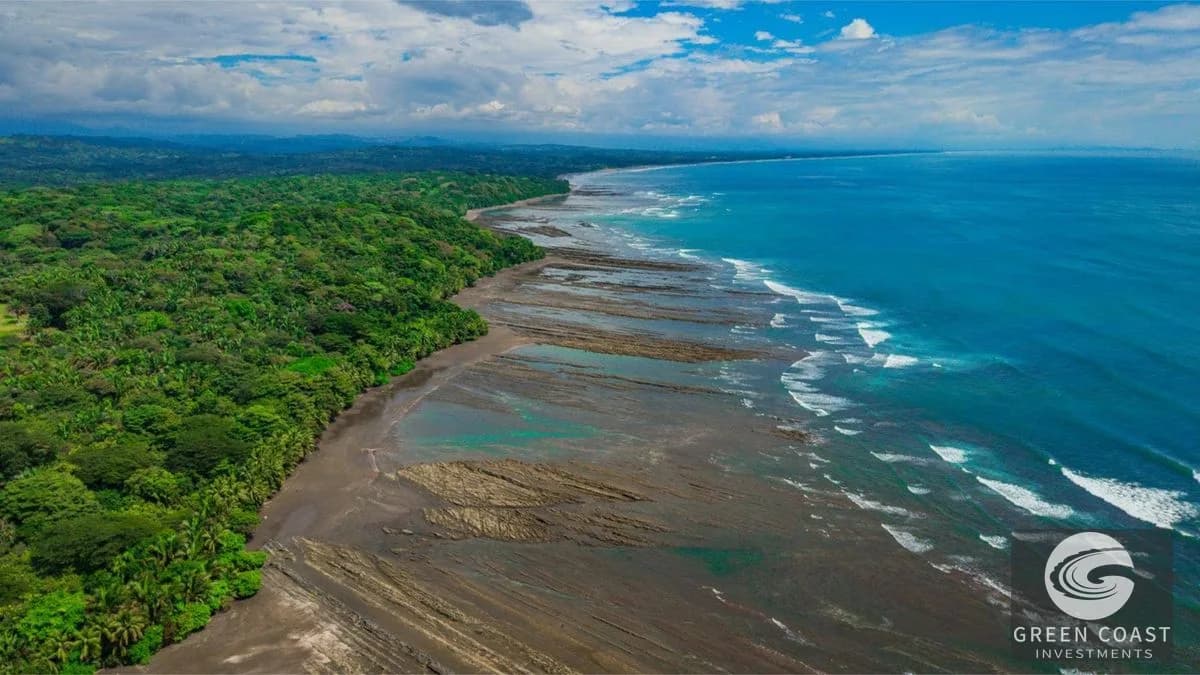
Yes, it is legally possible to own 100% titled oceanfront property near Jacó and Esterillos, but it is an extraordinary rarity. While the vast majority of Costa Rica’s coastline is subject to strict government leasehold agreements, less than 5% of the entire country's coast possesses fee-simple, registered title that extends directly to the high-tide line.
The 4,850-acre Esterillos legacy estate represents a historic exception to standard maritime laws, offering absolute ownership in a market where active listings total 242 properties ranging from USD 50,000 to USD 989,000,000, with an average price of USD 5,152,527.
Understanding the Maritime Zone Law (ZMT)
To appreciate the value of this estate, North American buyers must understand Costa Rica's Maritime Zone Law (Ley de Zona Marítimo-Terrestre or ZMT). Under normal circumstances, the 200 meters of land measured inland from the ordinary high-tide line is heavily regulated and split into two distinct zones:
The Public Zone comprises the first 50 meters from the high-tide line. This strip is completely inalienable and open to the public, meaning no private development or ownership is permitted.
The Restricted Zone covers the next 150 meters. This area is typically concession land. Instead of owning the property, individuals acquire a municipal lease. Crucially, foreigners cannot hold majority ownership (more than 49%) in a concession-holding corporation unless they meet strict residency requirements.
Because the 4,850-acre Esterillos estate holds a rare, pre-existing registered title that predates the 1977 ZMT legislation, it bypasses these concession restrictions entirely. This allows foreign buyers to secure 100% fee-simple ownership of the land directly adjacent to the public zone, a legal status that is virtually impossible to replicate in modern acquisitions when you buy property jaco costa rica.
Essential Due Diligence for North American Buyers
When acquiring high-value coastal acreage, verifying the legitimacy of the title is the most critical step of your due diligence process. Buyers must work with specialized real estate attorneys to execute the following verifications:
1. National Registry Search (Registro Nacional)
Your legal counsel must pull the certified title report (certificación literal) directly from the Costa Rican National Registry. This document verifies the property's ownership history, boundary lines, and confirms that the title is free of liens, annotations, or municipal disputes.
2. Cadastral Map Verification (Plano Catastrado)
Ensure the property’s registered survey map is officially recorded and matches the physical boundaries of the estate. For oceanfront parcels, the map must explicitly show the titled boundaries extending to the public zone boundary without overlapping restricted concession areas.
3. Pre-1977 Title Chain Audit
To guarantee the safety of your investment, your attorney must trace the chain of title back before 1977. This audit proves the property was privately owned and registered prior to the enactment of the Maritime Zone Law, legally cementing its exempt status from concession requirements.
---
How Do US and Canadian Buyers Structure Ownership for Multi-Million Dollar Costa Rican Legacy Estates?
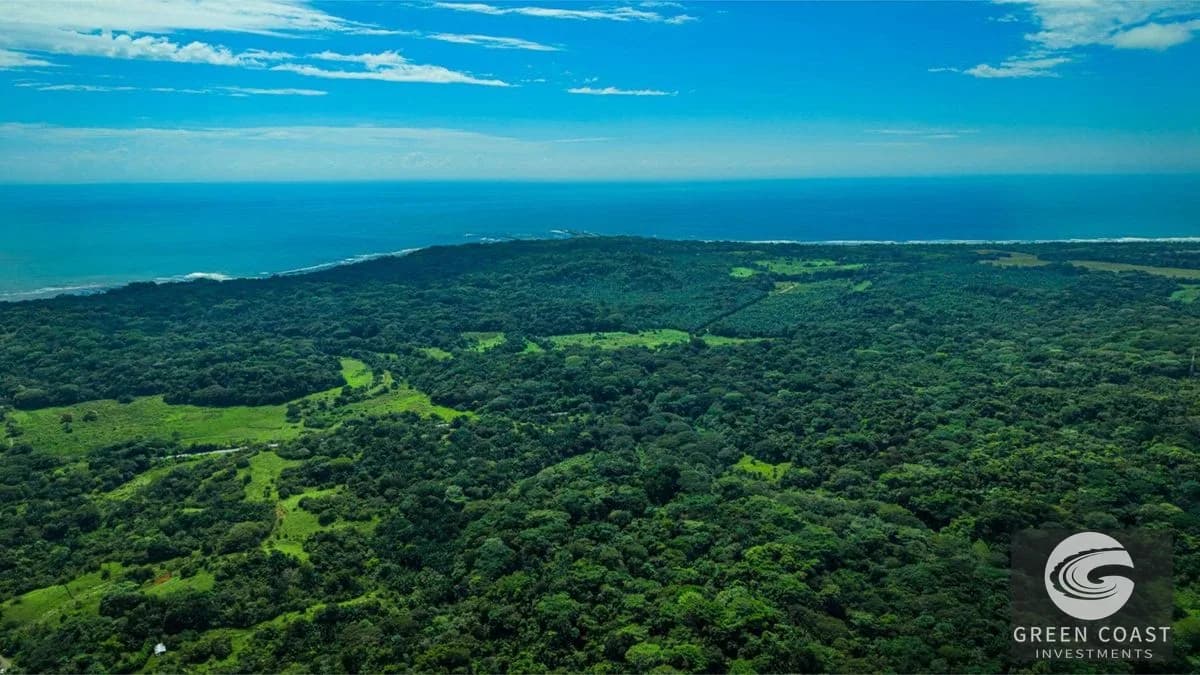
US and Canadian buyers secure multi-million dollar legacy estates in Costa Rica by holding the real estate asset through a local corporate entity or a specialized trust structure (fideicomiso) rather than in their personal names. This approach insulates personal wealth, streamlines multi-generational asset transfers, and ensures full compliance with both Costa Rican regulations and North American tax reporting requirements.
In the regional market surrounding Jacó, where active listings total 242 properties ranging from USD 50,000 to USD 989,000,000 with an average price of USD 5,152,527, utilizing the correct legal vehicle is essential to safeguarding high-value investments.
S.A. vs. S.R.L.: Choosing the Right Corporate Vehicle
Foreign investors typically choose between two primary corporate structures to buy property near Jacó, Costa Rica:
Sociedad Anónima (S.A.):* Operating similarly to a US corporation, an S.A. requires a board of directors (minimum of three members: President, Secretary, and Treasurer) and a resident agent. Shares are transferred via physical share certificates and recorded in a shareholder logbook. This structure is ideal for complex ownership groups with diverse investment partners.
Sociedad de Responsabilidad Limitada (S.R.L.):* Comparable to a limited liability company (LLC), an S.R.L. features a simplified management structure led by one or more managers. Ownership is held via "quotas" rather than shares. This structure offers excellent asset protection and simplified administrative maintenance, making it the preferred choice for single-family legacy estates.
Both entities are subject to Costa Rican corporate income tax rates, which scale up to 30% depending on gross income, though holding companies with no active business operations pay a minimum flat rate. Additionally, corporations must pay an annual corporate tax (approximately USD 120 to USD 380 depending on active status) and the annual Education and Culture Stamp fee.
The Fideicomiso: Securing Multi-Generational Legacy Transfers
For ultra-high-net-worth buyers acquiring premier acreage, a fideicomiso (trust) offers an advanced layer of security. By transferring the shares of the property-holding S.A. or S.R.L. into a fiduciary trust managed by a licensed Costa Rican bank or trust company, buyers can establish precise estate planning terms. The fideicomiso dictates exactly how the estate is managed and transferred to heirs upon the grantor’s passing, completely bypassing the lengthy, costly, and public Costa Rican probate court system.
International Tax Compliance and Transparency Requirements
Acquiring luxury real estate in Costa Rica triggers strict compliance mandates in both the home country and the host nation:
RTBF (Registro de Transparencia y Beneficiarios Finales):* Costa Rica requires all corporate entities to disclose their ultimate beneficial owners to the Central Bank's shareholder registry. The RTBF filing deadline occurs annually in April, with mandatory updates required within 15 days of any ownership change. Non-compliance results in severe financial penalties and restricts the corporation's ability to obtain certificates of good standing.
FBAR and FATCA (US Buyers):* US citizens must report foreign bank accounts held by their Costa Rican corporation if the aggregate value exceeds USD 10,000 at any point during the calendar year (FBAR/FinCEN Form 114). Under the Foreign Account Tax Compliance Act (FATCA), taxpayers must also file IRS Form 8938 to report specified foreign financial assets.
T1135 (Canadian Buyers):* Canadian residents holding specified foreign property, including shares in a non-resident corporation, with a total cost amount exceeding CAD 100,000 must file Form T1135 with the Canada Revenue Agency (CRA).
---
What Are the Zoning and Environmental Regulations for Building a Private Compound in the Central Pacific?
Developing a private compound on a massive acreage near Esterillos requires a precise understanding of Costa Rican environmental law and municipal zoning. To successfully buy property jaco costa rica, investors must secure environmental clearance from the National Environmental Technical Secretariat (SETENA) and align their development plans with the local Plan Regulador (regulatory plan) of the Parrita or Garabito municipalities.
Navigating these frameworks ensures that a multi-generational legacy estate remains legally compliant while preserving the surrounding natural ecosystem.
Navigating SETENA Environmental Permitting (D1 vs. D2 Tiers)
Any large-scale infrastructure development in Costa Rica requires an environmental impact assessment managed by SETENA. The evaluation path depends on the project's potential environmental impact, categorized into distinct tiers:
D1 Assessment:* Required for high-impact or large-scale developments, including extensive road networks, major earthmoving, or multi-unit structural footprints. This tier demands comprehensive environmental impact studies, archaeological evaluations, and formal mitigation plans.
D2 Assessment:* Reserved for low-impact, low-density projects. If your private compound limits its physical footprint and preserves the majority of the natural canopy, it may qualify for this simplified, faster approval process.
Municipal Zoning and the 5,000-Square-Meter Agricultural Law
The local Plan Regulador governs land use, setbacks, and building heights along the Central Pacific coast. For expansive legacy estates outside dense urban zones, the land is often classified under agricultural zoning.
Under Costa Rican law, the minimum agricultural parcel subdivision size is 5,000 square meters (approximately 1.24 acres). For a 4,850-acre estate, this zoning allows for strategic subdivision into private, ultra-low-density luxury estates. Each 5,000-square-meter lot is legally permitted to feature a primary residence and auxiliary structures, keeping the overall footprint minimal while maximizing privacy.
Currently, the regional market reflects high demand for these secure, low-density investments. Across 242 active listings in the area, prices range from USD 50,000 to USD 989,000,000, with an average price of USD 5,152,527, underscoring the premium placed on large-scale, permit-ready acreage.
Securing Water Concessions and Off-Grid Utility Infrastructure
Building a self-sustaining luxury compound requires securing independent water and power infrastructure.
Water Concessions: You must secure a formal water concession (concesión de agua*) from the Ministry of Environment and Energy (MINAE) to legally utilize natural springs or drill deep-water wells. This concession is a prerequisite for obtaining municipal building permits.
Electrical Infrastructure:* While connection to the national ICE grid is possible, large estates typically integrate solar arrays, industrial battery storage, and backup generators to guarantee uninterrupted power and achieve true utility independence.
Navigating Helipad Permitting and Luxury Infrastructure Development
Navigating the logistics of building a private helipad and luxury infrastructure on a 4,850-acre estate near Jacó requires coordination with Costa Rica’s civil aviation authority, the Dirección General de Aviación Civil (DGAC). Securing a private heliport license involves submitting detailed environmental impact studies through SETENA, obtaining municipal zoning approval, and passing rigorous DGAC physical site inspections. By establishing this private air infrastructure, high-net-worth buyers can bypass the standard two-hour drive from Juan Santamaría International Airport (SJO) to Esterillos, reducing travel time to a 20-minute helicopter flight.
DGAC Helipad Certification Requirements
To legally operate a private helipad on a legacy estate of this scale, your engineering team must submit a formal application to the DGAC. The primary requirements include:
Site Plan and Coordinates:* Precision GPS coordinates, approach path clearances, and obstacle-free zones.
Environmental Clearance:* A formal review from SETENA ensuring the flight paths do not disrupt protected local wildlife corridors.
Safety Infrastructure:* Installation of wind cones, proper perimeter fencing, fire suppression equipment, and a concrete landing pad designed to support the weight of twin-engine aircraft like the Eurocopter EC130.
Internal Road Networks and Security Infrastructure
Developing a compound of this magnitude requires a self-sustaining infrastructure plan. With 4,850 acres of terrain, building private internal roads is the first priority. Developers must utilize high-durability materials, such as interlocking concrete pavers (adoquines) or reinforced asphalt, designed to withstand the heavy rainfall of the Central Pacific green season.
Furthermore, securing the perimeter requires a multi-layered security layout. This includes a fortified main gatehouse with biometric access control, a secondary security checkpoint for staff, and strategically positioned staff quarters. Placing dedicated housing for estate managers, security personnel, and maintenance crews near the property boundaries ensures 24/7 operational readiness without compromising the privacy of the main residential compound.
Market Context and Investment Scale
Integrating world-class infrastructure on a tract of this size places the property at the absolute pinnacle of the regional market. Within the local real estate landscape, there are currently 242 active listings, with prices ranging from USD 50,000 to USD 989,000,000, and an average listing price of USD 5,152,527. Developing a fully certified private helipad and a secured internal road network instantly positions a property in the ultra-high-net-worth tier of this market, matching the expectations of global buyers who prioritize security, privacy, and rapid transit.
---
How Does Proximity to Los Sueños Marina Impact the Long-Term Value of Esterillos Acreage?
The proximity of the 4,850-acre Esterillos estate to Los Sueños Resort & Marina—located just 35 kilometers to the north—acts as a primary catalyst for long-term capital appreciation and sustained luxury demand. For high-net-worth individuals looking to buy property jaco costa rica, this geographic synergy offers the ideal balance: immediate access to Central America's premier yachting infrastructure paired with the absolute privacy of a massive, uncompromised coastal acreage.
The Yacht Owner Demographic and Slip Scarcity
Los Sueños Marina operates at near-capacity with 200 wet slips and 116 dry spaces, creating a highly competitive market for maritime infrastructure. The elite global demographic that utilizes these slips—including competitive sportfishing teams and superyacht owners—frequently seeks expansive onshore estates to build private, secure family compounds.
Because the immediate vicinity of the marina is densely developed, buyers are moving south toward Esterillos. The ability to dock a vessel at Los Sueños and commute to a private, helipad-accessible 4,850-acre estate in under ten minutes by air drives a highly exclusive sub-market of ultra-high-net-worth buyers.
Capital Appreciation and Market Dynamics
Positioned just 30 minutes by car from the marina, the Esterillos acreage benefits from the spillover of wealth and commercial development radiating from Herradura and Jacó. The regional real estate market reflects this premium positioning. Currently, active listings in the area total 242 properties, with a price range spanning from USD 50,000 to USD 989,000,000, and an average listing price of USD 5,152,527.
This high average valuation underscores the shift toward institutional-grade legacy estates. As premium oceanfront parcels near Herradura become non-existent, the Esterillos tract represents the last remaining land mass of this scale. Owners can capture high rental yields from luxury eco-lodges or private villa rentals, all while the underlying land value appreciates due to its strategic positioning near the country's most successful nautical hub.
---
What Are the Ecological Stewardship and Carbon Offset Potentials for This 4,850-Acre Estate?
Acquiring the 4,850-acre Esterillos legacy estate provides a rare opportunity to pioneer large-scale ecological stewardship while capitalizing on Costa Rica’s conservation incentives. Through the National Forestry Financing Fund (FONAFIFO) and its Payment for Environmental Services (PSA) program, owners of primary and secondary rainforests receive direct financial compensation for preserving forest cover, protecting biodiversity, and safeguarding water resources.
By enrolling this expansive acreage into the PSA program, international buyers can offset holding costs while actively contributing to global climate mitigation.
FONAFIFO Conservation Payments and Tax Exemptions
The PSA program managed by FONAFIFO offers structured financial incentives designed to reward private landowners for environmental preservation. For primary forest conservation, FONAFIFO currently pays rates averaging $60 to $80 per hectare annually under standard active contracts, with higher allocations available for targeted reforestation initiatives.
Additionally, lands officially enrolled in these conservation programs enjoy complete exemption from municipal property taxes. This tax-free status, combined with direct government payouts, significantly lowers the overhead of maintaining a massive private reserve near Jacó.
Carbon Sequestration and Corporate Neutrality
For high-net-worth individuals and corporate entities seeking to achieve net-zero carbon footprints, the estate serves as a massive private carbon sink. The primary rainforests of the Central Pacific region possess an extraordinary carbon sequestration capacity, capturing an estimated 10 to 15 metric tons of carbon dioxide equivalent (CO2e) per hectare annually.
Preserving thousands of acres of this dense canopy translates to thousands of tons of offset capacity each year. This ecological asset can be used to neutralize global corporate emissions or be packaged into certified carbon credits for international voluntary markets.
Aligning Conservation with the Central Pacific Market
Integrating a private conservation reserve with a luxury compound aligns perfectly with the shifting dynamics of the local real estate market. Currently, there are 242 active listings in the region, spanning a price range of USD 50,000 to USD 989,000,000, with an average price of USD 5,152,527.
As high-value buyers increasingly look to buy property jaco costa rica with sustainability in mind, estates that combine luxury living with verified ecological assets command a significant premium, securing both environmental legacy and long-term capital appreciation.
---
What Are the Tax Implications and Reporting Requirements for North Americans Buying Property in Jaco?
North Americans who buy property in Jacó, Costa Rica face a highly favorable tax structure compared to US and Canadian jurisdictions, characterized by low annual holding costs and clear transactional fees. To successfully acquire a luxury legacy estate in the Central Pacific market—where there are currently 242 active listings ranging from $50,000 to $989,000,000, with an average price of $5,152,527—buyers must account for transfer taxes, annual municipal assessments, luxury home taxes, and capital gains liabilities.
Transactional and Annual Holding Taxes
When purchasing real estate in the Jacó and Esterillos region, the transaction triggers a one-time property transfer tax (Impuesto de Traspaso) equal to 1.5% of the registered value of the property. This tax is typically split equally between the buyer and the seller as part of the closing costs, unless negotiated otherwise.
Once the property is acquired, the ongoing annual holding costs are remarkably low:
Municipal Property Tax (Impuesto de Bienes Inmuebles):* Local municipalities collect an annual tax of just 0.25% of the property’s declared value. For a multi-million dollar estate, this represents a fraction of the carrying costs associated with equivalent luxury acreage in North America.
Luxury Home Tax (Impuesto Solidario):* High-value residential structures are subject to an additional annual solidarity tax. This tax applies only to the value of the physical construction and urbanization features (excluding the raw land value) if they exceed a periodically adjusted threshold. The tax is calculated on a sliding scale ranging from 0.25% up to 0.55%.
Capital Gains Tax Regulations
Under the current Costa Rican tax code, capital gains tax (Impuesto sobre Ganancias de Capital) is set at a standard flat rate of 15% on the net profit realized from the sale of a property.
However, a critical exemption exists for legacy assets. If the property was acquired before the current tax law took effect in July 2019, first-time transfers of these pre-existing assets qualify for a special one-time tax rate of 2.25% of the total sales price, rather than 15% of the net gain. Additionally, if the property is held under a personal name and serves as the owner's primary residence, the sale is entirely exempt from capital gains tax.
North American Tax Reporting Requirements
While Costa Rica does not report local real estate transactions directly to foreign governments, US and Canadian buyers must comply with home-country tax obligations. US citizens buying property in Jacó through a Costa Rican corporation (Sociedad Anónima or Limitada) must file IRS Form 5471 (Information Return of U.S. Persons With Respect to Certain Foreign Corporations).
Furthermore, if the corporation holds foreign bank accounts exceeding $10,000 at any point during the calendar year, a Financial Crimes Enforcement Network (FinCEN) Form 114 (FBAR) must be filed annually. Under the Foreign Account Tax Compliance Act (FATCA), taxpayers must also file IRS Form 8938 to report specified foreign financial assets, while Canadian residents holding specified foreign property exceeding CAD 100,000 must file Form T1135 with the Canada Revenue Agency (CRA).