
Why Buy Property in Manuel Antonio, Costa Rica?
For buyers comparing active inventory, see Premier 205-Acre Ocean-View Development Land in Manuel Antonio & Quepos.
High-net-worth investors and international developers target the Manuel Antonio and Quepos corridor because it represents the pinnacle of Costa Rica’s luxury eco-tourism economy, where high rental yields meet strictly limited land inventory. When you buy property in Manuel Antonio, Costa Rica, you capitalize on a mature tourism market that attracts affluent global travelers year-round. Because the region is geographically hemmed in by the Pacific Ocean, steep coastal topography, and the protected boundaries of Manuel Antonio National Park, premium development parcels are exceptionally scarce, driving long-term capital appreciation.
In our years on this coast, we have watched the market transform from a backpacker outpost into a highly sophisticated, luxury-driven landscape. Currently, there are 92 active listings in the Manuel Antonio & Quepos region. While the market features a wide price range of USD 48,600 to USD 12,500,000—allowing entry-level buyers into the market—it is the luxury and commercial development sectors that drive the region's high average regional property price of USD 1,361,855. This high average valuation underscores the dominant demand for premium, ocean-view assets over standard residential inventory.
| Market Metric | Value (USD) |
| :--- | :--- |
| Active Listings | 92 |
| Minimum Price | $48,600 |
| Maximum Price | $12,500,000 |
| Average Price | $1,361,855 |
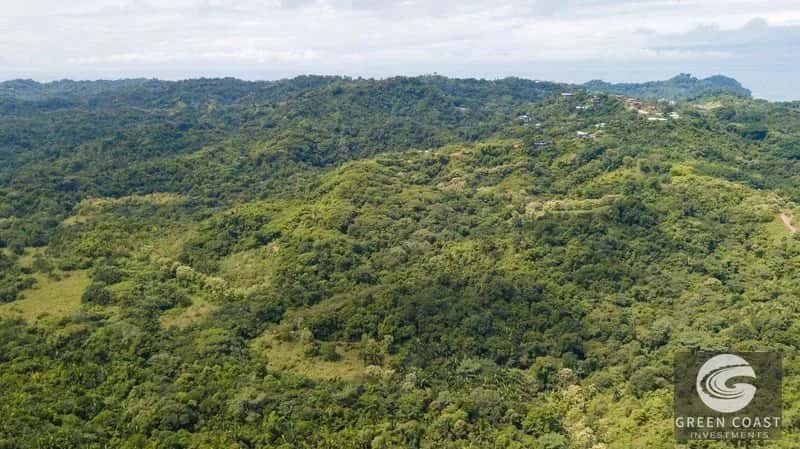
Within this highly constrained inventory, large-scale acreage with ocean views is almost non-existent. This scarcity makes the featured 205-acre development land, priced at USD 8,300,000, a rare high-yield opportunity for institutional developers. Situated in a prime location overlooking the coastline, this massive parcel bypasses the typical inventory bottlenecks, offering the scale required for a master-planned gated community, a luxury eco-lodge, or a branded residential resort.
Several macroeconomic factors continue to funnel capital into this specific corridor:
Infrastructure Maturity:* Unlike more remote coastal pockets, the Quepos and Manuel Antonio area features a world-class marina, a regional airport with daily flights to San José, and fully paved highway access.
Proven Rental Yields:* Existing luxury villas in the area command some of the highest average daily rates (ADRs) in Central America, often operating at high occupancy rates even during the shoulder seasons.
Eco-Luxury Alignment:* Modern affluent buyers demand a balance of untouched nature and high-end amenities. This 205-acre tract allows developers to preserve large swaths of primary forest while building low-density, high-value real estate.
---
Is Titled Land Different From Concession Land When You Buy Property in Manuel Antonio?

When you buy property in Manuel Antonio, Costa Rica, understanding the legal distinction between fee-simple titled land and concession land is critical to protecting your investment. Fee-simple titled land grants you 100% absolute ownership rights, which are identical for both Costa Rican citizens and foreign buyers from the US and Canada. In contrast, concession land—governed by the Maritime-Terrestrial Zone Law (Ley de la Zona Marítimo-Terrestre, or ZMT)—is essentially a long-term lease from the local municipality.
The premier 205-acre development parcel featured in this guide is 100% titled land. Because the entire acreage sits safely outside the restricted 200-meter maritime zone, investors enjoy secure, permanent ownership rights without municipal lease renewals or foreign ownership restrictions.
Costa Rica’s coastline is protected by strict zoning laws that divide the first 200 meters of land measuring back from the high-tide line into two distinct zones. The first is the 50-Meter Public Zone, which is completely public and where no private construction or development is allowed under any circumstances. The second is the 150-Meter Concession Zone. This area can be leased via a municipal concession, typically for terms of 10 to 20 years. Foreigners cannot own more than 49% of a corporation holding a concession lease unless they have resided in the country for five years.
Because the featured 205-acre parcel is fully titled, it is entirely exempt from these ZMT restrictions, allowing for straightforward, fee-simple ownership.
Acquiring concession land in the Aguirre/Quepos canton introduces several operational and financial risks for international developers. Municipalities have the authority to alter lease terms, increase annual canon fees, or delay concession renewals, which can stall development timelines indefinitely. Furthermore, international banks and traditional lenders rarely finance projects on concession land because the property cannot be used as collateral in the same manner as titled real estate.
Titled land drastically simplifies the development process for US and Canadian buyers. With fee-simple titles registered in the National Registry (Registro Nacional), you can secure third-party financing, establish clear corporate ownership structures, and obtain building permits without municipal lease interference.
This security is highly valued in the local market. Currently, there are 92 active listings in the Manuel Antonio and Quepos area, with a price range of USD 48,600 to USD 12,500,000, and an average price of USD 1,361,855. Fully titled tracts of this scale are exceptionally rare in this price landscape, making this 205-acre parcel a highly secure asset for large-scale residential or hospitality development.
---
What Are the Specific Zoning and Environmental Laws for Developing Large Acreage in Quepos?

Developing large acreage in the Quepos canton requires strict adherence to the local Plan Regulador (regulatory plan) and national environmental laws, especially when operating near the sensitive buffer zones of Manuel Antonio National Park. For investors looking to buy property Manuel Antonio Costa Rica offers, understanding these zoning laws is the difference between a highly profitable venture and a stalled project. Currently, the Quepos real estate market features 92 active listings ranging from $48,600 to $12,500,000, with an average price of $1,361,855, reflecting the premium placed on legally compliant, developable land.
The local Plan Regulador dictates the allowable footprint ratio (cobertura) for any construction. For large-scale development land in the Quepos canton, the maximum footprint ratio typically ranges from 15% to 40% of the total land area, depending on the specific zone (such as low-density residential or eco-touristic). The remaining percentage must be preserved as green space, natural forest, or common areas. This preservation requirement aligns with the region's commitment to eco-tourism and ensures that luxury developments maintain the lush, forested canopy that buyers expect in Manuel Antonio.
Any large-scale earthmoving, road construction, or parcel subdivision requires environmental clearance from SETENA (Secretaría Técnica Nacional Ambiental). SETENA categorizes projects into specific environmental impact assessment tiers based on their potential ecological footprint. High-impact or large-scale developments, such as a 205-acre master-planned community, require a Formulario D1. This tier demands comprehensive environmental impact studies (EIA), forest inventories, and geological evaluations. On the other hand, Formulario D2 is reserved for low-impact, smaller-scale projects that require basic environmental management plans rather than full EIAs.
Because the 205-acre tract sits near the Manuel Antonio National Park buffer zone, developers must secure a D1 clearance. This process ensures that road construction and infrastructure installation do not disrupt local wildlife corridors or natural water runoff.
The physical topography of the 205-acre tract plays a crucial role in meeting both SETENA requirements and zoning laws. The property features a series of natural ridges and elevated contours. Rather than requiring massive, high-impact grading—which SETENA heavily restricts—the natural topography offers pre-existing, stable building terraces.
These natural ridges provide two distinct advantages:
1. They minimize the need for extensive earthmoving, simplifying the SETENA approval process.
2. They position future luxury villas and structures along natural elevation lines, securing unobstructed ocean views while maintaining excellent soil stability and natural drainage.
---
What Are the Water Concession (ASADA) Requirements for New Real Estate Developments?
Securing a guaranteed, legal water supply is the single most critical factor for real estate development approval in Costa Rica. Without an official water availability letter (carta de disponibilidad de agua), local municipalities (municipalidades) will not issue building permits, halting any development plans before they begin. For investors looking to buy property in Manuel Antonio, Costa Rica, understanding the regulatory framework of local water boards (ASADAs) and the national water utility (AyA) is essential to mitigating risk and ensuring project viability.
To obtain a construction permit, developers must secure a formal water availability letter from either the local ASADA (rural water administrative association) or the AyA. This document legally certifies that the local infrastructure has the capacity to service the proposed project without compromising the existing community supply.
If the development relies on independent water sources, such as on-site maritime-terrestrial zones, rivers, or underground aquifers, developers must obtain a formal concession from the Water Department of the Ministry of Environment and Energy (MINAE). Registering a new water concession through MINAE is a rigorous legal process that typically requires detailed hydrogeological studies and can take anywhere from 12 to 24 months to secure final approval.
For large-scale parcels, such as the premier 205-acre development tract in the Quepos-Manuel Antonio corridor, water security is already strategically addressed. This expansive acreage features natural springs and potential deep-well sites, which can be registered for private concessions under MINAE guidelines to bypass municipal grid limitations.
Having these natural water assets on-site dramatically accelerates the development timeline. Instead of relying solely on overburdened public infrastructure, developers can establish independent, eco-friendly water systems to service luxury eco-lodges or private gated communities.
Securing land with proven water viability is paramount in a highly competitive market. Currently, active listings in the Manuel Antonio area stand at 92 properties, with a price range of USD 48,600 to USD 12,500,000, and an average price of USD 1,361,855. Given the high capital entry point for premium tracts, conducting thorough due diligence on water concessions protects your investment capital and ensures the long-term feasibility of your master-planned community.
---
How Does Proximity to Marina Pez Vela Impact Luxury Property Values in Manuel Antonio?
Proximity to Marina Pez Vela serves as a primary driver for luxury property values in Manuel Antonio, creating an economic synergy where high-end maritime infrastructure directly fuels residential real estate appreciation. For investors looking to buy property Manuel Antonio Costa Rica offers, properties within a 10-to-15-minute drive of this world-class marina command premium pricing, higher occupancy rates, and superior resale liquidity compared to isolated parcels. This relationship is reflected in the local market data, where active listings total 92 properties ranging from USD 48,600 to USD 12,500,000, with a high average listing price of USD 1,361,855 driven largely by the demand for luxury inventory near the harbor.
Marina Pez Vela acts as a magnet for high-net-worth individuals (HNWIs), elite sportfishing crews, and luxury yacht charters. Major international tournaments, such as the Offshore World Championship, draw affluent travelers who require premium onshore accommodations. This influx generates consistent, high-yield rental demand for luxury villas, with historical ROI trends for upscale estates near world-class Central American marinas averaging annual net yields of 8% to 12%. These properties benefit from premium nightly rates that often exceed USD 1,500 during the peak dry season, as yacht owners and charter guests seek private, secure lodging with ocean views just minutes from their vessels.
The economic footprint of the marina is further amplified by regional infrastructure upgrades, most notably the expansion of the Quepos Airport (KPA). The runway extension and terminal modernization allow for larger charter flights and increased commercial frequency from San José. This expansion has cut transit times to Manuel Antonio significantly, allowing travelers to arrive at their luxury villas within 15 minutes of landing. This ease of access enhances the appeal of the region for international buyers who prioritize efficient travel.
For developers, the premier 205-acre ocean-view parcel presents a strategic opportunity to capture this upscale market. Positioned in the hills overlooking the coast, this expansive tract of land is uniquely suited for a low-density gated community or a luxury eco-lodge. Developers can design private estates that cater directly to the marina’s clientele—offering panoramic Pacific views, helipad potential, and absolute privacy, all while remaining less than 10 minutes from the docks of Marina Pez Vela.
---
What Is the Historical ROI for Luxury Eco-Lodges and Gated Communities in This Corridor?
Historically, luxury eco-lodges and gated residential communities in the Manuel Antonio-Quepos corridor deliver some of the highest returns on investment (ROI) in Central America, with stabilized capitalization rates (Cap Rates) for premium eco-luxury hospitality assets consistently averaging between 8% and 12%. This strong performance is driven by a structural imbalance between high international demand and a strict regulatory limit on inventory. While the broader regional market features 92 active listings ranging from USD 48,600 to USD 12,500,000—with a market average of USD 1,361,855—completed luxury properties in the upper echelon of this inventory generate rapid amortization through high-yield vacation rentals and premium lot sales.
The rental market in Manuel Antonio operates at premium pricing due to the area's global reputation for biodiversity and ocean views. Large-scale luxury villas, specifically those featuring five or more bedrooms with unobstructed Pacific views, command average nightly rates ranging from USD 1,200 to USD 3,500 during the high season, with peak holiday weeks reaching up to USD 6,000 per night.
These assets maintain average annual occupancy rates between 65% and 75%, significantly outperforming traditional Caribbean and Mexican resort destinations. Because wealthy travelers prioritize privacy and natural surroundings, master-planned eco-resorts that blend high-end amenities with preserved rainforest canopies command a 25% pricing premium over standard beachfront lodging.
To maximize yield on the premier 205-acre tract, developers can implement a low-density, high-value parceling strategy. Rather than maximizing unit count, which increases infrastructure costs and devalues the natural appeal, the optimal roadmap focuses on a phased, low-impact master plan:
Phase 1: Anchor Eco-Luxury Lodge (Acres 1–40):* Establish a 30-key boutique eco-resort and wellness spa. This anchor asset establishes the brand identity, generates immediate cash flow, and drives up the land value of the surrounding parcels.
Phase 2: Premium Ocean-View Estates (Acres 41–120):* Subdivide the primary ridgelines into 15 to 20 exclusive, multi-acre residential parcels. Selling these raw, serviced lots to individual buyers seeking to build custom estates generates rapid capital recovery.
Phase 3: Low-Density Gated Hamlet (Acres 121–205):* Develop a cluster of 2- and 3-bedroom luxury eco-villas targeted at the fractional ownership and high-end rental market, utilizing shared green infrastructure to minimize environmental impact.
By preserving up to 50% of the acreage as a private nature reserve, developers can leverage conservation tax incentives while offering residents exclusive access to private hiking trails, directly supporting the marketing narrative that drives premium real estate acquisitions in Costa Rica.
---
Can US and Canadian Citizens Legally Own 100% of a Development Property in Manuel Antonio?
Yes, US and Canadian citizens can legally own 100% of a development property in Manuel Antonio with the exact same constitutional protections as Costa Rican citizens. Unlike many other Latin American nations that restrict foreign land ownership near coastlines or borders, Costa Rica grants foreigners equal rights to acquire, hold, and sell fee-simple titled real estate.
The foundation of foreign property ownership in Costa Rica is enshrined in Article 45 of the Costa Rican Constitution, which guarantees that private property is inviolable. No one can be deprived of their property except for legally proven public interest, and only after fair, pre-established market-value compensation.
When you buy property in Manuel Antonio, Costa Rica, your ownership rights are recorded directly in the Registro Nacional (National Registry). This centralized database provides public access to title deeds, property boundaries, liens, and encumbrances, ensuring complete transparency during your acquisition.
While you can purchase property in your personal name, most North American developers and investors choose to hold real estate assets through a local corporate structure. The two most common entities are:
Sociedad Anónima (S.A.):* Similar to a US corporation, requiring a board of directors (President, Secretary, and Treasurer) and a resident agent.
Sociedad de Responsabilidad Limitada (S.R.L. or Limitada):* Similar to a limited liability company (LLC), offering a simpler management structure with fewer administrative formalities.
Holding your development land in an S.A. or S.R.L. protects your personal assets, simplifies future transfer of ownership, and streamlines local tax filings, utility setups, and bank account openings.
Acquiring a premier 205-acre development tract requires a rigorous due diligence process led by a qualified local notary public (who acts as a neutral transaction officer) and an independent real estate attorney.
1. Title Search: Your attorney verifies the property's chain of title in the National Registry, checking for active mortgages, easements, annotations, or pending litigation.
2. Survey Map Verification: The physical boundaries must align perfectly with the registered cadastral map (plano catastrado).
3. Environmental and Zoning Audits: Verification of water availability from the local ASADA, soil stability, and compliance with municipal zoning laws.
4. Escrow Setup: Funds are held by a registered, SUGEF-regulated escrow provider. Standard escrow fees typically range from 0.25% to 0.5% of the transaction value.
5. Closing Costs: Total closing costs generally range from 3.5% to 4% of the purchase price. This includes the 1.5% property transfer tax, approximately 0.5% in National Registry stamps, and a statutory notary fee scale that averages 1% to 1.25%.
This legal framework supports a highly active local market. Currently, there are 92 active listings in the region, with a price range of USD 48,600 to USD 12,500,000, and an average price of USD 1,361,855, reflecting strong investor confidence in the Manuel Antonio and Quepos corridor.
---
Frequently Asked Questions About Buying Property in Manuel Antonio
To successfully buy property in Manuel Antonio, Costa Rica, international investors must understand the local tax structures, regulatory compliance, and due diligence requirements. The Manuel Antonio and Quepos market currently features 92 active listings ranging from USD 48,600 to USD 12,500,000, with an average price of USD 1,361,855. Navigating this high-value market requires strict adherence to Costa Rican financial laws and municipal guidelines to protect your capital investment.
What Are the Property and Capital Gains Taxes in Costa Rica?
Costa Rica offers a highly favorable tax environment for real estate buyers compared to North American markets. The standard annual municipal property tax (impuesto territorial) is exceptionally low at just 0.25% of the registered property value. For luxury residential builds exceeding a specific construction value threshold (adjusted annually), an additional sliding-scale luxury home tax (impuesto solidario) applies, typically ranging from 0.25% to 0.55%.
When you sell an investment property, the standard capital gains tax rate is 15%. However, if the property was owned prior to the 2019 tax reform law, first-time sales may qualify for a one-time option to pay a 2.25% tax on the total sales price instead. Primary residences are generally exempt from capital gains tax.
How Do SUGEF Compliance and Wire Transfers Work?
International buyers must comply with the General Superintendency of Financial Institutions (SUGEF), which regulates Costa Rica's financial system against money laundering. To transfer funds for a property purchase, you must provide comprehensive source-of-funds documentation, including tax returns, bank statements, and corporate filings.
Working with a licensed real estate broker registered with SUGEF and utilizing a registered, secure escrow service is mandatory for international wire transfers. Attempting to send large sums directly to a seller's local bank account without pre-cleared SUGEF documentation will result in frozen funds and delayed transactions.
Why Do Large Acreage Acquisitions Require Local Legal Counsel and Topographers?
Purchasing large tracts of land, such as the premier 205-acre ocean-view parcels in the Quepos corridor, demands specialized due diligence. Buyers must hire an independent local real estate attorney to verify the title registry (Registro Nacional) for any existing liens, easements, or annotations.
Equally critical is hiring an independent topographer. A topographer will physically survey the boundary lines to ensure they match the official registered survey plan (plano catastrado). This step is vital for identifying any boundary encroachments, confirming the locations of natural water springs, and verifying usable building ridges before finalizing the purchase contract.